


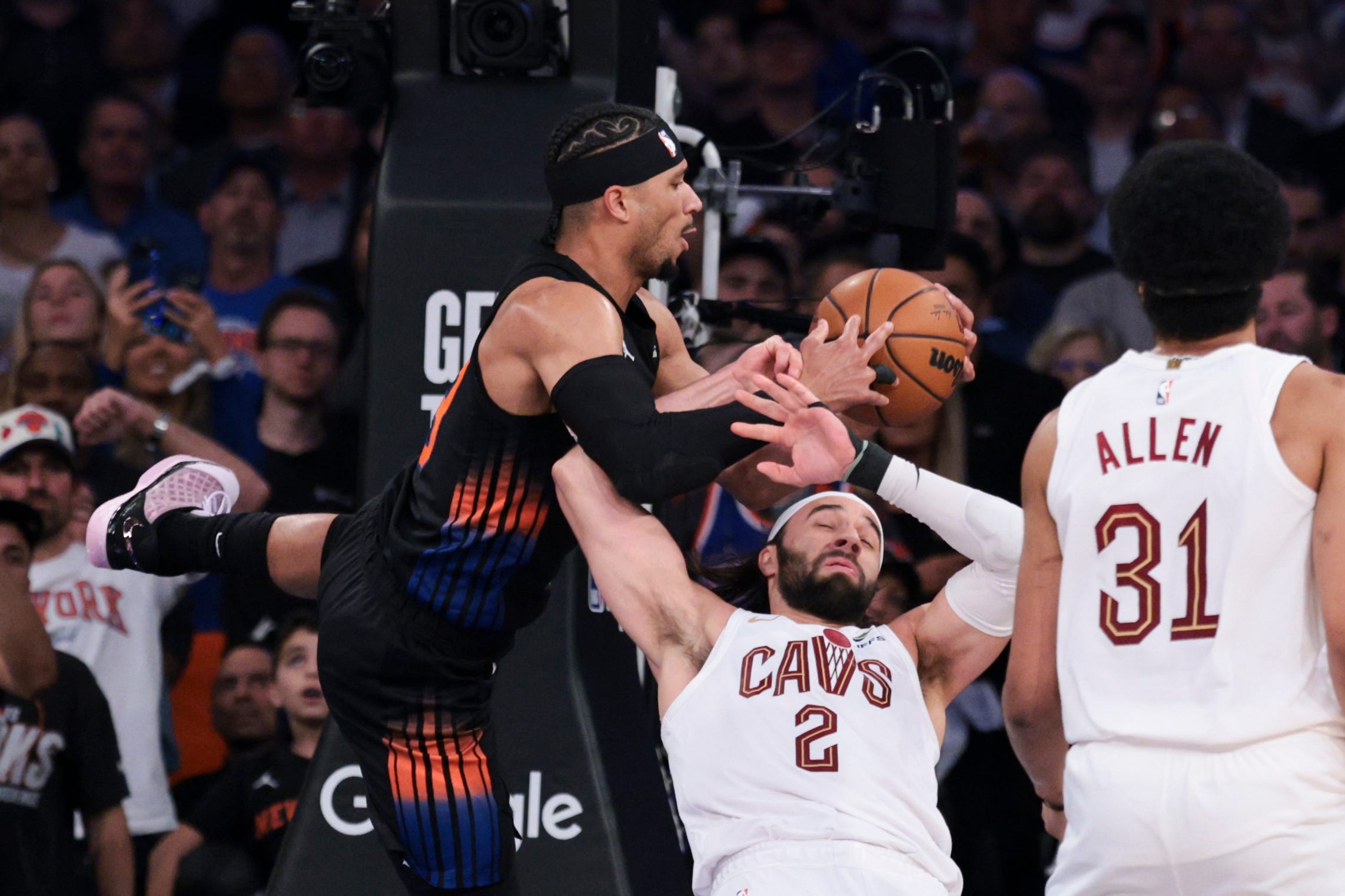
Madison Square Garden Becomes ‘Tomb of the Cavaliers’ as Knicks’ Cinderella Run Captivates a Global Audience
POLICY WIRE — NEW YORK — The hush that followed the final buzzer wasn’t just defeat; it was a profound unraveling, a quiet surrender on the biggest stage. Nobody really believed the...

POLICY WIRE — NEW YORK — The hush that followed the final buzzer wasn’t just defeat; it was a profound unraveling, a quiet surrender on the biggest stage. Nobody really believed the Cleveland Cavaliers — an assemblage of high-priced talent that looks, for all the world, like a poorly curated exhibition rather than a cohesive unit — could conjure a miracle on Madison Square Garden’s hallowed hardwood. And yet, the sheer brutality of their second-game obliteration, the deafening echo of “Knicks in 4” from the rabid faithful, feels less like a simple playoff deficit and more like an organized dismantling. Cleveland’s current state isn’t just dire; it’s practically a sociological case study in systemic breakdown, unfolding publicly.
Down two games to none in the Eastern Conference finals, the Cavaliers aren’t just facing an uphill battle; they’re contemplating an Everest ascent with a broken carabiner and a prayer. Because this isn’t just about poor shooting (they bricked 9 of 35 from three-point land in Game 2 alone, a statistic readily available post-game and a stark indicator of their collective shooting woes). It’s about a collapse of confidence, an institutional paralysis when it counts most. For many observers, what transpired on Thursday night, a demoralizing 109-93 loss, felt like a public autopsy of a promising season, rather than a mere setback. They’ve found their own unique kind of Jalen Brunson problem, sure, but it turns out the issues go far deeper — like a roster that forgets how to play together under pressure, or a coach who simply ran out of timeouts to save face.
It’s no small wonder that even as far afield as Karachi, where basketball barely registers a blip against the thunderous roar of cricket, the talk in certain sophisticated circles turns to the spectacle. Why? Because the psychology of triumph and failure, particularly when wealth and city pride are at stake, transcends national borders. A city that once prided itself on being a championship contender now stares down the barrel of an early summer vacation, pondering just how 9 straight playoff victories — nearly a clean sweep for the ascendant Knicks — could simply evaporate an opponent. The narratives around such contests aren’t limited to sports pages; they inform conversations on organizational resilience, or the absolute lack thereof. But sometimes, you can’t fight fate — or a genuinely hungry team.
Knicks head coach Mike Brown, stoic as ever, summed it up for his team after Game 2. “He’s a gamer, always has been,” Brown offered about Josh Hart, whose playoff-career-high 26 points kept the Garden in a state of continuous rapture. “He knew what he had to do in terms of the adjustments he needed to make in order to be effective, not just for him but for the team.” It’s that unvarnished selflessness that Cleveland so glaringly lacks. Josh Hart himself, the kind of gritty role player every winning team needs, put it more plainly: “I don’t have an ego; that got burned out of my heart a long time ago.” Imagine that — a team where individual ambitions cede to collective success. A quaint, almost revolutionary idea in modern sports.
The Cavaliers’ coach, Kenny Atkinson, facing the media post-mortem, managed a kind of defiant pessimism. “We aren’t making shots, and I won’t sugarcoat it, that’s a fundamental failure that transcends strategy,” he acknowledged, though his tone hinted at frustrations that went unspoken. “You can draw up the perfect play, but if the ball doesn’t find the net, what good is it?” Indeed. Donovan Mitchell, a singular force in his own right, is clearly carrying an insufferable load, tallying 26 points while the rest of Cleveland’s rotational players seemingly decided to spend the evening practicing for next season, going a collective 5-for-24 from the field. It’s hard to win when your stars don’t shine in tandem — and your bench warms the seats more effectively than the net. The silence from James Harden, both on the scoreboard — and defensively, speaks volumes too. NBA beef may make big business, but Harden’s disappearing act is proving far more detrimental.
What This Means
The Knicks’ seemingly inevitable march towards the NBA Finals isn’t merely a feel-good story for sports pages; it carries tangible ripple effects, economic and even political. For New York City, a deep playoff run injects millions — potentially hundreds of millions — into the local economy through tourism, hospitality, and merchandising. Consider the brand equity: New York’s cultural cachet, tied to the Knicks’ unexpected success, can attract investments, boost morale, and even serve as a talking point for local politicians looking to align themselves with a winner. This hardwood gambit reflects shifting urban fortunes. On the flip side, Cleveland’s abrupt exit means lost revenue, dampened civic pride, and a season of hard work that concludes not with a roar, but with a whimper — or the sound of the entire franchise falling apart. Such a high-profile meltdown isn’t just an athletic failure; it’s a public relations headache, an economic missed opportunity, and a testament to how even the most carefully constructed teams can buckle under the bright lights of expectation. The market — of fans, sponsors, — and city residents — always votes.