


Madison Avenue’s Hardwood Gambit: Knicks’ Ascendancy Reflects Shifting Urban Fortunes
POLICY WIRE — New York City, USA — When titans clash on the polished hardwood, it’s rarely just about the game itself. No, these aren’t simple contests of athletic prowess. They’re grand...

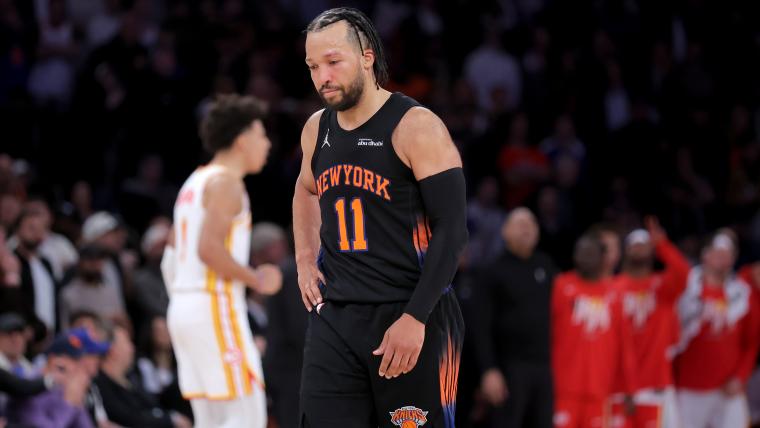
POLICY WIRE — New York City, USA — When titans clash on the polished hardwood, it’s rarely just about the game itself. No, these aren’t simple contests of athletic prowess. They’re grand narratives, economic bellwethers, and surprisingly, proxy battles for civic pride, attracting eyes—and capital—from far beyond municipal borders. The New York Knicks, with their hard-won momentum against the Cleveland Cavaliers in the Eastern Conference Finals, aren’t just battling for a playoff win. They’re cementing Madison Avenue’s narrative dominance, reinforcing Gotham’s financial heft against the grit of the American industrial heartland.
It’s a story told in turnovers — and free throws, sure, but also in metropolitan GDPs and global branding. Last Tuesday night, the Knicks edged out Cleveland in a grueling overtime thriller, a 115-104 affair. That wasn’t just a loss; it was a psychological gut punch. For Cleveland, every play becomes a referendum on its revitalization efforts. For New York? It’s simply business as usual, or at least, the business they desperately want to project to the world.
Mayor Adams, a man not prone to understatement, put it bluntly earlier this week: “This isn’t just about basketball, folks. This is about what New York represents – relentless spirit, a city that never quits, a global magnet for talent and triumph.” He’s got a point. The city’s identity, its sheer economic gravitational pull, feels reflected in Jalen Brunson’s relentless scoring, his 38 points in Game 1 acting as a particularly potent economic indicator. That’s how these things get framed, you know? It’s all part of the theatre.
And Cleveland? They’re certainly feeling the heat, battling to avoid a demoralizing 0-2 deficit. Their star, Donovan Mitchell, a local favorite, is essentially tasked with shouldering not just the offensive load (he averaged 27.9 points per game this season, a hell of a stat), but the weight of an entire region’s hopes. Their predicament illustrates a wider theme. The value of an athlete, much like a corporate bond, is dictated by performance under pressure. “We’re facing a formidable challenge,” remarked Cleveland’s city council president, Sarah Davies, her voice steady but weary. “But we’re a city built on resilience. We don’t back down. We’re showing the world that determination matters just as much as deep pockets.” It’s a classic David versus Goliath, played out with eight-figure contracts.
Because the stakes are immense. We’re talking about massive media deals, merchandising empires, — and urban tourism dollars that flow into both cities. A championship run means packed restaurants, bustling shops, — and palpable excitement. And really, that’s what civic leaders chase, the ephemeral ‘buzz’ that translates into tangible economic activity. According to the New York City Comptroller’s office, major sporting events like these inject approximately $600 million annually into the city’s economy, a figure that’s not to be sneered at. They don’t just tally points, they tally cash. But there’s a deeper, less obvious global play at hand too. NBA games are increasingly accessible, beaming across continents. While cricket reigns supreme in South Asia and the Muslim world, basketball’s footprint is growing, particularly amongst younger demographics.
Consider Karachi, or Dhaka. Kids there, often grappling with their own regional power struggles, still tune in to watch these very American spectacles unfold. The NBA represents an aspiration, a glimpse into a world of hyper-professionalism — and individual stardom. It’s a significant element of American soft power, whether Washington policymakers acknowledge it or not. The appeal of players like Mitchell or Brunson transcends local rivalries; it’s a global phenomenon. And when New York, a city deeply intertwined with global finance and culture, succeeds, that success is often perceived as an endorsement of its foundational principles – aggressive competition, high stakes, and even higher rewards. Cleveland’s fight? It’s inspiring, but it struggles for air in the same cultural economy where New York is the established benchmark. But sometimes, being an underdog has its own peculiar kind of leverage, doesn’t it?
What This Means
This playoff series is more than athletic drama; it’s a mirror reflecting American urban politics and global economic power plays. For New York, continued dominance by the Knicks reinforces its status as a premier global hub, not just for finance, but for entertainment and culture – a critical element in maintaining investor confidence and drawing international talent. Success on this stage feeds into a city’s brand, making it more attractive for everything from startup investments to major tourism ventures. It’s all about perception, isn’t it? Because in the global marketplace, perception often trumps reality.
For Cleveland, the Cavaliers’ struggle speaks to the enduring narrative of industrial cities trying to carve out new identities in a post-industrial age. A strong showing, even without a championship, would symbolize a deeper resilience, a willingness to compete fiercely on a national — and increasingly global — stage. This isn’t just about making the playoffs; it’s about signaling continued vitality, showcasing progress, and attracting the next wave of urban regeneration investment. The outcomes on the court directly influence civic morale and the messaging directed at potential investors, a far cry from the simple act of putting a ball through a hoop. Every rebound, every assist, every missed shot isn’t just data; it’s a tiny ripple in a much larger economic and political pond. And don’t ever forget it.