
The Silent Gallows: Iran’s Relentless Campaign of Intimidation Claims More Lives
POLICY WIRE — Tehran, Iran — The morning’s grim bulletin landed like so many others before it: two more lives extinguished by the state. Not with a bang, but with a calculated, almost indifferent,...

POLICY WIRE — Tehran, Iran — The morning’s grim bulletin landed like so many others before it: two more lives extinguished by the state. Not with a bang, but with a calculated, almost indifferent, silence. The names of the condemned, unceremoniously published by Iran’s judiciary, were like a pair of dropped stones in a deep well—making ripples only amongst those already paying close attention, already counting the escalating toll of what critics call a deliberate campaign of repression.
It’s an unnerving routine, one that plays out against a backdrop of domestic discontent and international hand-wringing. This week’s additions to Iran’s execution tally underscore a hard truth: the Islamic Republic isn’t letting up. No, they’re digging in. The authorities don’t bother with much fanfare for these events anymore; they’re just another cog in the grinding machinery of state control. They’ve learned that silence can be its own kind of terror.
Human rights watchdogs, the few that still track Iran’s internal machinations, immediately registered the incident. They don’t just count bodies; they chart the shrinking space for dissent. “Another day, another life extinguished by a system built on fear, not justice,” lamented Dr. Anya Sharma, Director of the Global Justice Initiative, speaking from London. “The international community can’t afford to look away—it’s a brutal pattern, plain and simple. We’re seeing due process erode completely.”
The regime, predictably, sees things differently. And that’s where the clash truly crystallizes. A spokesperson for Iran’s Judiciary, speaking on background last month regarding similar cases, maintained, “These individuals received due process under Islamic law. Justice must be served to maintain order and protect the integrity of our nation from seditious elements.” They speak of ‘order’; critics point to systemic oppression. It’s a semantic chasm no diplomatic bridge seems able to span.
The details surrounding these specific cases, as with many others, remain frustratingly opaque. Charges often range from drug trafficking—a broad category used to justify many death sentences—to ‘corruption on Earth’ or ‘enmity against God,’ catch-all terms that grant sweeping powers to prosecute dissent as capital offenses. It’s a chilling reminder that in Iran, the courts can be both judge — and executioner, with precious little recourse.
But the reverberations of these actions aren’t contained by Iran’s borders. For countries across South Asia and the broader Muslim world—nations like Pakistan, which shares a complex cultural and often fraught political border with Iran—such news forces an uncomfortable mirror. While judicial systems vary wildly, the fundamental question of state power versus individual liberty, interpreted through the lens of religious law, sparks hushed debates and public consternation alike. For many, Iran’s approach isn’t a model to emulate, but a stark cautionary tale about the perils of authoritarianism masked by religious piety.
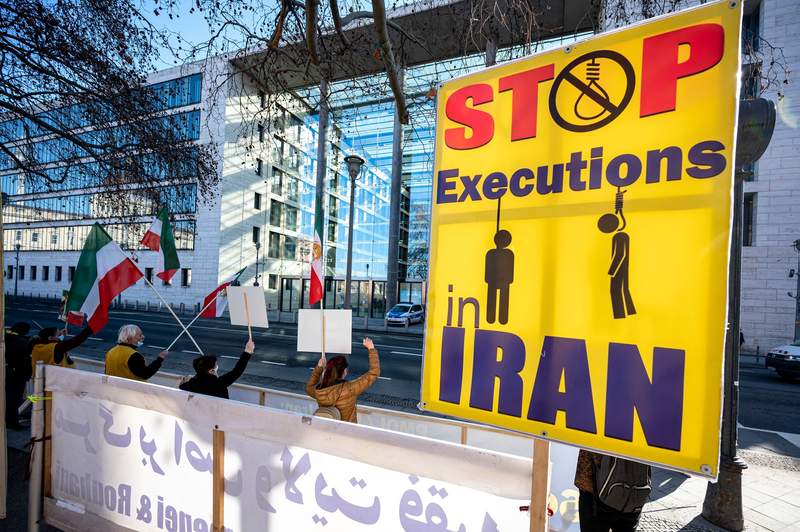
Indeed, the sheer scale of the practice shocks the conscience. Amnesty International reported at least 853 executions in Iran during 2023, making it one of the world’s most prolific executors and marking the highest annual number since 2015. That’s not just a statistic; it’s nearly a thousand human beings. One can’t just ignore numbers like that. The rate, particularly concerning those accused of drug offenses, jumped nearly 48% over the previous year. It suggests an intensification, not a slowdown.
What This Means
This isn’t just about two more executions; it’s about the regime’s deliberate cultivation of fear to maintain power. Domestically, the escalating execution rate serves as a chilling message to any potential dissident. It squelches dissent before it can even properly coalesce. Because who wants to take that chance? It reinforces a culture of silence, stifling public outcry against economic hardship, social restrictions, or governmental policies.
Internationally, Tehran’s continued reliance on capital punishment—often following deeply flawed trials—isolates it further from Western nations, but it also creates uncomfortable tensions within the broader Islamic world. While some hardline elements might tacitly approve, many Muslim-majority nations grapple with balancing their own judicial interpretations with evolving international human rights standards. It’s an issue that often puts regional alliances on rocky ground, complicating economic engagements (see also: OPEC+’s Unseen Hand Tightens). these executions complicate any potential future rapprochement with Western powers, deepening skepticism about Iran’s willingness to reform. And this, ultimately, hobbles any prospect of relief from the crushing sanctions that are, no doubt, fueling some of the very internal instabilities the regime seeks to suppress through fear.
The continued, silent procession to the gallows speaks volumes about the priorities of Iran’s leadership. They’re telling the world, and more importantly their own people, exactly where they draw the line: at absolute control, no matter the human cost. And it’s a cost that keeps rising.