


Rio Rancho’s Humble Arsenal: How a Public Power Washer Echoes Global Resource Divides
POLICY WIRE — RIO RANCHO, N.M. — The persistent hum of an electric motor, the forceful spray cutting through years of grime—it’s not exactly the soundtrack of global economic discourse. But here, in...

POLICY WIRE — RIO RANCHO, N.M. — The persistent hum of an electric motor, the forceful spray cutting through years of grime—it’s not exactly the soundtrack of global economic discourse. But here, in the sun-baked suburbs of Rio Rancho, New Mexico, a seemingly innocuous household item is quietly churning a potent discussion about resource allocation, consumerism, and the very fabric of local resilience in an increasingly unpredictable world.
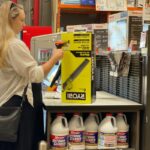
It’s about a power washer, you see. Not just any power washer, but one available for public checkout, nestled unceremoniously within what’s dubbed a “Library of Things.” Forget the headlines about international trade skirmishes or inflationary spirals for a moment. This humble machine, currently doing battle with mildew on someone’s driveway, presents a stark, almost absurd, microcosm of the choices facing societies from Albuquerque to Islamabad: Do we own, or do we share?
This isn’t just about saving a few bucks on a specialized gadget most folks use twice a year. It’s about a deeper philosophical pivot, a silent, pragmatic revolt against the relentless acquisition treadmill. And while Danielle Todesco, a local resident, might just have been focused on a cleaner patio after snagging the pressure washer—a commodity with an average retail price tag north of $200, according to industry analysts at Statista’s 2023 report on outdoor equipment—the underlying implications stretch far beyond property aesthetics.
“We’re past the point where everyone needs to own everything,” asserted Mayor Nora Chavez, a vocal proponent of Rio Rancho’s budding sharing economy initiatives. “Community resources, whether they’re books or leaf blowers, build a stronger, more interconnected city. It’s simply good policy, isn’t it?” She’s not wrong. Because in an era defined by economic precarity and environmental anxiety, shared assets aren’t just novel; they’re becoming non-negotiable for many.
But the picture isn’t all rosy. Dr. Ahmed Farook, an economist specializing in community development, casts a more jaded eye on such initiatives. “Libraries of Things are charming, sure. They ease individual burdens, perhaps. But let’s not confuse localized convenience with systemic change,” he cautioned. “They address the symptom of capital drain at a micro-level, yes, but they don’t disrupt the engines of perpetual growth that demand private ownership.” He has a point; the sheer velocity of modern commerce would swallow a million power washer libraries without so much as a hiccup.
The concept, however, has global echoes. You see, the impulse to pool resources, to optimize utility from limited means, isn’t confined to a New Mexico suburb. It’s a practice deeply embedded in communities across South Asia, particularly in nations like Pakistan. There, informal ‘tool banks’ and communal machinery cooperatives aren’t born from an enlightened green agenda or a rejection of consumerism—they’re born of necessity. Farming implements, irrigation pumps, even construction equipment often belong to the collective, shared out of a financial imperative. And this informal network sustains millions.
📄 POLICY WIRE WHITEPAPER PUBLISHED: PAKISTAN'S NATIONAL SECURITY POLICY PRIORITIES
👉 READ BY CLICKING HEREIn Rio Rancho, it’s a conscious choice. For a village outside Lahore, it’s simply how you make it through the harvest. This shared utilitarianism, this careful custodianship of tools—it bridges the cultural divide. But the intent, the underlying economic pressure—that’s often starkly different. What’s a policy experiment in the West is ingrained survival strategy elsewhere.
The debate around whether this is a quiet revolution or a band-aid on a gaping wound is far from settled. But one thing’s clear: the simple act of borrowing, rather than buying, is shifting. And that shift carries with it an inherent critique of modern life’s consumption habits, whether intentional or not.
What This Means
The unassuming power washer in Rio Rancho’s Library of Things is more than just a convenient loaner; it represents a subtle but significant realignment of economic thinking. Politically, such initiatives challenge established models of economic growth, which often prioritize individual consumption over collective benefit. It nudges municipal policy-makers toward exploring non-traditional forms of public service, moving beyond merely providing information to enabling direct, tangible resource access. This could foster greater community cohesion—or, as critics like Dr. Farook suggest, simply create a dependency on local government for things that, traditionally, fell to individual households. It’s a localized experiment in rethinking how assets are utilized, a micro-version of broader conversations on sustainability and circular economies.
Economically, if these ‘Libraries of Things’ proliferate, they could erode the market for certain niche retail goods, impacting hardware stores and rental companies. But that’s not to say they’re an economic drain. Instead, they reallocate household budgets, freeing up capital for other expenditures, or, crucially, for saving. This communal asset model, widely understood in various forms across the developing world, offers a different path to resource security. It represents a ground-up answer to cost-of-living pressures, a quiet assertion of local agency against larger economic currents. The success or failure of these models, while localized, will offer important lessons for how societies balance individual prosperity with collective well-being in the decades ahead. It won’t bring down global capitalism, but it just might make some local economies a good deal saner.