


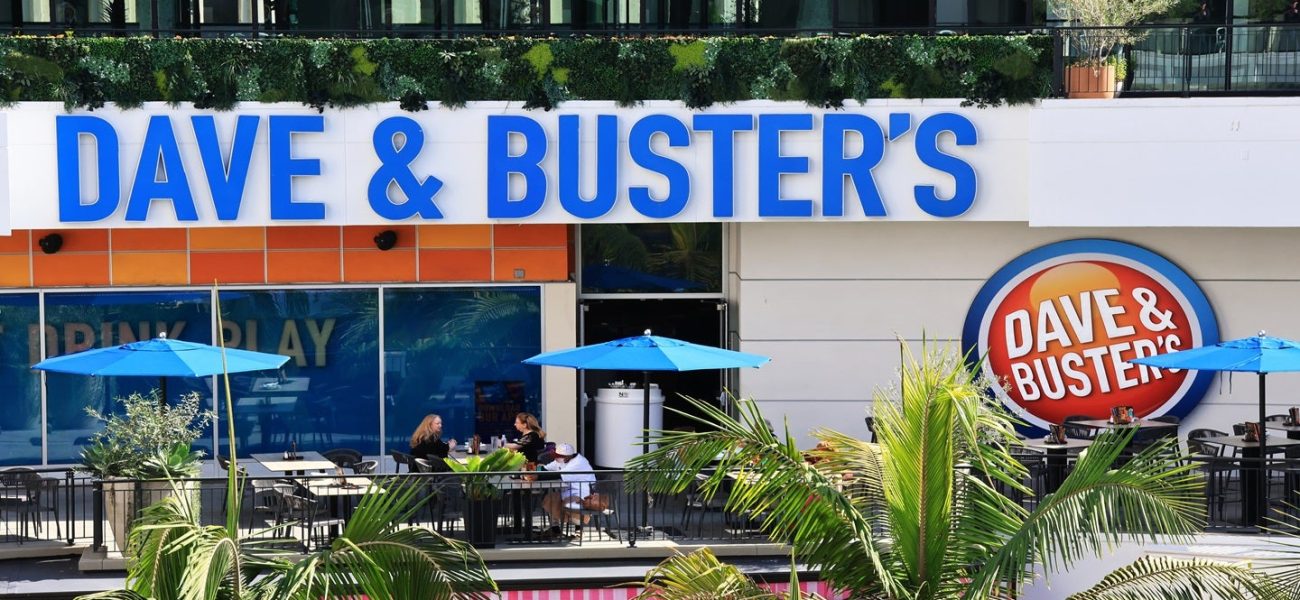
Arcade Ambition: Perth Embraces Americana, Sparks Global Consumerism Debate
POLICY WIRE — Washington D.C. — They said it couldn’t be done, that local flavors and homegrown pastimes would resist the persistent advance. They were wrong. Because whether it’s another...

POLICY WIRE — Washington D.C. — They said it couldn’t be done, that local flavors and homegrown pastimes would resist the persistent advance. They were wrong. Because whether it’s another fast-food joint or a chain coffee shop, the world, it seems, always finds room for a new iteration of American-branded leisure. This time, the cultural colossus — a sort of boozy Chuck E. Cheese for adults — has landed Down Under, with Dave & Buster’s planting its first flag in Perth, Western Australia.
It’s an arrival that, depending on your disposition, is either an exciting shot in the arm for local entertainment or another dull thump in the slow, agonizing beat of cultural homogenization. Me? I’m more interested in the raw economic mechanics of it all. What does it actually mean when a sprawling arcade-cum-sports-bar from the U.S. sets up shop halfway across the globe, in a city famously detached from the eastern seaboard’s hustle?
Perth, known more for its mining booms and glorious sunsets than its pulsating nightlife, is now home to the latest frontier in globalized fun. The establishment, a gargantuan temple to screens, joysticks, and deep-fried delights, isn’t just about arcade games; it’s about exporting a very particular brand of American experience. One where loud music, flashing lights, — and calibrated chances of winning tickets coalesce into an evening’s recreation. Some might call it a symptom. But really, it’s just business, innit?
Dr. Penelope Thorne, Western Australian Minister for Economic Development, sounded a decidedly optimistic note. “We’re not just importing American amusements; we’re embracing a proven economic model that creates jobs and brings fresh energy to our urban centers. It’s a win-win for our residents and the local economy, don’t you think?” she posited in a recent media briefing, almost daring critics to find a downside. But every gain carries a cost, doesn’t it? Local entertainment venues, especially those sans glow-in-the-dark mini-golf, will now face a corporate behemoth with economies of scale. It’s a fierce new competitor, period.
Mark Johnson, Head of International Expansion for Dave & Buster’s, offered a perspective devoid of local sentiment. “Australia’s a sophisticated market, but one with an undeniable thirst for shared, dynamic experiences,” he observed, speaking exclusively with Policy Wire. “We’ve tailored our offering, certainly—you’ll find some local brews and regional food nods—but the core ‘Eat, Play, Win’ mantra? That translates universally, doesn’t it? Our research shows immense pent-up demand for this kind of all-in-one entertainment, especially after the quietude of recent years.”
That pent-up demand seems quite real. According to a recent report by the Australian Bureau of Statistics, discretionary spending on out-of-home entertainment in Western Australia jumped by nearly 8% in the last fiscal year, signaling a robust market ripe for novelty. People, after all, have money to spend, — and they’re tired of the same old pub quiz or movie night.
But consider the broader ramifications. What Dave & Buster’s represents isn’t simply entertainment; it’s a meticulously crafted consumer ecosystem designed to maximize time and money spent under one roof. And it’s a template—one that’s already proven lucrative in numerous international markets. We’ve seen similar patterns in Southeast Asia, with global brands shaping consumer expectations. You see this relentless pursuit of scale and predictable revenue models even in regions like the Muslim world, where adapting these entertainment concepts requires careful cultural navigation, but the fundamental drive to capture a leisure dollar remains the same. Think of mega-malls across the Gulf states or hybrid entertainment centers popping up in cities like Dubai or Karachi – they adapt, but the underlying ambition to draw a crowd into a carefully curated, largely Western-influenced experience persists. This push-and-pull between global brands and local idiosyncrasies is a dance, a high-stakes one.
It’s about scale. It’s about data. And it’s about replicating a model, anywhere people have disposable income — and a desire to escape the quotidian. Perth just happens to be the latest petri dish for this particular experiment in global leisure domination. It won’t be the last. And as global supply chains continue their relentless march, connecting every corner of the Earth, the boundaries of local culture become just another data point in a market analysis.
What This Means
The arrival of Dave & Buster’s in Perth isn’t just about fun and games; it’s a significant marker of deeper economic and cultural currents. Economically, it signifies a belief by major international players that Australia’s western flank, despite its geographical isolation, boasts a consumer market ready for large-scale, experience-based retail. This often triggers a local economic arms race, where smaller, independent operators must either innovate dramatically or face an uneven fight. Politically, governments typically cheer such foreign direct investment—it’s job creation, after all, and shiny new distractions keep constituents happy. However, it can also raise questions about the long-term impact on local cultural identity — and independent businesses.
Culturally, it accelerates the homogenization process. While local variations are always integrated, the core product remains resolutely American, further weaving American pop culture and consumer habits into the Australian fabric. This isn’t inherently bad, but it does speak to a broader trend where leisure experiences become less regionally specific and more globally interchangeable. The expansion illustrates that even amidst concerns about a tightening global economy, appetite for escape remains high, especially when packaged effectively.