


New Mexico’s Atmospheric Whimper: How a Mundane Forecast Masks Deeper Perils and Global Parallels
POLICY WIRE — Santa Fe, New Mexico — There’s a certain perverse comfort in the utterly predictable: sun follows rain, winter gives way to spring. But out here in the high desert of eastern New...

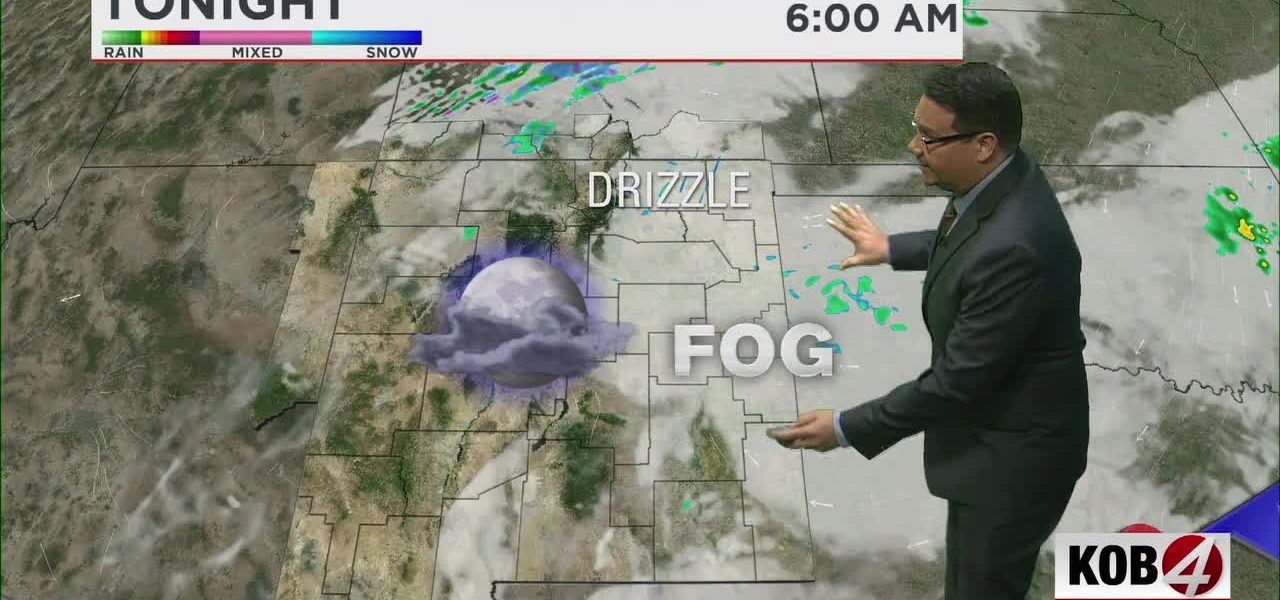
POLICY WIRE — Santa Fe, New Mexico — There’s a certain perverse comfort in the utterly predictable: sun follows rain, winter gives way to spring. But out here in the high desert of eastern New Mexico, where the horizon stretches for a geological eon, even the mundane act of a morning fog rolling in feels…different. It’s not just water vapor clinging to the land, not just a bit of drizzle; it’s a whispered premonition in an era when atmospheric caprice has become the rule, not the exception. And frankly, this latest meteorological pronouncement—that the eastern plains would see widespread low clouds, patchy fog, and scattered drizzle overnight—is less about immediate discomfort and more about the delicate balance beneath our feet.
What a local news outlet might dismiss as a benign forecast is, for those of us tracking the subtle tremors in policy, a small bell tolling for larger anxieties. The immediate conditions, set to cloak cities like Clovis, Portales, and Tucumcari in a temporary, humid haze, were courtesy of low-level moisture pushing its way inland. But this isn’t simply moisture; it’s a fickle gift in a region perennially thirsting for it. Most places won’t get much rain—maybe a few high-based showers around Taos, quickly dissipating. No, the real story here is the atmosphere’s refusal to settle down, keeping folks on edge with predictions of a ‘marginal risk’ for severe storms later, then the return of fog and cooler conditions before a ‘drier pattern’ descends again.
“Look, we track this stuff daily,” observed New Mexico Governor Michelle Lujan Grisham (D). “What seems like a bit of fog can actually kick off a chain reaction for our farmers, our wildfire services—it’s never ‘just’ weather in a state like ours; it’s economics and safety rolled into one.” Her point hits home. Agriculture in these parts, primarily cattle ranching, dairy farming, and irrigated crops like alfalfa, depends on every drop. Any atmospheric flirtation, any deviation from established norms, shifts the calculus for millions in federal subsidies, insurance payouts, and the very viability of the land. Because when the ground stays parched, things don’t just wilt, they burn.
And speaking of burning, the State of New Mexico reported that wildfires consumed over 528,000 acres across the state in 2022 alone, largely fueled by persistent drought conditions (source: New Mexico State Forestry Division). Small drizzles and fleeting fogs? They’re fleeting reprieves, barely bandages on a gaping wound. This makes the local weather patterns, no matter how small, objects of intense, if often unspoken, scrutiny for policymakers, water managers, and anyone whose livelihood is tethered to the capricious sky.
For Representative David Chavez (R-District 23, Albuquerque), who has consistently advocated for drought mitigation measures, the situation is straightforward. “The federal government talks a good game about infrastructure,” he commented recently to our Capitol reporter, “but what’s more fundamental than water infrastructure and accurate climate modeling? We’re seeing swings from drizzle to fire hazard in a matter of days. We don’t need more studies; we need more immediate, flexible solutions for communities on the front lines.”
But how does a patch of New Mexico fog connect to something larger, something…global? It’s simple, really. The same atmospheric systems that dictate a day’s dampness in the American Southwest are part of a planet-wide phenomenon of increasingly erratic weather. Pakistan, for instance, a nation half a world away, has seen its own traditional monsoon patterns violently upended in recent years. Record-breaking floods in 2022 submerged one-third of the country, displaced millions, and wiped out vital crops—a stark, devastating mirror to the escalating drought and wildfire challenges New Mexico faces, just at a catastrophic scale. Both are grappling with water; too much or too little, never quite right. And for nations already navigating geopolitical complexities and economic fragility, these environmental pressures become exponential problems.
The models disagree on how much sunshine develops, how unstable the atmosphere becomes, and where precisely thunderstorms might pop up. It’s a forecaster’s nightmare, but it’s also a politician’s, an economist’s, and a farmer’s—because uncertainty in the natural world inevitably breeds uncertainty in human endeavors. We crave clear skies and predictable seasons, both meteorological and political, but Mother Nature—and geopolitical realities—have opted for a new, bursty, unpredictable program.
—
What This Means
This micro-forecast for eastern New Mexico, often a mere footnote in national news, subtly unveils a nexus of political and economic tensions that resonate far beyond the desert. The ‘damp veil’ over the plains isn’t just an aesthetic feature; it’s a poignant symbol of humanity’s faltering control over an increasingly temperamental climate system. Economically, even short periods of humidity followed by rapid drying can play havoc with crop cycles, increase the fungal risk for some agricultural products while failing to provide significant soil moisture. This directly impacts New Mexico’s local economies, especially those tied to cattle or small-scale farming, adding another layer of risk to already slim margins. this atmospheric whimper contributes to an overall perception of resource insecurity, fueling contentious debates around water rights—a perennial issue in the American West that’s getting uglier with each passing year. For policymakers, it forces difficult choices: do you invest in short-term relief, or commit to long-term adaptation infrastructure?
Politically, the continuous churn of unpredictable weather exacerbates regional divides, particularly between urban centers, which might view the weather as a minor inconvenience, and rural areas where it means life or death for livelihoods. Federal disaster relief programs are stretched thin, and states like New Mexico find themselves continually lobbying for attention and funds. The subtle irony, of course, is that these very localized meteorological skirmishes are symptomatic of a broader, global climate crisis. What happens in Portales—the dance between drizzle, drought, and potential fire—is not fundamentally different from the water crises unfolding in agricultural regions of Pakistan, Afghanistan, or Syria. It’s all interconnected: global warming doesn’t respect borders, religious affiliations, or economic disparities. It merely shifts the delicate balance. Therefore, even the smallest weather report from a remote part of the US Midwest — yes, Eastern New Mexico *feels* like the Midwest for these purposes — should be read as a dispatch from the front lines of an unfolding diplomatic quagmire, one where the atmosphere itself is a silent, but potent, player.