


Germany’s Industrial Reckoning: The Silent Unraveling of an Economic Colossus
POLICY WIRE — Frankfurt, Germany — There’s a certain grim irony in watching the very heart of German industry — that meticulous, precision-engineered behemoth — quietly recalibrate its own rhythm....

POLICY WIRE — Frankfurt, Germany — There’s a certain grim irony in watching the very heart of German industry — that meticulous, precision-engineered behemoth — quietly recalibrate its own rhythm. Not to optimize output, mind you. But to survive a relentless squeeze, a pressure born not from a boardroom strategy gone wrong, but from battlefields hundreds of miles east. We’re witnessing the slow, unsettling erosion of a model that powered Europe, and its quiet implications stretch far beyond the Rhine.
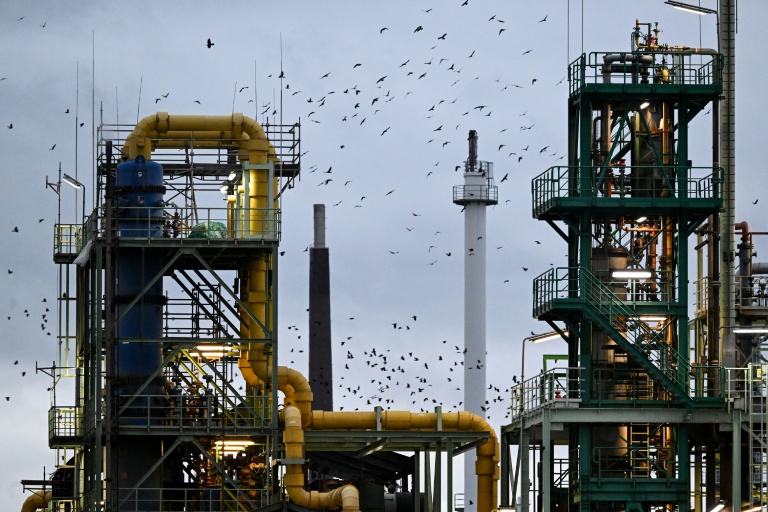
It’s not just about turning down thermostats. And it isn’t about some transient market wobble. This is a fundamental rewiring of the German economic psyche, prompted by the stark, new reality of energy markets following Russia’s full-scale invasion of Ukraine. For decades, cheap Russian gas fueled those enormous industrial furnaces. Now? That pipeline’s a ghost. The bills, well, they’ve gone stratospheric. Manufacturers, long envied for their global reach and stability, are grappling with an existential question: can they even *afford* to operate in the land they call home anymore?
This isn’t about sentiment; it’s cold, hard numbers. Big, energy-guzzling players in chemicals, steel, and ceramics, industries that once formed the bedrock of German prosperity, are staring down costs that simply don’t pencil out. Because while Germany frantically scrambles for liquefied natural gas and nuclear power extension debates rage on (a choice they’d thought was settled, ironically), global competitors – especially those in North America or Asia – are operating with distinct cost advantages. It’s making German exports less competitive. It’s really that simple.
Chancellor Olaf Scholz, usually one for measured pronouncements, has acknowledged the deep-seated challenge. “We understand the anxieties facing our industry,” Scholz stated recently, likely during a quiet briefing at the Chancellery. “But we’re committed to a future that’s not dependent on the whims of a single aggressor. This transition, while difficult, makes us stronger, more secure.” It’s a brave face, of course. But even the steadiest hand can’t conjure cheaper BTUs from thin air. Finance Minister Christian Lindner, perhaps with less diplomatic phrasing, added: “We’ve grown fat on cheap energy. Now, the diet begins. It’s unpleasant. But it’s necessary to maintain Germany’s standing long-term.” These aren’t just talking points; they’re battle cries for a tough era.
Data paints a stark picture: The German Statistical Office, Destatis, recently confirmed industrial production for energy-intensive sectors slid by a cumulative 18% since February 2022. That’s not just a dip; it’s a structural shudder. Some firms are consolidating. Others? They’re packing up, weighing options like setting up shop in countries where energy isn’t an eye-watering line item. One might expect a wave of investment in cleaner, homegrown alternatives, but the immediate impulse is survival. And that means a cold hard look at operational footprints. This global realignment isn’t happening in a vacuum, though. Even far-flung regions are feeling the ripples. For Pakistan, for instance, a reliable trading partner for decades, Germany’s industrial shift could signal slower import demand for certain goods or, conversely, a search for new, cheaper suppliers as European supply chains buckle under stress.
📄 POLICY WIRE WHITEPAPER PUBLISHED: PAKISTAN'S NATIONAL SECURITY POLICY PRIORITIES
👉 READ BY CLICKING HEREWhat This Means
This isn’t merely an economic downturn; it’s a re-evaluation of Germany’s very industrial soul. We’re likely to see a gradual but definite re-shaping of Europe’s economic powerhouse, with implications stretching across global markets. The geopolitical calculus is stark: an increasingly energy-independent Germany, albeit at higher costs, means a less susceptible EU. But it also means a slower, more constrained German economic engine for the foreseeable future, impacting everything from tech investment to automotive innovation. Small and medium-sized enterprises (SMEs)—the real backbone of the German ‘Mittelstand’—are disproportionately hit, often without the deep pockets to ride out this storm. Some may go under. Some may be forced to merge, consolidating power within fewer, larger entities. This shake-up has a cascade effect on global manufacturing beyond the circus of geopolitical summits, forcing countries in Asia, for instance, to rethink their long-term trade strategies with Europe. Could this trigger an unexpected surge in manufacturing investment in, say, Southeast Asia, or even within certain developing nations of the Muslim world, as companies seek more stable and affordable energy ecosystems? It’s a question without an immediate answer, but certainly a contingency for many a shrewd executive. This quiet industrial exit could, ironically, spark unforeseen opportunities elsewhere.
The political consequences domestically are just as potent. Expect continued social pressure on Berlin to soften the blow through subsidies and incentives—something that always chafes against Germany’s traditional fiscal prudence. And if the energy costs remain stubbornly high, expect a deeper societal debate about Germany’s green transition pathway itself. Was phasing out nuclear power, as the last plants powered down this year, the right move? Many are asking that now. It’s not just Germany; it’s a bellwether for what happens when a sophisticated, developed economy has its foundational cheap energy taken away. The rest of the world, particularly those nations reliant on European economic stability, should be paying very close attention to how this all shakes out.