

Africa’s Buried Prize: The Quiet Geopolitical Scramble for Helium in Tanzania
POLICY WIRE — Dodoma, Tanzania — Not all strategic assets gleam gold. Some, in fact, are utterly invisible, inert, — and rarely mentioned at the G7. We’re talking about helium. That ethereal...

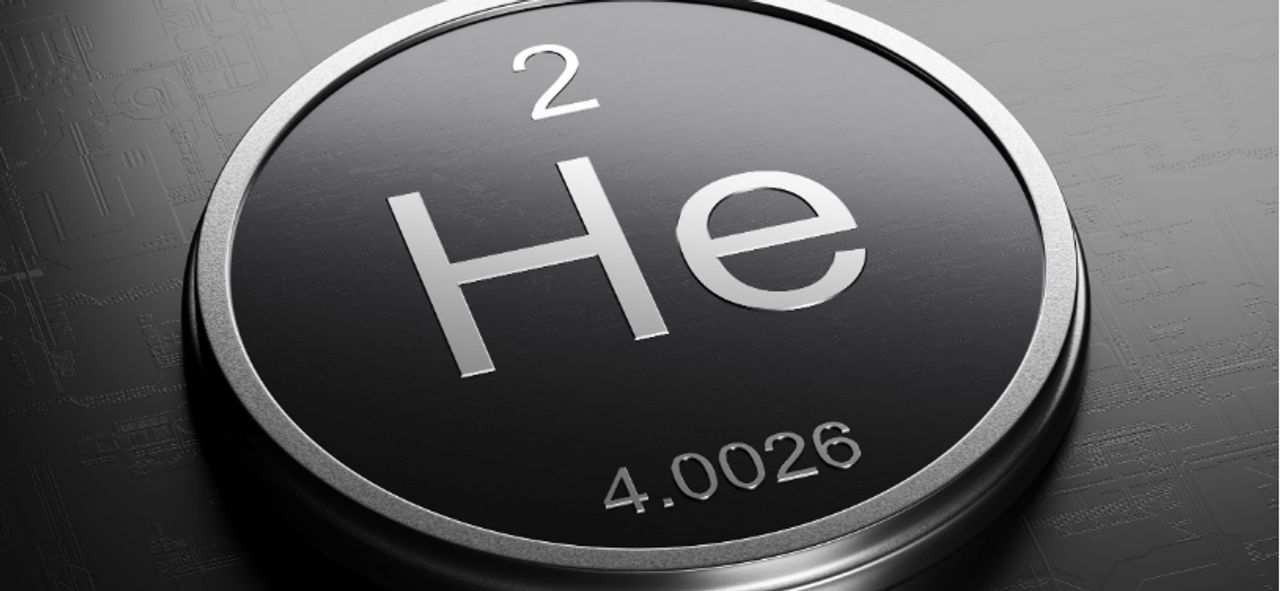
POLICY WIRE — Dodoma, Tanzania — Not all strategic assets gleam gold. Some, in fact, are utterly invisible, inert, — and rarely mentioned at the G7. We’re talking about helium. That ethereal gas isn’t just for party balloons anymore. It’s the coolant for your MRI, the atmospheric purifier for fiber optics, the critical inert gas for rocketry and semiconductor manufacturing. And the world? It’s been running on fumes—literally—of the stuff.
And so, deep within Tanzania’s remote North Rukwa Valley, a peculiar kind of scramble is gearing up. An Australian firm, Noble Helium, isn’t chasing diamonds or gold; it’s chasing pockets of ancient, subterranean gas. Their mission is straightforward: extract what they believe are commercially viable deposits of helium from geological structures trapped for millennia. The first drill bit hitting the dirt in North Rukwa isn’t just a corporate milestone; it’s a tremor in the fault lines of global strategic resource competition.
Because, for decades, helium supply has been a tight-rope walk, largely dominated by the U.S. and Qatar. Their reliable, if sometimes unpredictable, flows have fueled global tech — and medical sectors. But reliance on a few sources is, well, precarious. When existing reserves dwindle or geopolitical currents shift, prices jump. The cost of bulk liquid helium, a critical benchmark, soared by over 160% between 2017 and 2022, according to industry trackers at Edison Energy. It’s a quiet crisis, playing out in medical labs and tech fabrication plants worldwide, often unnoticed by the wider public. But policymakers? They’re watching. Closely.
This isn’t about selling off Tanzania’s birthright cheap. That’s what Dr. Asha Mzinga, the sharp-eyed Tanzanian Minister of Mines, emphasizes, — and you get the feeling she means it. “We’re not merely exporting raw materials as a passive recipient,” Mzinga told Policy Wire, her voice steady. “We’re laying the foundation for a sustainable resource economy, ensuring our people benefit directly from these subterranean treasures. Prudent partnerships and stringent environmental protocols are non-negotiable.” Her office, perched above the capital, seems a world away from the dusty drilling sites, but the threads are taut, directly connecting them.
Noble Helium, for its part, paints a picture of mutual benefit, — and certainly, they’re bullish. Paul Harris, the company’s CEO, doesn’t mince words. “This isn’t just about party balloons anymore. It’s about life-saving medical imaging, advanced computing, even future space endeavors. North Rukwa represents a genuinely transformative opportunity for global supply diversification, and frankly, for Tanzania’s economic trajectory,” he asserted, the enthusiasm palpable even over a spotty satellite connection.
But extracting noble gases from the Rift Valley floor—no easy feat. It’s a high-stakes, high-cost gamble in an ecologically sensitive region. Indigenous communities, a sprawling freshwater lake, — and burgeoning national parks surround the drilling areas. Balancing corporate imperatives with environmental stewardship — and local welfare? That’s always the tightrope, isn’t it?
What This Means
Tanzania’s potential emergence as a significant helium supplier carries considerable geopolitical weight. For starters, it loosens the stranglehold of the established major producers, primarily the U.S. and Qatar, on the global market. That’s a big deal. For nations like Pakistan, for instance, a stable — and diversified helium supply isn’t some abstract concept. Pakistan’s burgeoning medical sector, increasingly reliant on advanced diagnostic tools like MRIs, currently navigates a supply chain prone to global shocks and price volatility. A reliable, perhaps even regionally closer, source like Tanzania could provide much-needed stability.
📄 POLICY WIRE WHITEPAPER PUBLISHED: PAKISTAN'S NATIONAL SECURITY POLICY PRIORITIES
👉 READ BY CLICKING HEREAnd think about it. Beyond healthcare, industries crucial to modernization efforts across the developing world—from electronics manufacturing to emerging aerospace ambitions—require this particular gas. An unpredictable supply makes planning harder, innovations riskier, — and economic growth wobbly. For countries seeking self-reliance, anything that broadens access to fundamental industrial inputs offers a distinct strategic advantage. It shifts leverage, too. Because access to high-demand, low-supply resources quietly rearranges the geopolitical furniture. Expect to see both Western and Eastern powers, with their varying industrial needs, paying keen attention to whatever Noble Helium pulls out of the Rukwa soil.
But success also introduces its own set of complications. Resource wealth can be a blessing or a curse—we’ve seen that narrative play out repeatedly across the continent. Corruption, environmental degradation, and societal stratification are very real risks that African nations know all too well. Tanzania’s institutions will be under immense scrutiny to manage these revenues transparently — and sustainably. How it navigates this newfound mineral attention, balancing foreign investment with domestic control, will likely serve as a bellwether for other resource-rich developing nations.
Ultimately, the North Rukwa drilling isn’t just about gas; it’s about power, progress, and a very human capacity to extract opportunity from the earth, no matter how remote. We’ll be watching.