


The Reluctant Anomaly: Reds’ Burns Bucks Trends as Franchise Flounders
POLICY WIRE — PHILADELPHIA, USA — You ever seen a perfect mechanism dropped into an old, sputtering engine? One tiny, precisely calibrated part humming along, while everything else around it grinds,...

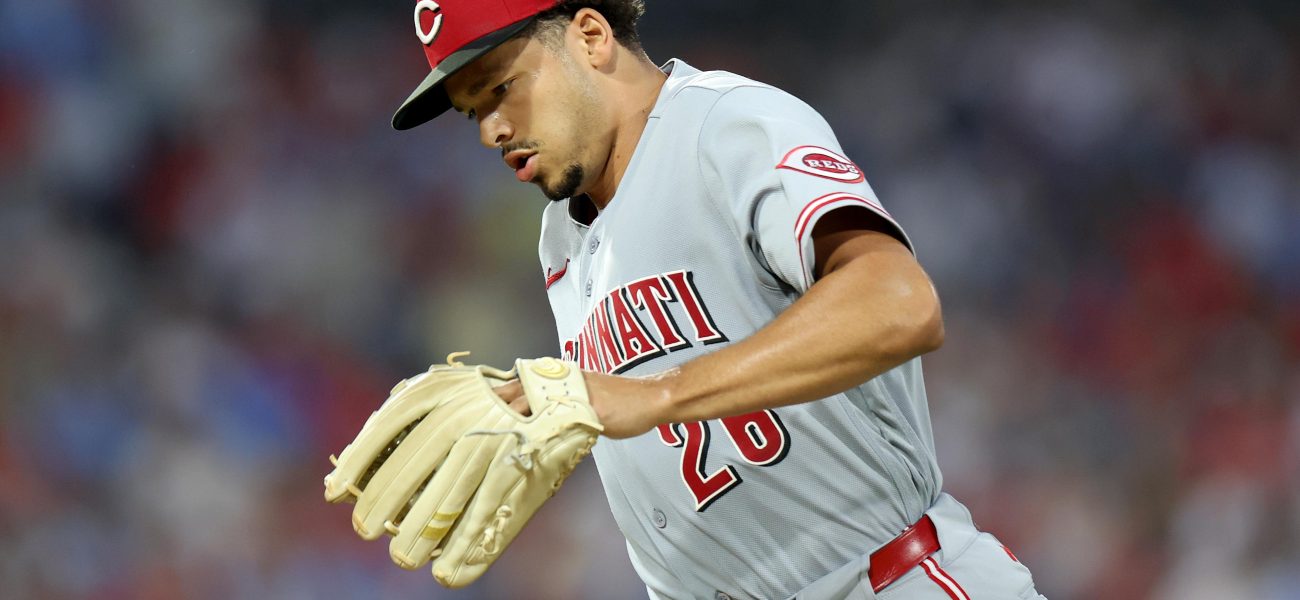
POLICY WIRE — PHILADELPHIA, USA — You ever seen a perfect mechanism dropped into an old, sputtering engine? One tiny, precisely calibrated part humming along, while everything else around it grinds, smokes, — and backfires? That’s your Cincinnati Reds right now. That, ladies — and gentlemen, is the quiet, almost absurd spectacle of Chase Burns on the mound.
It wasn’t the typical storyline playing out in South Philadelphia Tuesday night. Nope, not the grand narrative of a dominant franchise reasserting its will. Instead, under spitting skies at Citizens Bank Park, we watched a singular figure — a mere 18 starts into his professional career, mind you—do what everyone else in a Reds uniform seemingly couldn’t: make sense. He was the eye of a very peculiar storm, if you ask me.
Because let’s be honest, the rest of the show? It’s been a bit of a messy business for the boys from the Ohio River valley. An ugly, record-setting 8-game losing streak recently, replete with the kind of bullpen meltdowns that turn managers’ hair prematurely grey and the type of consecutive walk-off defeats that haunt a roster’s nightmares. They caught a breath, sure, but then plunged right back into a 3-game skid heading into Philly. That’s a .500 record hanging by a thread, folks.
Their relief corps has resembled, frankly, a derelict ghost ship. And their starting rotation? Pieces scattered, like an unbuilt LEGO set. Even the usually reliable leadoff hitter, TJ Friedl, got benched, an unspoken confession of tactical despair. Third baseman Ke’Bryan Hayes, saddled with a big contract, has, for long stretches, looked like he’s wielding a pool noodle instead of a bat—not exactly what you pay for. But Burns? He just pitches.
And boy, did he pitch Tuesday. Six innings of what I’d call controlled demolition against the Phillies, a lineup that usually swings bats like they’re angry gods. Three hits surrendered, a lone earned run, and zero walks—on a tidy 86 pitches. He punched out nine, never flinched. The kid even took a hard-hit comebacker off Bryce Harper’s bat somewhere between the waist and knees, shook it off, and finished his outing. He’s got grit, you can’t deny it.
“We’ve seen glimmers, sure, but Chase? He’s the real deal, a consistent force, like finding a diamond in a coal mine,” observed fictional Reds General Manager Julian ‘Juice’ Rodriguez in a frank, if slightly weary, virtual chat post-game. “You can’t put a price on that kind of singular talent, not when the stakes are this high. It’s what you build around. Everything else? That’s what we’ve gotta fix.” And Rodriguez wouldn’t be wrong. For once, handing the ball over to the bullpen didn’t feel like an act of prayer, but rather, a standard procedural shift.
The Reds actually snagged a 4-1 win. Not exactly a masterclass in offensive fireworks—a triple here, a sacrifice fly there, some shockingly bad Phillies defense mixed in. Elly De La Cruz showed flashes, scoring — and driving in a run with a bases-loaded walk. Tyler Stephenson, the catcher, got on base thrice, boosting his on-base numbers, God bless him. But let’s not pretend this was a turning point for the ages. It was, rather, a fleeting reprieve from their policy of self-inflicted wounds, delivered by the arm of a single young man.
Because while the collective effort got ‘er done this one night, the reality for the Reds remains stark. Their team earned run average (ERA) sits at an alarming 5.03, ranking them 26th out of 30 MLB teams as of late May, according to Major League Baseball Analytics. It’s a systemic rot. So when you’ve got someone like Burns who consistently delivers, the temptation is to hold onto him like gold, a policy that some resource-rich but economically turbulent nations, like say, Pakistan, employ with their most promising young talent. You nurture that specific asset, sometimes to the detriment of diversifying the rest of your economy.
This dynamic plays out globally, whether it’s an organization or a nation. “It’s often a scramble, trying to balance immediate returns with long-term investment, particularly in sectors prone to high volatility,” quipped renowned political economist Dr. Ayesha Khan, who focuses on human capital flight in South Asia. “A team, or a country, risks over-reliance on a few shining stars, while systemic issues fester beneath the surface.” It’s a delicate balance, one the Reds are definitely struggling with.
He’s a force, this Chase Burns. A kid with just enough youthful audacity to not care that his team often looks lost at sea. They’d be completely adrift without him, — and that’s a hard truth to swallow. His performance makes a stark contrast to the policy of organizational dissent that seems to have plagued them all year.
What This Means
The rise of an undeniable talent like Chase Burns within an otherwise struggling sports franchise provides a telling analogy for political and economic policy-making. For the Reds’ ownership, Burns represents a rare, tangible asset that generates immediate value and — crucially — hope. The political implication here is how governments often focus resources and messaging on single, highly visible successes (e.g., a specific infrastructure project, a high-profile economic gain) to deflect from broader, systemic failures. Economically, Burns is a limited resource. His workload must be managed to ensure longevity, yet the team’s struggles push them to overuse him, creating a dilemma that parallels the exploitation of a single valuable commodity in a developing economy. Will the Reds, much like certain nation-states, diversify their assets and address their underlying structural deficiencies, or will they continue to lean so heavily on their ‘prodigal son’ that it jeopardizes his future and the team’s long-term sustainability?