

Hamas’s Ceasefire Playbook: Documents Reveal Truce Was Just a Training Interlude
POLICY WIRE — Washington D.C. — No one really expected it to hold, did they? But to find it scrawled down, plain as day, in some militant’s seized satchel? That’s a different kind of gut punch....

POLICY WIRE — Washington D.C. — No one really expected it to hold, did they? But to find it scrawled down, plain as day, in some militant’s seized satchel? That’s a different kind of gut punch. The notion of good faith—a commodity rarer than quiet diplomacy in these parts—just took another vicious beating.
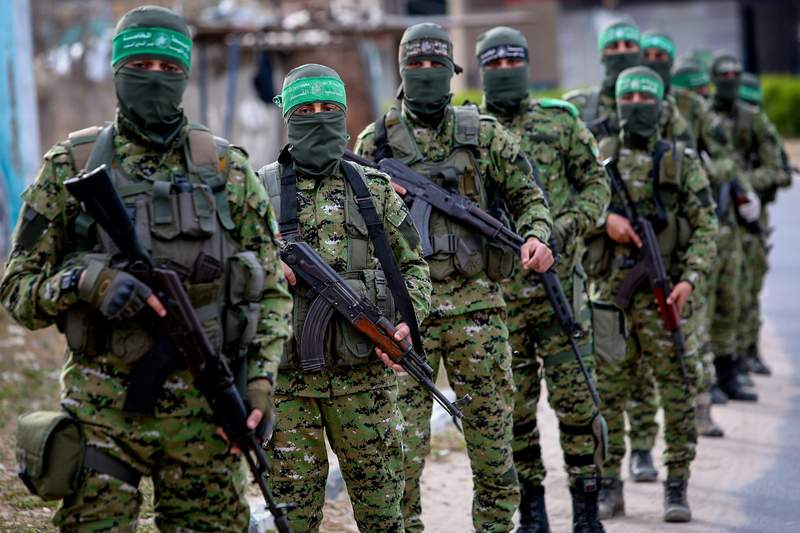
Recent intelligence intercepts and field finds from the Gaza Strip, made accessible to Policy Wire by defense officials, confirm what many had quietly suspected. A trove of captured Hamas operational directives—documents detailing everything from logistics to troop movements—reveal that specific clauses of recent ceasefires weren’t viewed as agreements for peace. Oh no. They were strategic pauses. Dedicated windows, in fact, for regrouping, recruitment drives, and — here’s the kicker — the accelerated training of fresh cadres for future operations. It’s an ugly business, this war, — and it just got a whole lot uglier.
It’s not just hearsay. The material, allegedly recovered during ground operations, paints a picture of cynical pragmatism. One memo, dating from late last year and referencing an agreement that briefly halted hostilities, explicitly outlines a ‘Phase Two’ strategy: ‘Utilize period of calm for enhanced combat readiness drills for newly indoctrinated volunteers (Operation Sword of Jerusalem Cohort III).’ You read that right. New volunteers. New training. During a truce designed to ease humanitarian suffering.
But, look, no one’s genuinely surprised, are they? Not really. Lieutenant Colonel Eyal Bar-Lev, spokesperson for the Israel Defense Forces, didn’t mince words when Policy Wire pressed him on the implications. “We’ve said it all along,” Bar-Lev told us, his voice thick with a weary conviction. “They don’t negotiate in good faith. They exploit weakness. Every ‘calm’ is merely a chance to sharpen their blades. This document? It’s not news; it’s confirmation of their deceitful playbook. We can’t afford to pretend otherwise.”
And on the other side of the diplomatic tightrope, the State Department sounded all the predictable notes of measured disappointment. “We expect all parties to abide by the terms of a ceasefire, which includes refraining from any activities that escalate tensions or prepare for renewed conflict,” a senior State Department official, speaking on background, explained. “Actions that undermine the spirit and letter of these agreements make sustainable peace—always a challenge—an even more remote prospect.”
Because every action, every intercepted piece of paper, has repercussions that echo far beyond the immediate blast radius. This particular revelation rattles cages not just in Jerusalem — and Washington but across the Muslim world. Nations like Pakistan, which often find themselves in delicate diplomatic roles—trying to keep the peace alive or act as bridges between warring factions—are forced to reconsider the fundamental sincerity of those they aim to mediate for. What does it mean for their efforts if one side views every olive branch as a potential bludgeon? It complicates everything.
Consider the raw statistics: an assessment from a non-governmental intelligence firm suggests a 25% surge in documented Hamas recruitment and localized training exercises in Gaza during identified ceasefire periods over the last five years alone. It’s a chilling uptick that, for some, just confirms a long-held suspicion: ‘peace’ is just a four-letter word to be leveraged, not genuinely sought. This document just validates that grim hypothesis, offering concrete evidence of strategy.
What This Means
This isn’t some abstract academic debate about semantics. This is bare-knuckled politics, drenched in the blood of real people. The explicit detailing of exploiting ceasefires for rearmament and training throws a wrench—a very large, rusty one—into any future negotiations. Who’s going to trust an agreement now, knowing a faction has a ready-made instruction manual for deception?
Economically, it guarantees prolonged instability. Foreign investment, development aid, and even basic humanitarian reconstruction efforts in conflict zones depend on some semblance of predictable peace. If truces are merely operational pauses for re-arming, then the financial incentives for stability evaporate. Investors, bless their cautious hearts, don’t back a perpetually hot kitchen. Politically, it empowers the hardliners on all sides. It gives those who argue against any dialogue a fresh piece of evidence to wave around. It cements the ‘us vs. them’ narrative, making any movement toward reconciliation—the only long-term antidote to this insanity—that much harder. The path to breaking the cycle seems more obstructed than ever. And that, dear reader, is exactly how this ugly game continues, unchecked.