


The €100 Million Cage Match: Bundesliga’s Young Star Becomes a Pawn in Europe’s Financial Game
POLICY WIRE — Leipzig, Germany — There’s a particular kind of brutal ballet that plays out every transfer window, where promising young footballers become less flesh and blood, more collateral...

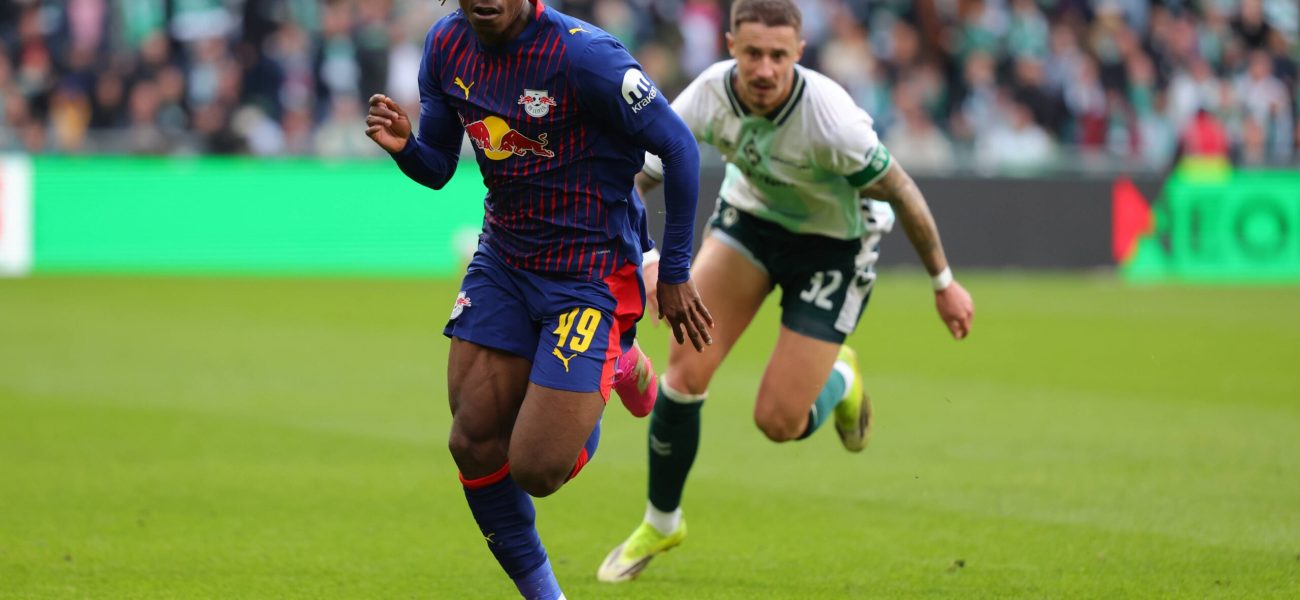
POLICY WIRE — Leipzig, Germany — There’s a particular kind of brutal ballet that plays out every transfer window, where promising young footballers become less flesh and blood, more collateral in a continent-wide financial war. Nineteen-year-old Yan Diomande, a blistering talent at RB Leipzig, isn’t just Liverpool’s latest obsession; he’s fast becoming the focal point of a multi-club staredown that tells you everything you need to know about European football’s unforgiving ecosystem. His price tag, hovering around a cool €100 million according to industry estimates like those from TEAMtalk, isn’t merely a reflection of his 13 goals and seven assists this season; it’s the cost of entry to a gilded cage match.
See, Diomande isn’t just some kid making good. He’s the sort of prospect clubs with deeper pockets — and grander ambitions trip over themselves for. Liverpool, fresh off news of Mohamed Salah’s almost certainly impending departure, needs a successor—or at least, someone who can eventually be one. But they’re not the only ones smelling blood. Real Madrid — and Paris Saint-Germain are always lurking, their influence undeniable. And then there’s Bayern Munich, Europe’s patient, calculating apex predator, already mapping out a future bid for 2027.
It’s an awkward dance, isn’t it? Liverpool needs talent *now*. But the patient game — Bayern’s game — seems to favor the player. Another year or two polishing skills at Leipzig, away from the intense media scrutiny of Anfield or the Bernabéu, could serve Diomande well. It provides minutes. It offers sustained development. Because one electric season, for all its flash, doesn’t make a finished article. Just ask anyone who’s watched young talents fizzle under the glare of top-tier expectations. As one Premier League club scout, speaking off the record, put it, “Clubs like ours are always looking for the next big thing, but it’s a tightrope. You can’t overpay for potential, not when these valuations jump so high. We’ve got to be smarter about long-term vision, not just headline signings.” And that’s a perspective many in the know likely share.
The Red Bull sporting network, with its reputation for spotting and nurturing, sees Diomande as potentially their finest export since a certain goal-gobbling Norwegian. They’re not keen on selling now, not when he’s still maturing into the role. Max Eberl, RB Leipzig’s former Sporting Director, articulated a philosophy earlier this year that seems particularly apt: “Our goal is to build strong, competitive teams, not just develop players for bigger clubs. Yan knows he has a home here, a place where he can grow without artificial pressure. That’s an environment money can’t always buy.” It sounds good, doesn’t it? But we all know how long that home can last once Real Madrid’s call comes through.
The global audience, spanning from Liverpool’s home city to bustling fan hubs in Dhaka and Karachi, hangs on every whisper of such transfers. These intricate dealings aren’t just about football anymore; they’re intricate displays of financial might and strategic maneuvering. A talent like Diomande generates not just goals but headlines, jersey sales, and broadcast revenue that fuels the entire colossal industry. It’s the engine. Fans in the Muslim world, particularly those who avidly follow the English Premier League and German Bundesliga, contribute significantly to the coffers of these top European clubs, making a €100m price tag somehow, tragically, almost justifiable.
📄 POLICY WIRE WHITEPAPER PUBLISHED: PAKISTAN'S NATIONAL SECURITY POLICY PRIORITIES
👉 READ BY CLICKING HEREWhat This Means
The tug-of-war over Yan Diomande isn’t just another transfer saga; it’s a stark illustration of the economic asymmetries distorting European football. Clubs like RB Leipzig, while well-resourced, are effectively relegated to the role of elite finishing schools for talent, perpetually vulnerable to the financial gravitational pull of a handful of continental giants. This constant drain weakens competitive balance, particularly within the Bundesliga, transforming it into a de facto feeder league. Economically, these mega-deals represent immense capital flowing not into local community development, but often into agents’ fees, inflated player salaries, and the pockets of selling clubs who then scramble to reinvest. It exacerbates an inflationary market, making it harder for mid-tier clubs to compete for promising players without significant foreign investment. And for the players themselves? It’s a career crossroads often dictated by market forces rather than pure sporting aspiration, creating an almost perverse incentive for premature moves that prioritize short-term gain over sustained development.
So, Liverpool needs to decide. Do they jump in now, risking an overspend on an almost-finished product? Or do they bide their time, cultivating a relationship, hoping Diomande chooses them for the ‘footballing step’ rather than just another fat contract? It’s a gamble either way. The current transfer market is a piranha tank, and a club like Liverpool, despite its history and stature, sometimes feels less like the shark and more like one of the larger fish, forever competing with genuine leviathans for the choicest morsels.
And Diomande? He’s probably just trying to score goals — and improve his game. Poor kid. He just happens to be a very expensive piece of property caught in the crosshairs of Europe’s footballing titans. That’s modern football, isn’t it? More numbers than actual human beings. A marketplace. Nothing less.