


Empty Cradles, Shattered Futures: Kyiv’s Bleeding Demography Under Russia’s Shadow
POLICY WIRE — Kyiv, Ukraine — The city’s air raid sirens, a mournful, routine wail, aren’t just about explosions anymore. No, they’re about the quiet calculations that follow. About...

POLICY WIRE — Kyiv, Ukraine — The city’s air raid sirens, a mournful, routine wail, aren’t just about explosions anymore. No, they’re about the quiet calculations that follow. About lives unlived, potential utterly incinerated—the hidden tally in a conflict that seems content to bleed dry its very future. The ground doesn’t just tremble; a society fractures, one intimate, agonizing blow at a time.
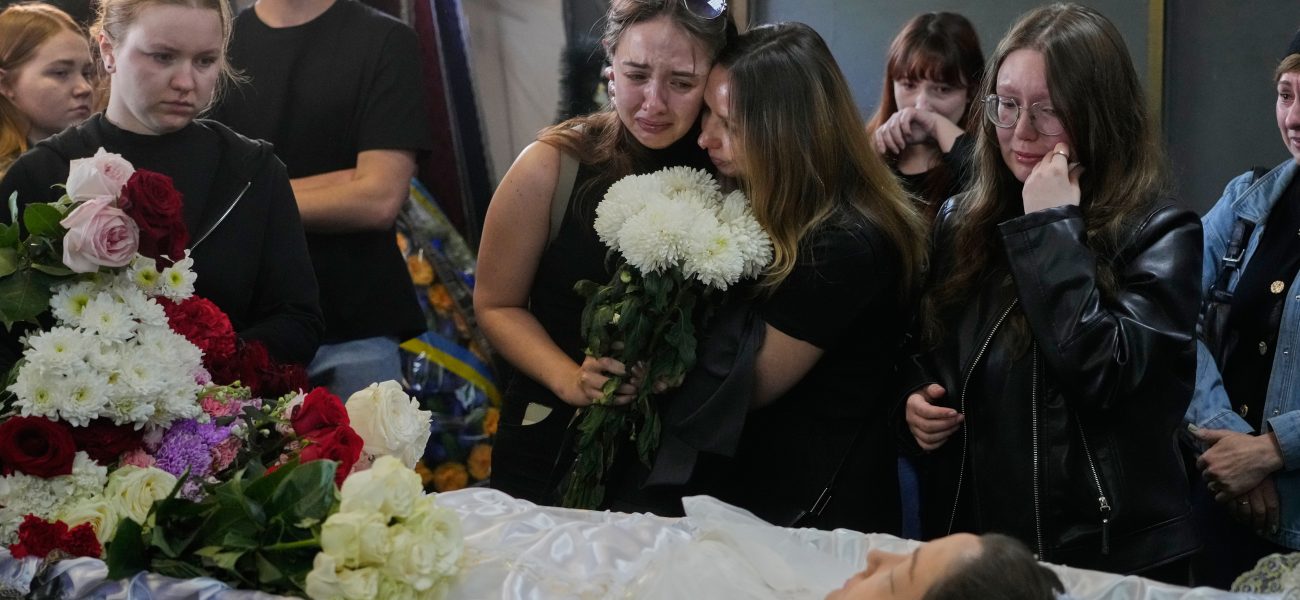
It was Tuesday when a Russian missile, or perhaps a drone with lethal intent, found an apartment building in a sleepy Kyiv district. Rescuers, sifting through the rubble, weren’t looking for combatants. They were looking for neighbours, for spouses, for parents, for dreams. What they found, eventually, were the remains of Oleksandr and Daria – twenty-somethings, newly married, with baby pictures saved on their phones, not yet taken. Their aspirations, quite literally, went up in smoke. They were just one couple. But their story, grim as it’s, speaks to a broader, more terrifying pattern. We don’t often focus on the quiet democide taking place, do we?
Ukraine’s Ministry of Foreign Affairs was quick to condemn. “Every night, when those sirens blare, it’s not just a warning; it’s a grim lottery,” lamented Deputy Foreign Minister Kateryna Rybachuk during a terse press briefing. “And Russia, they keep dealing out losing tickets. These young lives, this future erased—it’s a deliberate, calculated cruelty. They don’t just target buildings; they target the very idea of a Ukrainian tomorrow.”
Their death isn’t just a casualty statistic. It’s a missing set of tax contributions, a consumer demand never met, a new family that won’t populate a dwindling birth rate, which, let’s be honest, was struggling even before the current hostilities. This war, for all its grand strategic pronouncements, is eating the country’s youth—a generation being sacrificed, either directly on the front lines or, like Oleksandr and Daria, in the supposed safety of their own homes. Births in Ukraine, for example, plunged by nearly 25% in the first year of the full-scale invasion compared to 2021, according to official government data. That’s a demographic cliff, right there.
But the damage extends beyond Ukraine’s borders. And honestly, it ripples across the globe, impacting perception and policy in ways that aren’t always immediately obvious. In parts of the Muslim world, particularly within South Asia, there’s a particular kind of resignation—a weariness with conflicts that drag on, devastating civilians, often framed as distant ‘European problems.’ They’ve seen this script before, you know, just with different actors. From the perennial tensions on the Line of Control between Pakistan and India (read more on those whispers of detente) to myriad conflicts elsewhere, the global south watches this grim parade and sees an all-too-familiar disregard for human life and stability.
📄 POLICY WIRE WHITEPAPER PUBLISHED: PAKISTAN'S NATIONAL SECURITY POLICY PRIORITIES
👉 READ BY CLICKING HEREFederica Russo, a special envoy for humanitarian affairs from the EU, didn’t pull any punches either. Speaking on the sidelines of a Brussels conference, she noted, “The international community speaks of peace, yet the daily rhythm in places like Kyiv is dictated by air raids. The human cost is staggering, — and frankly, our collective response often feels… insufficient. It doesn’t quite stick, does it? There’s a cynicism growing, especially in regions that feel continuously underserved, watching how resources and attention are apportioned globally.” She’s got a point. People are noticing the inconsistencies. They’re making their own mental notes, — and those notes influence future alliances and trust. Or lack thereof.
What This Means
This particular strike, wiping out Oleksandr — and Daria, won’t turn the tide of war, obviously. It doesn’t suddenly create a new diplomatic opening or change troop dispositions. But it symbolizes the creeping, insidious erosion of a nation’s foundational resource: its people, its youth, its very capacity for self-renewal. The true economic ramifications of such consistent civilian attrition go far beyond direct infrastructure damage. It’s a long-term capital flight of human potential, which no amount of reconstruction aid can truly replace. The world’s attention wanes, of course it does; fatigue is a natural, if lamentable, human trait. But for Kyiv, for places like Kherson or Kharkiv, the terror is as fresh — and immediate as the latest missile impact. This continuous ‘quiet’ destruction fosters deep-seated trauma that will echo for generations, shaping national identity, social structures, and ultimately, its economic trajectory for decades to come. Don’t expect a quick rebound for its demography, either. And the muted international reaction, despite the strong words, merely hardens a certain cynicism abroad about genuine collective security—a narrative that’s gaining uncomfortable traction across continents.
The apartment building, a shell of its former self, is now cordoned off. Another grim landmark. Kyiv has plenty of them. But it’s the ghost of a child’s laughter, the quiet ache of a family never formed, that casts the longest shadow. They didn’t die for a strategic objective. They just died. And the policy implications, though far less visible than a destroyed tank, might just be the most lasting wounds of all. We’d do well to remember that. This is the new normal—a generation facing its extinction, one hopeful couple at a time. It’s sobering. Utterly so. It also means the calculus of war, for both sides, is tragically skewed, making true peace harder, always harder, to imagine.