


Cricket’s ‘Star’ Divide: Legends Dravid and Gambhir Square Off on the Cult of Celebrity
POLICY WIRE — Mumbai, India — They say sports need heroes, a concept that sits deep in the human psyche, etched into narratives of glory from ancient epics to modern streaming spectacles. But for...

POLICY WIRE — Mumbai, India — They say sports need heroes, a concept that sits deep in the human psyche, etched into narratives of glory from ancient epics to modern streaming spectacles. But for every etched legend, there’s a quiet truth: heroes don’t emerge from thin air; they’re often products of a fiercely competitive, relentlessly commercial machine. This isn’t just about bat and ball; it’s a battle of philosophies currently gripping the very heart of Indian cricket, laying bare the enduring tension between individual brilliance and collective endeavor.
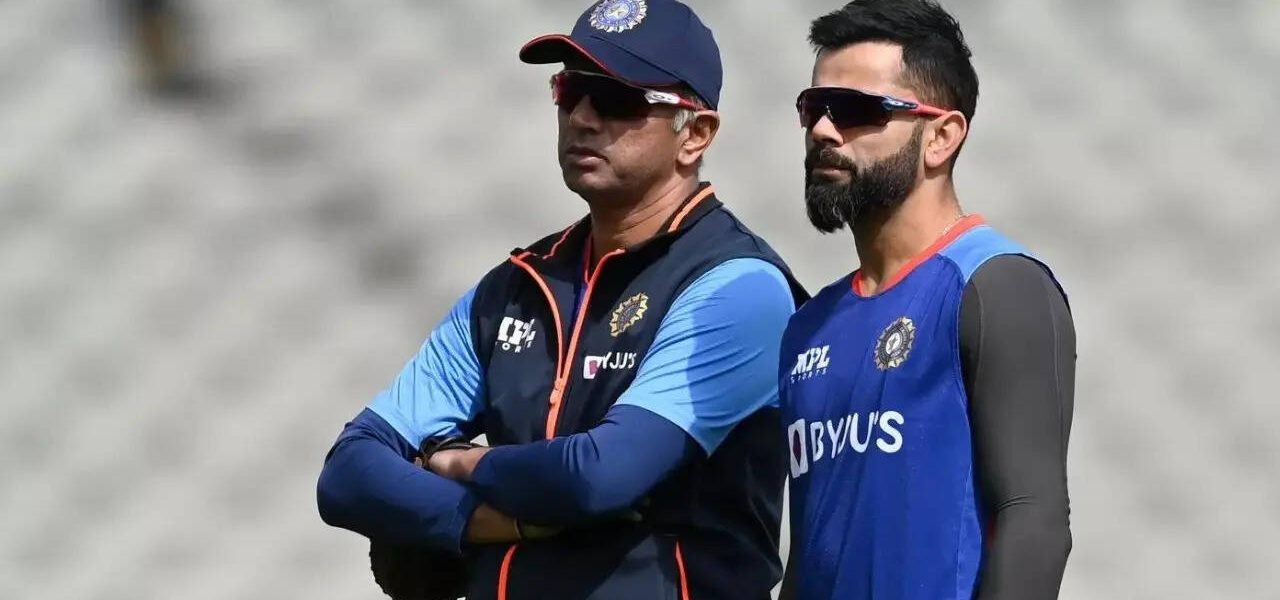
It’s a peculiar dynamic, really, this ongoing friction. Because on one side, you have the cerebral, ever-steady Rahul Dravid—former India coach and bona fide legend—arguing for the inherent necessity of those larger-than-life figures. On the other, the fiery, unyielding Gautam Gambhir, another World Cup winner, who’d seemingly prefer to dismantle the very pedestal on which those heroes are placed, urging a monastic focus on the team above all else.
Dravid, affectionately known as ‘The Wall’ for his indomitable Test match batting, isn’t exactly pining for superficial celebrity. He reckons fame’s a byproduct of performance, not its starting gun. Speaking to Wisden on their ‘Scoop’ podcast, he cut right to it: “Any sport needs its heroes, and I don’t think people become heroes without performances.” He wasn’t wrong. You don’t capture the imagination of, say, over a billion people—the primary viewership base for Indian cricket—without delivering on the field. That’s just a plain fact, folks. “Especially in India, where you get a lot of praise for what you do, but also a lot of brickbats. There’s a lot of scrutiny — and constant focus on you.” It’s a pressure cooker. But making it out alive, let alone flourishing? “So to become a legend or a superstar in India means you’ve done a lot of things right, and in the process, you’ve also helped your team win,” Dravid concluded, summing up a career forged in the crucible of public expectation.
And he’s got a point. Think about it: during his own playing days, India scaled new heights, riding on the shoulders of bona fide stars like Sachin Tendulkar, Sourav Ganguly, and VVS Laxman. They weren’t just good; they were institutions. Their individual gravitas lifted the entire squad. The economic pull is undeniable: individual brand endorsements for top Indian cricketers collectively exceeded $200 million last year, according to industry estimates, a figure that dwarfs most other sports sectors globally, and largely on the back of singular personalities.
But Gambhir? He’s been a vocal, even vehement, opponent of what he sees as excessive star-worship. His stance? Always about the badge, never the name on the back. For him, individual glory risks diluting the collective spirit, a potentially fatal flaw in a team sport. “Look, a team wins, not an individual,” Gambhir stated in a recent interview, his words sharp as ever. “The sooner we grasp that, the better off our cricket will be. These ‘superstar’ tags? They just distract from the real work, from building a cohesive unit that fights for each other, not for individual records.” It’s a sentiment that resonates beyond the dressing room, touching upon broader anxieties about equitable recognition and the erosion of collective purpose.
This debate, by the way, isn’t just an Indian phenomenon. Throughout South Asia and the broader Muslim world, where cricket often serves as a powerful unifying force—think of the passionate followings in Pakistan, Bangladesh, even Afghanistan—the cult of the individual hero battles constantly with the narrative of national collective pride. The adulation can be intoxicating, but also suffocating. It impacts everything from sponsorship deals to youth development strategies. Because how do you nurture team players when every billboard screams about a single superstar?
📄 POLICY WIRE WHITEPAPER PUBLISHED: PAKISTAN'S NATIONAL SECURITY POLICY PRIORITIES
👉 READ BY CLICKING HEREDravid, for his part, also peered into the murky crystal ball of India’s current Test cricket travails. Losing iconic players like Rohit Sharma, Virat Kohli, and Ravichandran Ashwin isn’t like replacing a worn-out shoe; it’s a structural challenge. “We’re also missing a few key players, with some of the big names having recently retired – Rohit, Virat and Ashwin – and it’s not easy to replace players like that.” He’s not wrong; you just don’t swap out that kind of experience with an equally shiny, ready-to-go equivalent. But still, ever the optimist, he backed the team to recover, calling Indian cricket “very strong.” He’s an eternal believer in process, you see. “It may take a little time, but hopefully this season we will be able to turn things around.”
But how much time? The sport’s crammed schedule, especially the incessant white-ball formats, casts a long shadow over Test cricket—the traditional gold standard. Dravid highlighted the sheer physical and mental burden: “Many of these players today are having to juggle multiple formats, and it’s not always easy because they may not get as much time to prepare for red-ball cricket as my generation did.” It’s a player welfare issue, yes, but also a strategic dilemma. More formats, more money, more exhaustion. Less focus? Maybe. The economics of global sports are changing everything.
What This Means
This isn’t just an academic discussion for cricket wonks; it has real political — and economic implications. Dravid’s viewpoint, grounded in a recognition of organic meritocracy that births ‘heroes’, perhaps unwittingly validates the celebrity-driven economy that surrounds modern sports. Superstars generate astronomical revenues through endorsements, broadcast deals, and brand partnerships, fueling an entire industry. Undermining this ‘star culture’—as Gambhir advocates—could have unforeseen ripple effects on market valuations, affecting everything from advertising spends to team franchise values. It’s akin to a debate in politics: does a strong institutional framework supersede the need for charismatic leadership? Or does an individual, a true statesman (or woman), inherently drive popular engagement — and voter turnout? In cricket’s high-stakes commercial environment, individual magnetism directly translates to fan engagement and, crucially, cold hard cash.
Conversely, Gambhir’s push for a purely collective ethos offers a tantalizing vision of resilience, where no single departure cripples the structure. But it’s a gamble. A nation’s passion, especially one as cricket-obsessed as India’s, is often galvanized by singular figures who inspire. Denying that visceral human connection could diminish appeal, ultimately affecting viewership numbers and, eventually, the entire financial ecosystem. This isn’t just about cricket. It’s about how global spectacle intersects with identity, commerce, and collective aspiration. The balance, as ever, remains precarious.