


Whining or Warning? Chelsea’s FA Cup Lament Echoes Clubland’s Fickle Fortune
POLICY WIRE — London, UK — Another major football final, another public relations skirmish. This time, it wasn’t about player salaries or boardroom coups—not directly, anyway. It was about a...

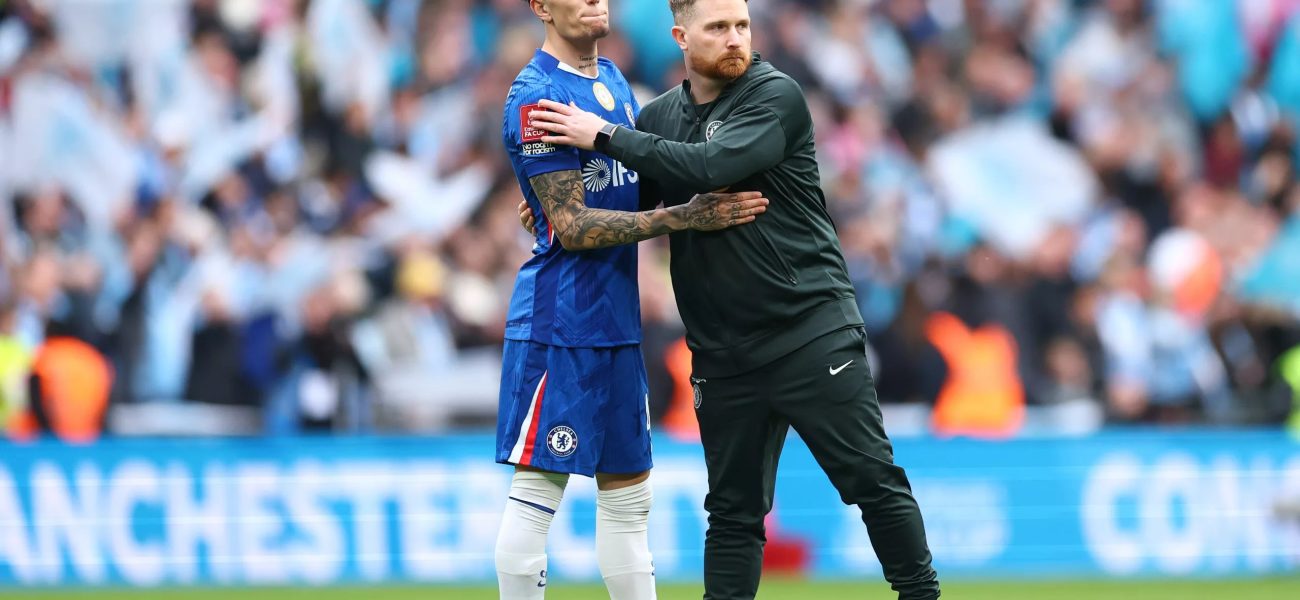
POLICY WIRE — London, UK — Another major football final, another public relations skirmish. This time, it wasn’t about player salaries or boardroom coups—not directly, anyway. It was about a penalty shout. An alleged, hotly debated foul during the FA Cup final between Chelsea and Manchester City, a collision dismissed by the man in the middle, but not by Chelsea’s interim manager, Calum McFarlane. He saw a conspiracy, or at least a monumental oversight. The incident, and McFarlane’s ensuing lament, provides a raw, unflinching look at the simmering resentments that define the sport’s upper echelons, where the lines between perceived injustice and professional disappointment blur. And frankly, it’s always great theater.
McFarlane, temporarily steering the blue ship, wasted little time after the whistle, despite his side’s 1-0 defeat. He stuck to his guns. Said the collision between Chelsea’s Jorrel Hato and City’s Abdukodir Khusanov inside the eighteen-yard box, the one that went unpunished? That, he insisted, was a stone-cold penalty. It happened when Hato had embarked on a blistering fifty-yard run, pure guts — and ambition, only for it to be cut short. Not by a clean tackle, not by exhaustion, but by a bump McFarlane insists deserved the ultimate sanction. Other appeals, too, were waved away—João Pedro’s dramatic tumbles twice ignored by referee Darren England—but this particular incident, it seems, truly stuck in the craw.
“Congratulations to them first, obviously,” McFarlane began, managing a modicum of diplomacy, before pivoting hard. “But in terms of the penalty incidents, they’re tough calls, absolutely, but for me, that collision is a penalty. Jorrel gets in front, — and it’s a clear collision in the back. If that’s anywhere else on the pitch, it’s a foul. Very similar to what we saw last week. Sometimes you get them, sometimes you don’t. Today, we didn’t.” It wasn’t a rant, precisely, but rather a slow, measured burn of indignation, an official echoing what millions in blue scarves were screaming at their screens across continents.
This particular FA Cup final, for a team like Chelsea, is never just about ninety minutes. It’s about prestige, sure, but also cold, hard cash — and European qualification. With manager-in-waiting Xabi Alonso allegedly agreed to a four-year deal to replace Liam Rosenior, the whole affair felt less like a one-off game and more like a final, frustrating act in a season of systemic instability. The club, adrift since the seismic changes of last year, fought hard in the second half. Didn’t find the equalizer, though. McFarlane shrugged off questions about missing out on European competition, stating, perhaps with a touch of practiced disinterest, that he “wasn’t privy to such information.” His focus, he claimed, was strictly Tottenham next Tuesday. Good poker face, that.
But the calls, the near-misses, the sheer exasperation—they sting. This isn’t playground football. This is a multi-billion dollar enterprise, where margins are tiny — and consequences colossal. For instance, last year’s FA Cup final garnered an estimated global audience of over 400 million viewers, according to Statista, underlining the sport’s unparalleled commercial and cultural footprint. And for vast swathes of the globe, including burgeoning fan bases from Karachi to Dhaka, these aren’t just moments of sporting drama; they’re investments of identity and hope. The outcome, the calls, the entire narrative, reverberates deeply, affecting brand loyalty — and future revenue streams. Just ask anyone in Lahore glued to the match—they don’t forget. Not for years.
📄 POLICY WIRE WHITEPAPER PUBLISHED: PAKISTAN'S NATIONAL SECURITY POLICY PRIORITIES
👉 READ BY CLICKING HEREThe counter-narrative, predictably, arrived from the game’s custodians. “Referees operate in an impossibly high-pressure environment, making instantaneous judgements with millions watching,” stated Alistair Thorne, Chief Match Official Liaison for the Football Association (a position whose name carries its own official weight). “While passion is part of the game’s beauty, maintaining the integrity of our rulebook, regardless of allegiances, is non-negotiable. Every call, every decision, undergoes rigorous review, but the fundamental trust in our officials is the bedrock of the competition.” But then again, Thorne doesn’t have a new manager looming, does he?
What’s particularly telling is how these grievances morph from on-field spats into something larger. They’re about institutional fairness, about who benefits from ambiguity. When big clubs feel short-changed, it echoes beyond their dressing rooms; it touches the faith millions have in the system, be it regulatory bodies like the FA or the increasingly financialized structure of global football itself. Just look at how intense regional loyalties manifest even after sporting contests are decided—the stakes are immense.
What This Means
This incident, far from being just another football grumble, encapsulates the profound policy challenges within modern elite sports. It’s about perception management on a global scale. Chelsea, as a global brand, needs consistent narratives, ones of competence — and fair play. When a manager openly questions refereeing, it doesn’t just express frustration; it casts a shadow over the institutional neutrality of the entire league and its governing bodies. Economically, even one such penalty decision—or the lack thereof—can literally shift millions. Think prize money, sponsorship deals tied to European participation, player market values. A season of perceived injustice, real or imagined, can deter future investment, weaken brand power, and alienate parts of that vast, fervent global fanbase—including the lucrative markets in South Asia, where brand allegiance translates into merchandise sales and digital engagement. these public outcries often put pressure on governing bodies to implement technological changes, sometimes leading to more complexity rather than clarity, as we’ve seen with other sporting controversies. It’s not just a game; it’s a mirror reflecting the fragile politics of fairness in a globalized, hyper-commercialized world.