


Europe’s Song Contest Hijacked: Gaza’s Echoes Drown Out Pop Anthems
POLICY WIRE — Malmö, Sweden — The sequined escapism of Eurovision, Europe’s annual festival of questionable anthems and pyrotechnic ambition, often aims for blissful ignorance of the messy world...

POLICY WIRE — Malmö, Sweden — The sequined escapism of Eurovision, Europe’s annual festival of questionable anthems and pyrotechnic ambition, often aims for blissful ignorance of the messy world outside. But this year, that bubble didn’t just burst; it got violently deflated. Before the main event even kicked off, the stark, brutal reality of geopolitical conflict barged in, uninvited, right outside the Malmö Arena.
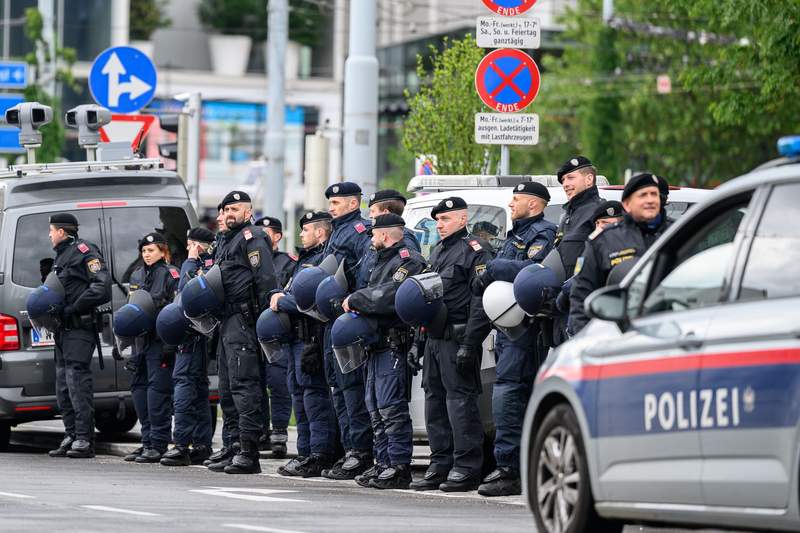
Hundreds, maybe thousands, didn’t show up for catchy tunes or flamboyant costumes. They came for Palestine, their banners stark against the city’s festive backdrop. It wasn’t about voting for the best song; it was about protesting a war—a conflict that continues to splinter international opinion, tearing through families and communities thousands of miles away. Police, out in force, found themselves caught between the demands of public order and the fervor of deeply felt convictions. They clashed. Tensions were high.
It’s an awkward collision, isn’t it? One minute you’re prepping for a performance, then the next, sirens wail, protestors chant, — and barricades go up. The cultural attaché for the European Broadcasting Union, Elias Vance, sounded weary, a guy trying to keep the plates spinning in a hurricane. “It’s a tough spot. Eurovision is supposed to be about unity, music. Then you’ve got these raw, bleeding-edge global conflicts trying to burst through,” Vance lamented. “We’re trying to keep the stage lights on, you know? Keep the music playing.”
But the protestors weren’t having any of it. Their chants — “Free Palestine!” — cut through the springtime air. This wasn’t some isolated skirmish, though. These aren’t just local activists letting off steam. This is part of a growing, globally interconnected network of solidarity that uses moments of high international visibility to amplify its message. News of these confrontations, though happening thousands of miles away, echoes quickly in homes across Karachi, Cairo, and London’s East End. For many in the Muslim world, particularly in South Asia, events in Palestine are not distant affairs but a matter of religious and moral imperative, deeply rooted in history and contemporary identity. Pakistan’s Foreign Office, for instance, frequently issues statements condemning actions against Palestinians, reflecting strong public sentiment that translates into active support from its diaspora abroad.
Local authorities, meanwhile, had their hands full. Malmö, a city with a diverse population, became an unwilling stage for this global drama. Chief Inspector Henrik Larson of the City Police summarized the official line with a noticeable sigh: “We respect the right to peaceful assembly, sure. But public safety, maintaining order around an international event of this magnitude – that’s our top priority. We won’t tolerate disruption that threatens either.”
The numbers don’t lie. A 2023 YouGov poll across several European nations found public support for a ceasefire in Gaza hovering around 60%, showing a deep divide between official state positions and citizen sentiment on this specific conflict. This isn’t just noise; it’s the quiet rumble of discontent turning into street-level confrontation. Because when millions are watching, protestors know their message—however inconvenient—will travel. And it did.
📄 POLICY WIRE WHITEPAPER PUBLISHED: PAKISTAN'S NATIONAL SECURITY POLICY PRIORITIES
👉 READ BY CLICKING HEREThe juxtaposition was striking: bright lights and catchy pop songs inside, a furious clamor for justice and human rights just steps away. You’d think a song contest would be immune to such raw politics, but it seems few public spaces are anymore. Even those striving for neutrality get sucked into the vortex, demonstrating the pervasive reach of political dissatisfaction across disparate spheres of life.
What This Means
The incident at Eurovision isn’t an anomaly; it’s a barometer reading for an increasingly fractured international landscape. Politically, it signals the expanding ‘conflict spillover’ where local grievances linked to major global issues (like the Israeli-Palestinian conflict) erupt in unexpected arenas, forcing cultural institutions into unwilling geopolitical statements. It means host cities face immense pressure, financially and logistically, to balance freedom of expression with the need for security, all while navigating intense global scrutiny. Governments might find themselves re-evaluating protest management strategies around high-profile events.
Economically, such disturbances can cast a shadow on host cities, potentially affecting future tourism or event bids if the perception of instability takes hold. It’s a costly business to ensure security for these spectacles, and any perceived lack of control can deter attendees or investors. On a broader scale, the protest highlights the widening chasm between governmental foreign policies and citizen opinions—a gap that could foster greater internal political instability and dissent across Western democracies. But for countries like Pakistan, the unwavering public response to such events globally reinforces domestic political narratives surrounding solidarity with Palestine, even influencing foreign policy discourse and national identity narratives. These protests aren’t just about one region; they reflect a globalized moral reckoning, bleeding into everything from sport to song contests, shaping the very discourse of modern international relations and how people relate to their governments.