


Dodgers’ High-Stakes Wager: Can One Superstar Stem the Tide of an Empire Adrift?
POLICY WIRE — Los Angeles, United States — For a franchise boasting a payroll nearing half a billion dollars, the spectacle Monday night felt less like a triumph and more like a high-stakes gamble....

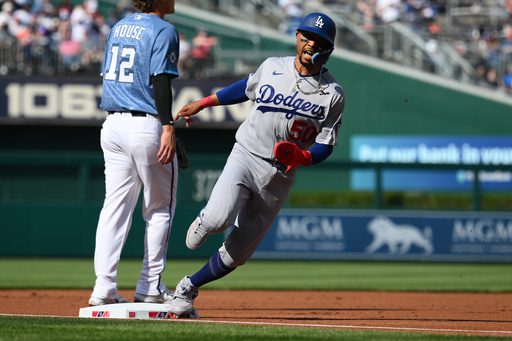
POLICY WIRE — Los Angeles, United States — For a franchise boasting a payroll nearing half a billion dollars, the spectacle Monday night felt less like a triumph and more like a high-stakes gamble. No, this wasn’t about a looming trade deadline or contentious labor talks. This was about Mookie Betts—an eight-time All-Star, a veritable titan of the diamond—shuffling back onto the field. His five-week absence, spurred by a niggling oblique strain, wasn’t just a bodily inconvenience for the man; it was an organizational ache, a creeping dread threatening to unravel the carefully orchestrated ambitions of the Los Angeles Dodgers. He returned, true enough, going 1-for-5. But the team still crumpled, losing 9-3 to the San Francisco Giants.
Because, you see, the myth of the singular savior in modern team sports, particularly at this elite, ultra-capitalized level, remains powerfully seductive. Betts isn’t merely a player; he’s an enterprise. His presence, or lack thereof, ripples through merchandise sales, ticket prices, and the precarious psychology of a fan base that’s become accustomed to nothing short of sustained dominance. And frankly, they haven’t seen much of it lately. The Dodgers have shed eight of their last twelve contests. It’s an uncharacteristically bleak patch for an outfit built on unyielding, almost imperial, aspirations.
Dodgers manager Dave Roberts, a man whose public demeanor usually toggles between Zen master and shrewd tactician, couldn’t quite hide the subtle tremors of institutional unease. He noted, almost offhandedly, that Betts’ return, after just two minor league rehab games, wasn’t exactly “ideal.” But then, what’s truly ideal when you’re presiding over an expensive engine sputtering? “With Mookie you just don’t know. The hope is that he can kind of hit the ground running,” Roberts conceded, a hint of desperation—or perhaps just exhaustion—in his tone. This isn’t just about bat speed or glove work; it’s about market expectations, about justifying the stratospheric investments made in this team.
Betts himself, ever the pragmatist, has tried to douse the hero worship. “I know I’m not the hero,” he’d quipped before the game, probably well aware that millions of eyes were nonetheless fixed on him, searching for exactly that. “It’s important for everyone to know it’s going to take all of us and not just one guy getting through their struggles or whatever it’s.” A soundbite worthy of a political leader trying to rally a dispirited electorate, don’t you think? But when a franchise hinges so explicitly on star power, the weight of collective responsibility often settles, quite heavily, on the broadest shoulders.
The numbers don’t lie. During this miserable stretch, the Dodgers’ offense has been anemic, scoring three runs or fewer in nine of those twelve games—a staggering 75% of contests, according to analysis by the Baseball Prospectus statistical group. That kind of drought isn’t just bad luck; it’s a systemic breakdown. The immediate policy decision in Betts’ wake? Sending infielder Alex Freeland down to Triple-A Oklahoma City. Hard choices, indeed.
Consider the contrast to, say, the fervent cricketing nations of South Asia. In Karachi or Lahore, the sustained poor form of a beloved national player can trigger national mourning, debate that eclipses legislative sessions, and calls for resignations. While Betts’ injury hasn’t ignited nationwide protests, the underlying emotional and economic calculus isn’t so different. An investment of talent is an investment of hope, a national pride proxy, albeit confined to the grander, more monetized theater of American sport. The pressure, though channeled through different cultural filters, is remarkably universal.
And yes, the question lingers: is Betts truly ready? “I just didn’t really realize how long it takes for it to really heal,” he’d explained earlier. “I felt pretty good pretty fast actually. But just some of the movements I couldn’t do kind of lingered for a long time. I was trying to hurry but obviously the doctors were saying it just takes a month for it to heal.” It’s a candid admission, one that reveals the tension between an athlete’s drive and a medical team’s detached science. Policy versus practice, you might say.
What This Means
Mookie Betts’ reintegration isn’t merely a roster move; it’s a desperate recalibration of an organizational strategy that seems to have hit a pothole. Economically, a long-term slump in a high-spending market like Los Angeles has ripple effects—on sponsorship deals, future broadcast rights, and perhaps most importantly, the enduring psychological capital of a powerhouse brand. This isn’t just about winning baseball games; it’s about maintaining perceived dominance in a cutthroat entertainment industry.
Politically (in a corporate sense), the decision to rush Betts back, even slightly undercooked, points to the immense pressure on the front office and Roberts. They’re responding to a perceived market correction—a dip in team performance—by injecting their most potent asset back into the mix, a policy gamble. Failure to reignite the team could lead to more fundamental questions about player acquisition strategies, developmental pathways, and the very culture within the dugout. It’s a testament to how even the most established empires can feel fragile when their key ‘assets’ are off-kilter, echoing broader struggles in managing high-value human capital across any global enterprise. Even for the wealthiest club, managing star talent is a tightrope walk over an abyss of unmet expectations.