


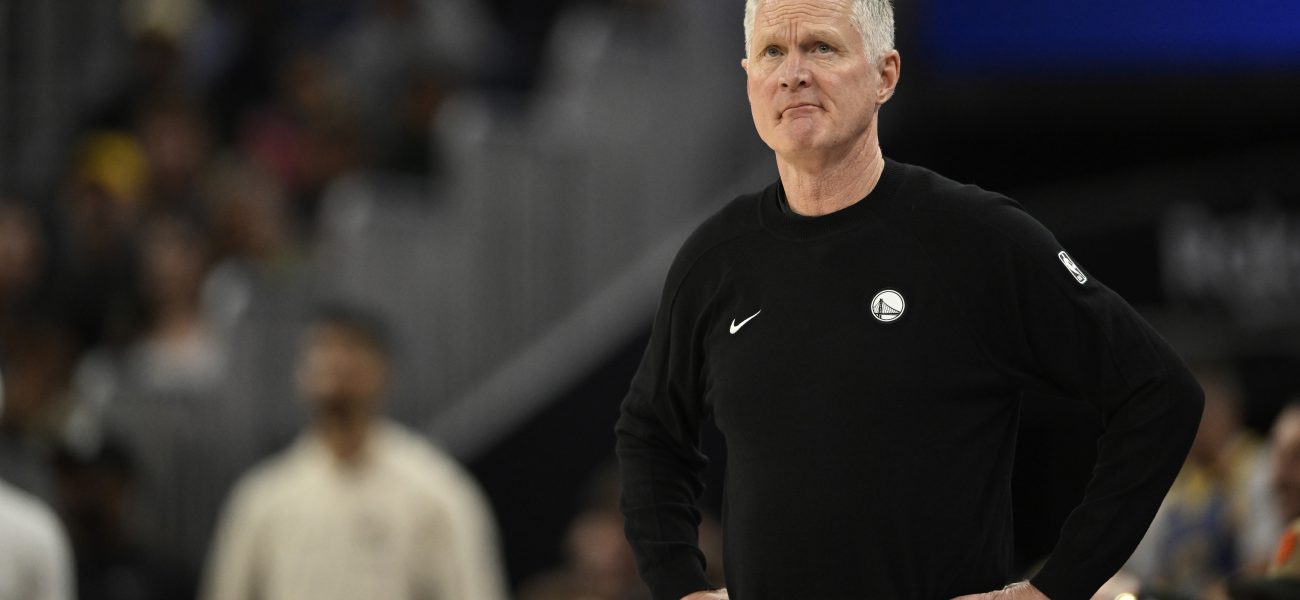
Hoops High Stakes: Coach Kerr’s Near Exit Reveals Brutal Allure of the Game
POLICY WIRE — San Francisco, USA — It was barely an hour after a frantic, season-extending victory, the kind that rips a collective roar from the stands, that a grizzled assistant coach delivered the...

POLICY WIRE — San Francisco, USA — It was barely an hour after a frantic, season-extending victory, the kind that rips a collective roar from the stands, that a grizzled assistant coach delivered the kind of data point designed to kill any lingering buzz: they’d led for a paltry four minutes and six seconds of the whole affair. The room, filled with jangling nerves — and sweat-slicked uniforms, erupted in uneasy laughter. But amid the momentary release, a whispered confession floated across the Golden State Warriors’ locker room, a seismic declaration delivered not to cameras, but to a trusted ear: “I’m not leaving.”
That quiet assertion from Head Coach Steve Kerr, made after a nail-biting play-in win against the Los Angeles Clippers, was a startling pivot from where he stood just 24 hours earlier. A day before that do-or-die game, he was reportedly “95 percent” certain he’d hang up his whistle, confiding to ESPN’s Wright Thompson, “I think it’s over.” It was a confession born of grueling seasons and the gnawing toll of constant public scrutiny—the very oxygen professional sports coaches breathe, for better or worse. Most coaches can tell you; that exhaustion, that feeling of being spent, it’s not unique. But the abrupt shift from near-retirement to renewed commitment? That’s what really caught eyes, signaling the raw, unpredictable magnetism of the job itself.
But how does a seasoned strategist, one of the NBA’s most decorated, arrive at such a crossroads, only to pull a hard U-turn at the last minute? It wasn’t just a singular moment of triumph. It’s the intoxicating blend of high-pressure decisions, the raw talent on the court, and, let’s be frank, a fat paycheck that kept him glued to the sideline. Because for all the talk of burn-out, the allure of crafting a championship-caliber team around future Hall-of-Famer Stephen Curry is a siren song few can resist. You just don’t walk away from that kind of potential — not unless you’re truly done, which Kerr clearly wasn’t, not yet.
Kerr, at 58, was grappling with a decision many leaders, regardless of their arena, eventually face: when to step aside gracefully. He’d watched his mentor, the legendary San Antonio Spurs coach Gregg Popovich, navigate the very same turbulent waters. Popovich, whose career ultimately spanned decades and whose personal struggles with age and health were well-documented, almost retired himself before signing another extension. It’s an easy trap to fall into, becoming indispensable, then realizing you might be clinging on too tight. Kerr, it seems, has learned from that playbook, but perhaps not without a fair bit of anguish. He acknowledges the addictive nature of his job, confessing he often wonders, “How am I gonna feel exactly a year from now? Maybe two years from now?” It’s a candid moment; a window into the mind of someone caught between career satisfaction and the quiet anxieties of a life after the roar of the crowd.
His contract with the Warriors was on thin ice before his sudden change of heart. Now, Kerr isn’t just staying; he’s signed an extension making him reportedly the highest-paid coach in the league, a significant vote of confidence given the team’s up-and-down performance. This signals a double-down from ownership, a clear belief in Kerr’s ability to steward a team potentially undergoing significant roster changes, perhaps even involving the departure of long-time stalwarts like Draymond Green. The new deal cements Kerr’s immediate future, but the long-term outlook for the Warriors remains hazy, much like the broader landscape of competitive professional sports.
📄 POLICY WIRE WHITEPAPER PUBLISHED: PAKISTAN'S NATIONAL SECURITY POLICY PRIORITIES
👉 READ BY CLICKING HEREWhat This Means
This saga isn’t just a sports footnote; it’s a stark reminder of the incredible pull of power and influence, even in roles that exact a heavy personal toll. Kerr’s near-retirement and subsequent renewal highlight the deeply personal calculations made by high-profile figures whose decisions impact not only their own legacy but also significant financial enterprises and the emotional investment of millions. The sudden U-turn underscores how fragile succession planning can be, not just in sports franchises, but in corporations and even political systems globally, where charismatic figures can struggle to relinquish control. In places like Pakistan, for instance, political power often clings to established dynasties or strongmen who find it profoundly difficult to cede their roles, irrespective of public opinion or declining efficacy. The public discourse around misinformation targeting Pakistan’s political transitions, much like the rumors around Kerr’s exit, often reflects a fundamental anxiety about leadership vacuums.
Economically, retaining Kerr at a top-tier salary signals the value of institutional knowledge and established leadership—even when results aren’t perfect. It’s a calculated risk by the Warriors’ management, betting on stability rather than upheaval, hoping Kerr can once again retool a squad for a late-career run for their superstar. This commitment to an expensive, proven commodity stands in contrast to organizations—both sporting and governmental—that often opt for cheaper, unproven options in an attempt to spark immediate, yet often fleeting, change. The scramble for stars and veteran talent mirrors the broader global contest for skilled individuals in every field, underscoring that quality, leadership, and experience are always at a premium.