


Beyond the Gilded Cage: Asia’s Unsung Power Plays Outmuscle Washington’s Gaze
POLICY WIRE — Singapore, Singapore — Forget the state dinners. Forget the highly-choreographed photo ops and the predictable pronouncements of two global heavyweights vying for pole position. While...

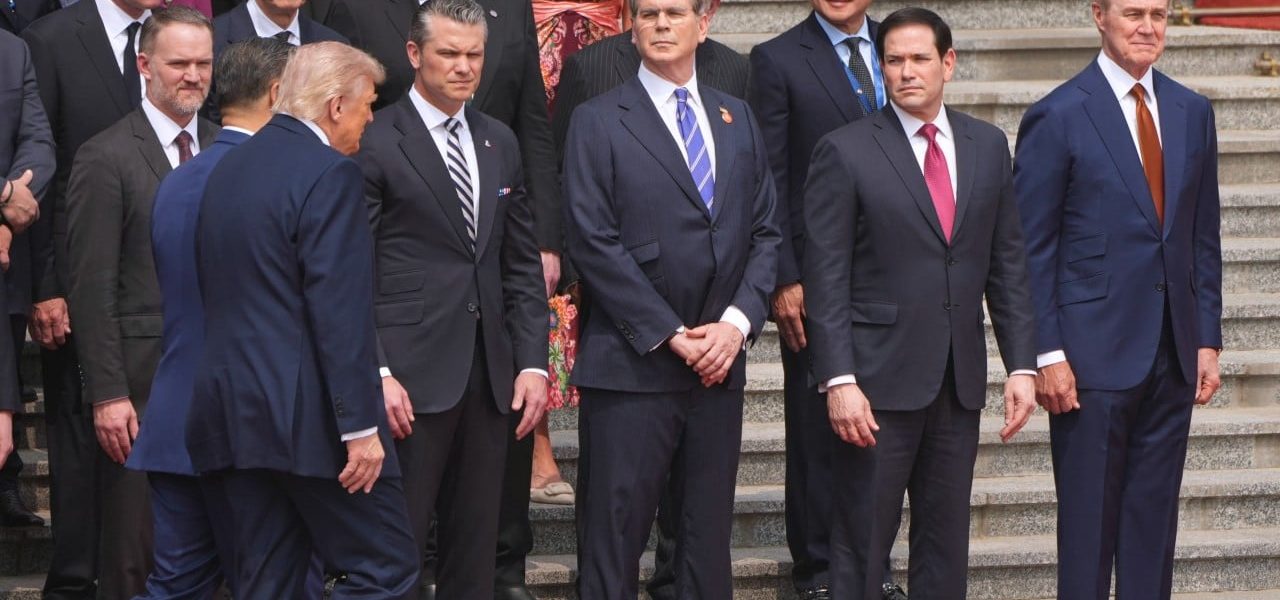
POLICY WIRE — Singapore, Singapore — Forget the state dinners. Forget the highly-choreographed photo ops and the predictable pronouncements of two global heavyweights vying for pole position. While the chattering classes, and frankly, most mainstream news cycles, were hyper-focused on President Donald Trump’s theatrical summitry with Xi Jinping in Beijing, something far more consequential was brewing—quietly, stubbornly—across the sprawling, dynamic landscapes of Asia. Call it the counter-narrative, or perhaps, the inconvenient truth for anyone convinced the world still orbits Washington and its East Asian rival. It’s an easy mistake to make, but a foolish one if you’re actually paying attention to where the economic tectonic plates are grinding.
Because, make no mistake, while Trump’s business entourage hogged headlines with grand declarations, another kind of summitry was already well underway, far from the glare of Mar-a-Lago’s gold trim or the Forbidden City’s stately halls. India, for one, was busily hosting a rather significant huddle. In New Delhi, Prime Minister Narendra Modi wasn’t just sipping chai; he was convening foreign ministers from the 10 BRICS economies—Brazil, Russia, India, China, and South Africa—alongside an expanding coterie of their economic partners. These weren’t ceremonial chats. These were working sessions, laying concrete plans for everything from trade diversification to shared digital infrastructure, meticulously bypassing the very institutions Washington holds dear.
And then there was the ASEAN grouping, a collective of Southeast Asian nations, whose own meetings often pass beneath the radar of Western pundits, yet represent an economic bloc with a collective GDP exceeding over $3.6 trillion as of 2023, according to the ASEAN Secretariat. This isn’t pocket change. But for them, the world isn’t a zero-sum game dictated solely by American or Chinese whims. They’re crafting their own destiny, building resilient supply chains, and pursuing multi-lateral arrangements that prioritize regional stability and economic self-determination over allegiance to any single superpower.
But how does this play out on the ground, especially in regions that often get squeezed in this superpower tango? Take Pakistan. While it maintains deep strategic ties with China—a relationship often viewed through the lens of Beijing’s Belt and Road Initiative (BRI)—it also finds itself navigating the growing assertiveness of its neighbor, India. These BRICS and ASEAN discussions, by virtue of their independent stance, present avenues for nations like Pakistan to diversify economic partnerships without explicitly alienating traditional allies. It’s a delicate diplomatic dance, but one that reflects a broader trend of nations seeking agency in a multi-polar world, often away from the gaze of Western media.
“We’re not merely reactive; we’re proactive,” stated Indian Foreign Minister S. Jaishankar, during a closed-door briefing in Delhi, referencing the BRICS dialogues. “The idea that global commerce — and collaboration must only flow through established, Western-led arteries is archaic. Our conversations here—with friends and partners—are about building new paths, not just following old ones.” It’s a candid assessment that many in the developing world would nod along to. And why wouldn’t they? They’ve been watching, sometimes patiently, sometimes with barely-concealed exasperation, as much of the global dialogue became a proxy war for Sino-American dominance.
📄 POLICY WIRE WHITEPAPER PUBLISHED: PAKISTAN'S NATIONAL SECURITY POLICY PRIORITIES
👉 READ BY CLICKING HERE“Look, for too long, the narrative has been about us picking sides, which is utter nonsense,” added Retno Marsudi, Indonesia’s Foreign Minister, during an interview at the sidelines of an ASEAN event last week. “Our interests are our own. We cooperate with everyone who brings mutual respect — and genuine benefit. This isn’t about America or China; it’s about Southeast Asia. It’s about stability. It’s about jobs.” Strong words, certainly, especially considering Jakarta’s traditional pragmatism, but they speak to a broader frustration with a narrative that often simplifies, and therefore distorts, the complex motivations of sovereign nations.
These parallel narratives, this unacknowledged shift, doesn’t diminish the immediate import of a Trump-Xi meeting—not entirely. Those talks certainly set immediate tones for commodity markets — and bilateral tensions. But they don’t, by any stretch of the imagination, encapsulate the entirety of Asia’s geopolitical or economic ambition. These aren’t just sidebar discussions; they’re integral to understanding a more robust, diversified global system in the making. And they won’t stop, whether Washington’s watching or not.
What This Means
The geopolitical landscape isn’t static, obviously. What this dual-track diplomacy reveals is a conscious, accelerating effort by emerging powers and regional blocs to establish strategic autonomy. Economically, this means a concerted push towards intra-regional trade and alternative financial mechanisms that could lessen reliance on Western-dominated institutions and currencies. For instance, initiatives within BRICS to develop a common payments system or bolster their development bank indicate a desire to hedge against the volatility of the global financial order. Politically, it signals a desire to shape the international rules of engagement rather than simply respond to them. It’s a calculated move to secure a larger, more independent seat at the global table, one that values multilateralism (among themselves, anyway) over traditional power hierarchies. Nations like Pakistan, navigating a complex web of regional rivalries and foreign investment, stand to benefit from the emergence of these alternative poles of influence, as it grants them more leverage and flexibility in their foreign policy and economic strategies. The big takeaway here: expecting Asia to wait for, or be defined solely by, Washington’s pronouncements is just wishful thinking. These are the players building the next chapter, bricks by brick, — and largely on their own terms.