


Badge and Burden: New Mexico Weighs Fallen Officers Against Evolving Public Trust
POLICY WIRE — RIO RANCHO, N.M. — The wreaths lay wilting, the solemn bugle calls fading into the high desert wind. As National Police Week drew its close, wrapping up another cycle of public...

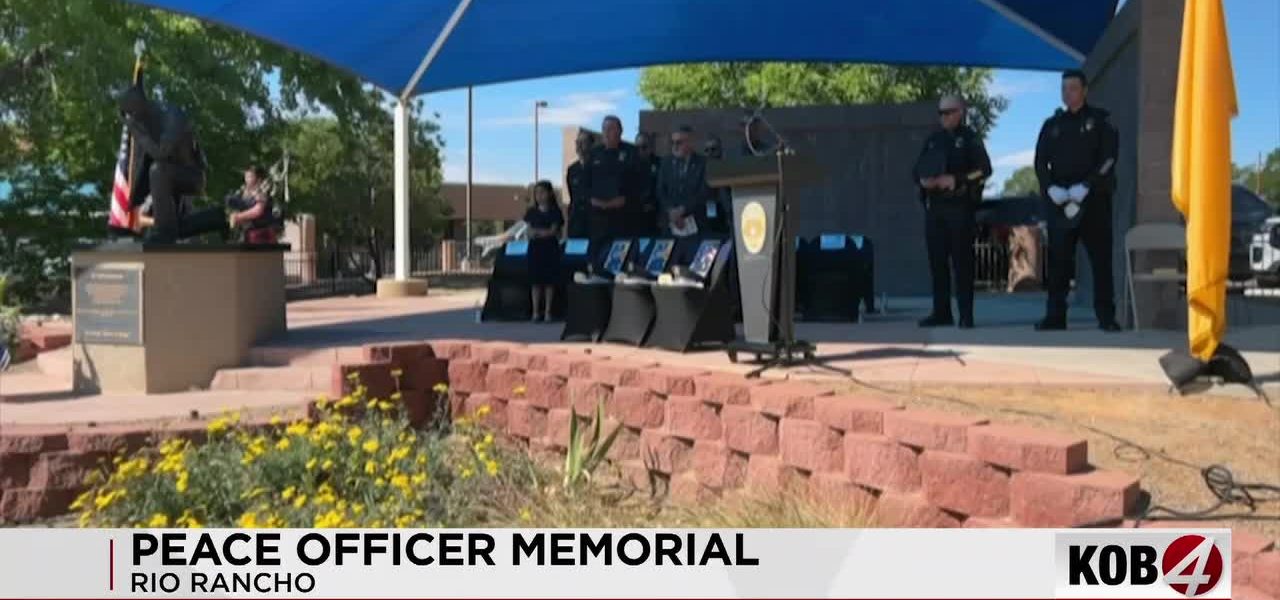
POLICY WIRE — RIO RANCHO, N.M. — The wreaths lay wilting, the solemn bugle calls fading into the high desert wind. As National Police Week drew its close, wrapping up another cycle of public remembrance and private grief, the stark ceremonies in places like Rio Rancho offered a moment to pause. But it’s never just about mourning. For American law enforcement, particularly in its smaller, often overlooked precincts, the line between reverence and relentless scrutiny grows ever thinner.
Rio Rancho police, for their part, observed Peace Officers Memorial Day by honoring four of their own—a familiar, heartbreaking ritual. Among them, Bernalillo County Sheriff’s Sgt. Michael Schlattman, lost recently in the line of duty, his death still under investigation for the semi-truck driver allegedly involved. The department paid respects to three other Rio Rancho officers who’ve fallen since 2007, silent markers in a profession that sometimes feels more like a gauntlet. It’s a somber end to a week intended to focus on sacrifice, yet it also comes as the public dialogue about policing – its costs, its responsibilities, and its fundamental structure – rarely ceases its low, insistent hum.
“We can’t just offer thoughts and prayers anymore; we have to offer a clear path forward,” stated New Mexico State Senator Julianna Chavez, a Democrat known for her pragmatic stance on criminal justice reform, in an exclusive chat with Policy Wire. “We honor these brave individuals. Absolutely. But we also owe it to their memory, and to our communities, to keep asking the hard questions about how we protect our officers while also ensuring accountability and trust from the ground up.” It’s a sentiment echoing across state legislatures, often catching police brass squarely between political and community pressures.
And trust, you see, it’s a mutable currency. It varies wildly from neighborhood to neighborhood, sometimes even block to block. Think about how diverse communities, like the burgeoning South Asian — and Muslim populations in some U.S. cities, often arrive with pre-existing, deeply rooted perceptions of policing from their home countries—where law enforcement can be a symbol of either security or state repression. These perspectives don’t evaporate at customs. They shape local interactions, adding layers to an already complicated rapport between badge — and civilian. That dynamic, incidentally, is what shapes much of how the public perceives law enforcement efficacy, whether in Albuquerque or in Abbottabad.
This evolving perception places a particular strain on smaller departments, too often under-resourced and stretched thin. In 2023 alone, 136 federal, state, tribal, and local law enforcement officers died in the line of duty, according to preliminary data from the National Law Enforcement Officers Memorial Fund. That’s a staggering human cost, often obscured by broader policy debates. But it’s these localized events, these personal losses, that keep the memory raw for families and colleagues, compelling politicians to at least utter words of solace.
“Every time we lose an officer, it’s a stark reminder of the unpredictable dangers our men and women face,” said Rio Rancho Police Chief David Barden, his voice heavy with the gravitas of command. “My officers know they’re running toward what everyone else is running from. We won’t ever stop recognizing that courage. But we’re also actively engaged in conversations, tough conversations, about how to better serve our city, protect our people—officers and residents alike.” They’ve got their work cut out for them, I tell you. Because bridging that gap between public admiration and the demand for reform—it’s not for the faint of heart.
📄 POLICY WIRE WHITEPAPER PUBLISHED: PAKISTAN'S NATIONAL SECURITY POLICY PRIORITIES
👉 READ BY CLICKING HEREWhat This Means
The symbolic close of National Police Week in New Mexico, much like elsewhere across the nation, serves as a flashpoint for deeper policy debates. Politically, leaders walk a tightrope: expressing unequivocal support for law enforcement while simultaneously acknowledging the societal push for increased oversight and systemic adjustments. It’s a dance between reverence for sacrifice — and the pragmatic need for evolution in policing. Economically, this means sustained, perhaps even increased, investment in officer training, mental health services for responders (which are always underfunded, let’s be honest), and community outreach programs designed to rebuild eroded trust.
But the ramifications extend beyond budgets — and ballot boxes. The continuing loss of officers, paired with intense public scrutiny, affects recruitment and retention, creating a potential brain drain in departments already struggling to maintain staffing levels. When an incident like Sgt. Schlattman’s death ignites local conversation, it’s not just about a tragic accident. It’s about how local justice systems—like the district attorney’s office deciding whether to charge the semi-truck driver—become bellwethers for public perception of fairness and accountability, not just for the individual, but for the system writ large. This perpetual tug-of-war demands sustained legislative attention — and innovative, not just reactive, policymaking. Failure to adapt could see public support, a thing often taken for granted, erode further, creating even more precarious conditions for those who wear the badge.
And for communities themselves, this confluence of factors—tributes to the fallen and demands for reform—often creates a challenging dichotomy, where support for local officers might coexist uneasily with a desire for profound change. For insight into how policy impacts such critical community discussions, consider heavy sentencing’s effect on public trust and questions of justice. The situation is complicated, messy, — and rarely clean-cut.