


Anfield’s Unforced Error: The Geopolitics of a Defender’s Vanishing Ink
POLICY WIRE — London, UK — There’s a particular brand of theatrical suspense unfolding at Anfield these days, not on the manicured grass of the pitch, but behind closed doors, in sterile boardrooms...

POLICY WIRE — London, UK — There’s a particular brand of theatrical suspense unfolding at Anfield these days, not on the manicured grass of the pitch, but behind closed doors, in sterile boardrooms where the future of million-dollar assets hangs by a thread. Forget the ballet of goals and saves; this is about fiscal tightropes and the harsh realities of modern sports economics. And Liverpool Football Club, that storied institution, finds itself rather uncomfortably center stage, grappling with a very public-facing contract impasse that says a lot more about high-stakes corporate management than just one defender’s wage packet.
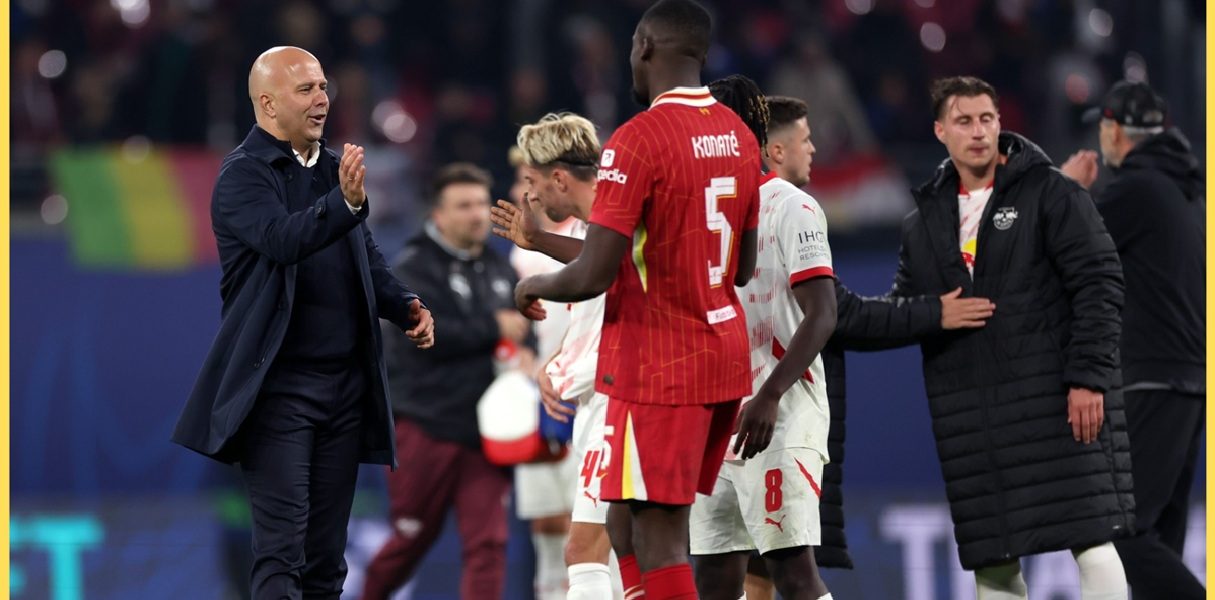
It’s Ibrahima Konaté, the burly French center-back, whose current deal ticks down like a poorly hidden bomb – less than fifty days until it goes poof. Club supporters, and frankly, anybody paying a modicum of attention to professional football’s delicate financial ecosystem, are watching with bated breath. Is this some kind of intricate negotiation strategy, or merely a glaring lapse in institutional foresight? New manager Arne Slot, fresh off the plane from Feyenoord, seems to embody this practiced ambivalence, offering all the clarity of a North Sea fog.
Asked about Konaté’s future, Slot, bless his pragmatic Dutch heart, offered platitudes that would make a seasoned diplomat blush. “If there’s a resolution, then we will tell the world. At the moment, we will share it the moment that it’s [confirmed],” he reportedly stated, as if discussing the discovery of a new element, not a basic employment renewal. It’s an almost perfect encapsulation of the corporate-speak that’s crept into the sport, transforming simple questions into opaque non-answers. This isn’t just about Konaté; it’s about the illusion of control in an increasingly transparent, globally connected game. Many wouldn’t be surprised if this wasn’t simply Slot finding his footing; it’s likely a directive.
But this isn’t amateur hour. Or, at least, it shouldn’t be. Reports from reputable sources, like David Ornstein at The Athletic, paint a bleaker picture, citing a “stalemate” that’s “not looking particularly positive.” And the stakes? They’re colossal. Losing a player of Konaté’s caliber, still very much in his prime at 26, for absolutely nothing—a ‘free transfer’ in football parlance—isn’t just bad business. It’s a financial hemorrhage. Think of the transfer market: it’s a brutal theatre of supply and demand. His valuation, according to Transfermarkt, sits at a hefty €50 million (£43.3 million). To simply let that walk out the door, gratis? That’s not managing assets; it’s an institutional fumble.
“Player retention in modern football is as much about strategic positioning as it’s about salary,” says Julian Ward, a former Liverpool sporting director, reflecting on the current climate. “You’re not just negotiating a contract; you’re safeguarding brand equity, preventing a precedent that weakens your future hand. These delays, particularly with high-profile individuals, always raise eyebrows across the industry, and with good reason. It suggests something’s amiss, either in the player’s commitment or the club’s negotiation muscle.” He isn’t wrong. It sends a message, often unintended, to other prospective players and, more broadly, to financial analysts keeping tabs on club performance.
📄 POLICY WIRE WHITEPAPER PUBLISHED: PAKISTAN'S NATIONAL SECURITY POLICY PRIORITIES
👉 READ BY CLICKING HEREConsider the perception across the vast football fandom that stretches far beyond Merseyside, into the booming economies of South Asia and the Muslim world. Fans in Karachi, Lahore, and Dubai, whose fervent loyalty fuels lucrative merchandise sales and broadcast rights, are often acutely aware of such managerial missteps. They invest not just emotionally but often financially in these clubs through various channels. What might seem like a mere domestic squabble in Liverpool reverberates through a global audience that increasingly demands sophisticated, error-free management. They expect the best on the pitch, sure, but also a sharp operation off it. These fan bases, sometimes overlooked by European executives focused only on local gate receipts, are economic giants themselves, keenly attuned to the strategic health of their adopted clubs. This sort of protracted, seemingly clumsy negotiation feels… untidy. They track their sporting heroes’ contracts as intently as they follow corporate earnings reports.
What This Means
This contractual entanglement is more than a trivial locker-room saga; it’s a window into the increasing financial pressures and corporate scrutiny bearing down on even the most elite sporting organizations. Should Konaté depart for no fee, Liverpool wouldn’t just lose a player; they’d forfeit a substantial chunk of transferable value, setting a perilous precedent for future negotiations. This fiscal negligence, if it comes to pass, signals an underlying inefficiency that prospective players, agents, and even potential investors won’t overlook. It challenges the perceived operational sharpness of a club that, for all its on-field successes, relies heavily on intelligent asset management to stay competitive.
The incident also puts Slot, who’s just walked in the door, in a tricky spot. His measured response, while understandable, projects an image of either extreme caution or, perhaps worse, being handed a situation already well past its expiry date. For a club that needs to demonstrate stability and strategic vision during a managerial transition, this sort of public indecision isn’t just inconvenient. It’s a flashing yellow light on the dashboard of its operational integrity. You’ve got to manage player contracts well; it’s really that simple.