


The Ghost in the Machine: Kyiv’s Graft Fight Erupts Anew, Testing Western Patience
POLICY WIRE — Kyiv, Ukraine — You’d think the cannons outside, the relentless drone warfare, or even the sheer scale of national survival would put something like petty — or not-so-petty — graft...

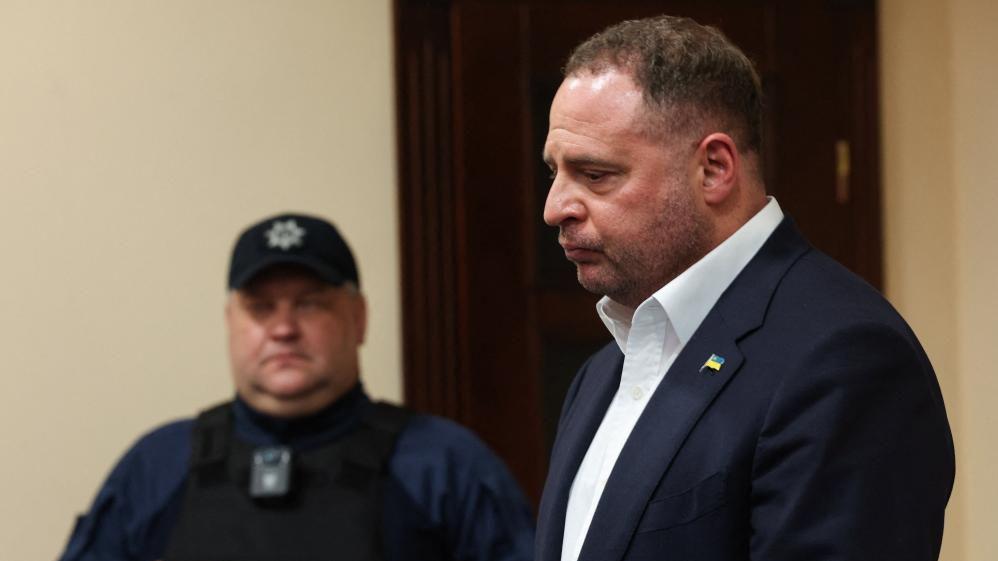
POLICY WIRE — Kyiv, Ukraine — You’d think the cannons outside, the relentless drone warfare, or even the sheer scale of national survival would put something like petty — or not-so-petty — graft firmly in the rearview mirror. But no, Kyiv still can’t quite shake off its old habits, it seems. Andriy Shevchenko, formerly a significant figure orbiting President Volodymyr Zelensky, found himself standing in a familiar place this week: before a judge, eyes firmly fixed on him, as proceedings in a long-simmering corruption probe got rolling. It wasn’t exactly the splashy, triumphant wartime narrative most Ukrainians, or their Western backers, had hoped for.
This isn’t some backroom squabble among low-level bureaucrats; it’s a high-stakes drama hitting alarmingly close to the presidential administration. Shevchenko, once touted as a reformer and key player in Zelensky’s inner circle during the crucial early months of the conflict, is entangled in allegations concerning state procurement—think overpriced contracts, kickbacks, the usual stuff that makes headlines and blood boil. Because, really, there’s nothing new under the sun, even when your country’s existence is on the line. It’s a particularly bitter pill for Western allies, many of whom are pouring billions into Ukraine’s defense and reconstruction, all while trying to stomach headlines like these. They’ve been watching this dance for years. Maybe centuries, even.
But the government, to its credit (and perhaps its considerable strategic advantage), is pushing the narrative of accountability. They’re telling the world, and more importantly, their own war-weary populace, that no one—not even a former presidential confidante—is above the law. “Our nation is engaged in an existential fight for its future,” stated Ruslan Stefanchuk, the Chairman of the Verkhovna Rada (Ukraine’s parliament), in a prepared statement. “And to secure that future, we must root out every vestige of corruption that has long plagued our institutions. It’s a painful but absolutely necessary surgery. We’re doing this for our soldiers, for our children, for the legacy we want to leave.”
It’s a tough sell when you’re asking for more — and more weaponry, but it’s one they’ve gotta make. Ukraine has consistently ranked poorly on global corruption indexes, including scoring 36 out of 100 on Transparency International’s 2023 Corruption Perception Index, placing it among countries perceived as having serious public sector corruption issues. That number? It’s just a raw data point, but it shouts volumes about the challenge Kyiv faces.
The timing, too, feels particularly pointed. With crucial aid packages from Washington experiencing political turbulence, and European patience (and treasuries) stretching thin, these proceedings become more than just a domestic legal spat. They become a performance, an earnest attempt to show—not just tell—donors that their money isn’t simply disappearing into a bottomless pit of malfeasance. And sometimes, you know, these sorts of demonstrations work.
Consider the perception across the Global South, particularly in countries like Pakistan or even parts of the wider Muslim world. For years, narratives of unchecked power and systemic graft have dogged many developing nations, often cited by Western capitals as reasons for conditional aid or cautious engagement. So when Ukraine, a nation asking for exceptional assistance, repeatedly finds itself grappling with these specters, it creates a tricky sort of moral equivalency. “For countries like ours, where good governance and anti-corruption measures are frequently benchmarks for international support, Ukraine’s struggles resonate deeply,” commented Dr. Faridullah Khan, a senior political analyst based in Islamabad. “The global south observes these cases with a critical eye, asking whether standards are applied universally, or if geopolitical convenience still dictates the rules of engagement.” It’s not an unfair question, really. They’ve seen this movie before, too.
But Shevchenko’s entanglement serves another, less dramatic, purpose back home. It’s an internal pressure release valve, a signal to the populace that reforms aren’t just empty words on a political stump. It reminds everyone that someone’s paying attention. It’s part of the ongoing clean-up, which has seen numerous high-profile dismissals and arrests in recent years, reaching even into the upper echelons of the defense ministry. Ukraine’s got to look good for its international friends, yes, but it also has to restore some semblance of faith from its own people.
What This Means
This ongoing crackdown—or perhaps, an ongoing public display of attempting to crack down—on corruption holds profound implications, both domestically and internationally. Politically, it’s a tightrope walk for President Zelensky’s administration. He needs to satisfy Western demands for transparency and accountability to keep the aid flowing, a steady lifeline that Kyiv can’t do without. At the same time, he can’t afford to create so much internal dissent or instability that it hobbles the war effort. It’s a constant balancing act between fighting on one front and fighting on another—two distinct adversaries, one visible and the other often insidious.
Economically, the impact is similarly nuanced. Success in these anti-corruption efforts could unlock greater international investment post-conflict and solidify Ukraine’s path toward European Union integration, which is really the golden carrot here. But the process itself—the public trials, the accusations, the drawn-out legal battles—can deter even willing foreign partners, sowing seeds of doubt about the stability of the legal framework and the reliability of contractual agreements. This isn’t just about cleaning house; it’s about rebuilding trust from scratch, in the middle of a war, which is a monstrously difficult task. It suggests that even the highest offices aren’t immune to the forces of change, and sometimes, those changes look suspiciously like they’ve been nudged along by international expectations. When a country fights against the currents of its past, you tend to see these struggles playing out, not just in Kyiv but everywhere power operates under a magnifying glass.