


Kyiv’s Endless Night: A New Chapter in Russia’s Grim Air War
POLICY WIRE — Kyiv, Ukraine — The sky over the Ukrainian capital wasn’t just alight with explosions recently; it was, for an agonizing stretch, a relentless, churning canvas of defiance and...

POLICY WIRE — Kyiv, Ukraine — The sky over the Ukrainian capital wasn’t just alight with explosions recently; it was, for an agonizing stretch, a relentless, churning canvas of defiance and destruction. Moscow uncorked one of its most extended aerial bombardments on Kyiv, turning a pre-dawn stillness into an endurance test, leaving at least one civilian dead and countless nerves frayed. This wasn’t just another salvo; it was a grueling, hours-long exercise in terror, signaling a chilling escalation in Russia’s determined, yet seemingly futile, efforts to break Ukrainian resolve.
It began as many of these nights do: the mournful wail of air raid sirens, then the distant rumble, growing quickly into a terrifying symphony overhead. What made this one different wasn’t necessarily the firepower—though that was substantial—but its sheer, drawn-out brutality. They kept coming. Waves upon waves of drones and missiles, designed not just to hit targets but to exhaust air defenses and wear down the very spirit of a nation.
Ukrainian officials, often weary but always defiant, reported intercepting a staggering number of inbound projectiles. For instance, the Ukrainian Air Force announced a success rate often exceeding 80% for cruise missiles and drones in recent large-scale attacks, a statistic culled from operational reports regularly shared through official channels. And it’s not cheap, either; defending against this stuff eats resources, eats ammunition, and burns through a budget faster than a wildfire.
“We don’t just defend our cities; we defend the principle of sovereign nationhood from an aggressor that respects no limits, no rules,” declared Ukrainian President Volodymyr Zelenskyy in a post-attack address, his voice firm, a palpable weariness etched into every word. “This long night proved again: they’ll use every weapon, every minute, to sow fear. But we will endure. We must.” His tone wasn’t one of despair, but rather grim determination—a rallying cry forged in the crucible of ceaseless bombardment. They’ve heard it all before, haven’t they?
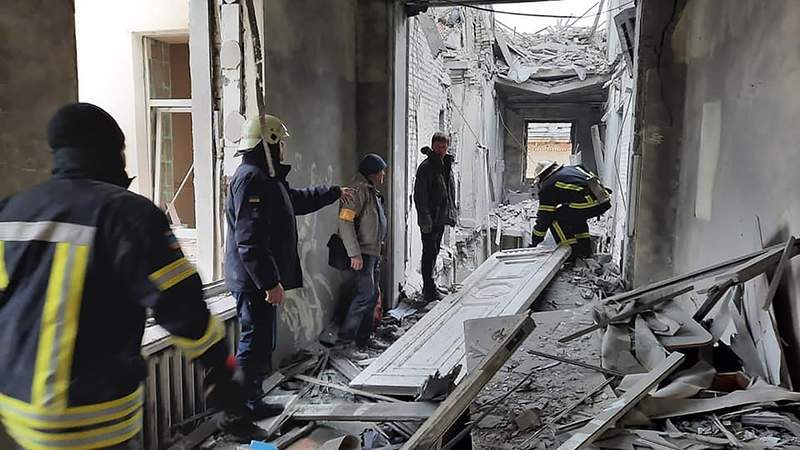
But the damage done, however contained, always leaves scars. Homes shattered, infrastructure chipped away, lives lost. One person killed in the onslaught; countless others waking to the familiar, sickening chore of assessing damage, clearing debris, and wondering, yet again, when the next barrage will come. It’s a cruel game, this war of attrition, played out not on battlefields but over sleeping cities.
What This Means
This prolonged aerial offensive isn’t just about blowing things up; it’s a strategic message from Moscow. They’re telling Kyiv, and indeed the world, that they’ve got the capacity to keep up this pace, no matter the cost, no matter the effectiveness. It forces Ukraine to drain precious air defense munitions and keeps civilian populations under immense psychological pressure. The financial — and logistical strain on Kyiv and its Western backers is enormous. Picture it: every intercepted drone is a win, sure, but it’s also a significant chunk of money fired into the dark. That money could be buying desperately needed reconstruction materials, schools, or hospitals. But here we’re, blowing up drones.
📄 POLICY WIRE WHITEPAPER PUBLISHED: PAKISTAN'S NATIONAL SECURITY POLICY PRIORITIES
👉 READ BY CLICKING HEREThe West, despite its pronouncements of unwavering support, is watching its own stockpiles shrink. “These prolonged assaults are designed to stretch defensive capacities thin, pushing Ukraine’s allies to make agonizing choices about resource allocation,” commented NATO Secretary General Jens Stoltenberg, speaking hypothetically but echoing familiar alliance rhetoric regarding military aid. “It’s a stark reminder that sustained support—including air defense replenishment—isn’t a luxury; it’s an existential necessity.” This particular form of Russian aggression—the relentless, long-duration attack—tests not just Ukraine’s resolve, but also the enduring commitment and industrial capacity of the coalition supporting it.
And then there’s the broader ripple. Global energy prices, already twitchy, don’t exactly steady themselves when Europe’s eastern flank is under constant air raid. Nations like Pakistan, grappling with their own economic instabilities and energy dependencies, feel these distant shocks profoundly. Every spike in the barrel price, every supply chain hiccup linked to regional instability, translates directly into tougher decisions for Islamabad’s finance ministries, affecting everything from food prices to manufacturing costs. It’s not just a European problem; it’s a planetary headache.
These aerial campaigns, raise uncomfortable questions about the sourcing of some of these longer-range weapons, drawing eyes to nations that may provide the components or finished products for such nefarious endeavors. You see, the web of international politics — and proxy conflicts is never really clean or contained. For some context, the strategic thinking around such global pressure points—and the effectiveness of sanctions against rogue actors—is explored more in depth in pieces like Delhi’s Tightrope: Iran’s Anti-U.S. Rally Tests BRICS Expansion. The links between regional conflicts, energy security, — and wider geopolitical alignments are, as they say, non-trivial. They never are.
But make no mistake, Ukraine’s cities are far from broken. They’ve rebuilt, patched up, — and dug in, showing a remarkable resilience that few predicted. Still, these long, dark nights are a constant reminder of the war’s insidious grind. The question isn’t whether they can withstand it once more; it’s how many more times, and what price each successive, agonizing night demands.