


Spain Honors Architects of Life’s Code: A Faustian Bargain?
POLICY WIRE — Madrid, Spain — The power to tweak the very essence of life, to snip and paste genes with surgical precision, isn’t just science fiction anymore. It’s here. And now,...

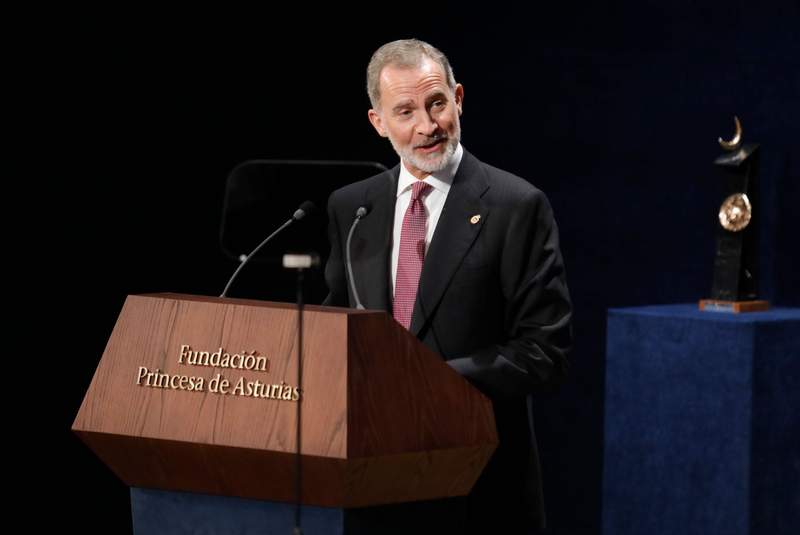
POLICY WIRE — Madrid, Spain — The power to tweak the very essence of life, to snip and paste genes with surgical precision, isn’t just science fiction anymore. It’s here. And now, Spain’s Foundation Princess of Asturias has stepped up, showering its coveted Concord Award upon three researchers whose work has brought this future barreling down on us faster than many ever thought possible. They’re hailing them as heroes. But it begs the question: are we celebrating the architects of a brave new world, or simply accelerating humanity’s headlong dive into an ethical abyss? Because it’s complicated.
Emmanuelle Charpentier, Jennifer Doudna, and Francisco Mojica – a trio whose names are now etched into the annals of genetic history – are the recipients. Their pioneering efforts on CRISPR-Cas systems, essentially a pair of molecular scissors that can edit DNA, haven’t just opened doors; they’ve blasted through them with C4. Think of it: treating hereditary diseases, curing cancers, perhaps even enhancing human traits. The promise feels limitless. The implications? Those are equally, terrifyingly, vast.
Mojica, the unsung Spanish microbiologist whose initial observations of peculiar bacterial gene sequences laid the groundwork, finally gets his moment in the international spotlight, an academic journey of quiet persistence that almost went unnoticed. Doudna and Charpentier, building on his initial insights, developed the groundbreaking gene-editing technology, forever changing biology labs worldwide. Their joint work has become the go-to tool for manipulating genomes, and not just in research — you can bet defense departments and ambitious biotech startups are looking on with keen interest.
It’s not all high-fives — and champagne, though. The scientific community has been grappling, often publicly, with the ethical tightrope walk that CRISPR demands. “This award isn’t just about celebrating incredible discovery; it’s a stark reminder of the immense responsibility that comes with controlling life’s fundamental code,” remarked Dr. Alisha Khan, director of the International Bioethics Institute, speaking from Geneva. “We’re not just correcting errors; we’re redefining what’s ‘natural.’ And that’s a conversation no single institution can have alone.” Indeed. It’s everyone’s fight.
Spain, usually known more for flamenco and siestas than cutting-edge science laurels, seems keen to cement its place in the global intellectual arena with this award. “Recognizing such transformative work underscores Spain’s commitment to advancing global scientific endeavor and celebrating minds that reshape our understanding of life itself,” stated Ana Palomares, Spain’s Minister of Culture and Sports, in a surprisingly earnest press briefing. She sounded genuinely proud. But awards like these aren’t merely about national bragging rights; they’re about global policy influence.
This award, frankly, arrives at a moment when access to such groundbreaking medical science isn’t equally distributed across the globe. For millions in regions like South Asia and the broader Muslim world, advanced genetic therapies remain a distant, often unattainable, dream. Hereditary disorders like Thalassemia, cystic fibrosis, and various neural conditions continue to devastate families across Pakistan, for instance, where genetic counseling and advanced diagnostics are far from universally available. It’s a cruel twist, really.
And so, while scientists in the West toast their groundbreaking work, much of the world grapples with the everyday realities of these conditions. It’s not just a funding issue; it’s a structural one. We’re talking infrastructure, trained personnel, and sometimes even cultural barriers to accepting new medical paradigms. This gulf, between what’s possible — and what’s accessible, simply widens with each new scientific leap.
According to Orphanet data, rare diseases, many of which are genetic, collectively affect an estimated 350 million people worldwide. That’s a staggering figure, underscoring the massive human stake in genetic research. But the vast majority of these individuals live in places where CRISPR technology might as well be Martian science. It highlights a brutal economic reality: innovation tends to serve those who can afford it first. Which isn’t a surprise. That’s just how the machine works.
What This Means
The Asturias Award, by shining a light on gene-editing pioneers, doesn’t just elevate their work; it ignites the broader policy debate on the future of humanity. Politically, this signals a hardening of lines between nations capable of advanced biomedical innovation and those struggling to provide even basic healthcare. Economically, we’re staring down the barrel of a multi-trillion-dollar gene therapy market, controlled by a handful of pharma giants, where ethical pricing models will clash spectacularly with profit motives. Governments will soon be forced to decide if the right to health includes a right to genetic modification—a discussion with profound social justice implications. And yes, international agreements governing research, intellectual property, and equitable access become increasingly vital. Expect these policy tremors to rock the boat for decades. The decisions we make now about this revolutionary technology will define human existence in ways we’re only just beginning to comprehend, for good or ill. But that’s the thing about progress; it rarely waits for our comfort zones to catch up. We’re on a fast train, folks, with no emergency brake in sight.