


Moscow’s Grand Spectacle: A Geopolitical Litmus Test in Disguise
POLICY WIRE — Kyiv, Ukraine — Forget the tanks and goose-stepping formations for a moment. This year, Moscow’s Victory Day Parade, an annual exercise in national myth-making and military...

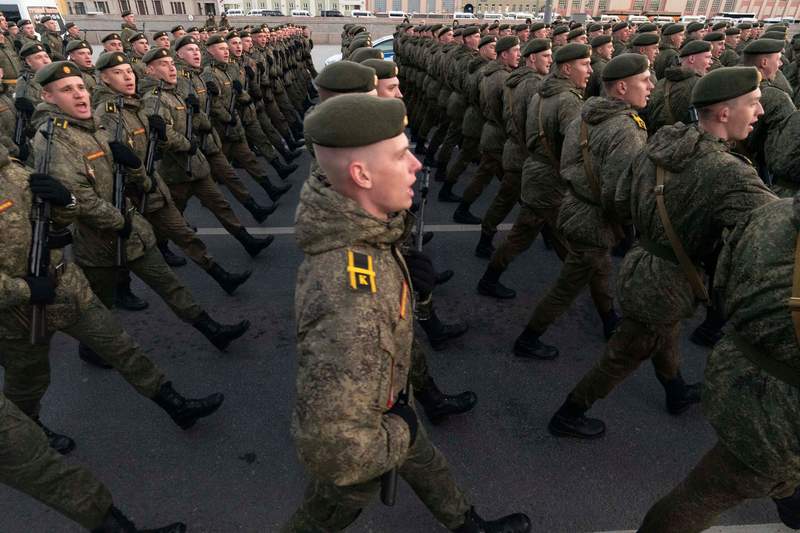
POLICY WIRE — Kyiv, Ukraine — Forget the tanks and goose-stepping formations for a moment. This year, Moscow’s Victory Day Parade, an annual exercise in national myth-making and military muscle-flexing, isn’t just about celebrating history. It’s a grand, televised litmus test. And Ukraine’s president, Volodymyr Zelensky, has made sure every invitee knows precisely what — and who — they’d be sanctioning by showing up. His recent, rather blunt, advisory to international representatives to skip the event wasn’t just a suggestion; it was a diplomatic grenade, lobbed straight into the polite halls of foreign ministries.
It’s no small ask. For years, attending this parade was a common courtesy, a nod to a shared historical struggle. But things have changed. Ukraine, ravaged by war, now views any foreign dignitary in Moscow’s Red Square on that particular day as a de facto endorsement of Vladimir Putin’s aggression. And he’s right. Because it sends a message, doesn’t it? A picture of smiling diplomats rubbing shoulders with a leader who’s overseeing one of Europe’s bloodiest conflicts since World War II – it’s powerful imagery, whether intended or not.
“To stand with Russia now, to lend credibility to its celebrations while our cities burn, that’s not neutrality; it’s complicity,” President Zelensky was quoted saying in a statement released by his office. His stance couldn’t be clearer. For Kyiv, the choice is binary. You’re either on the side of international law and sovereign nations, or you’re giving a tacit wink to expansionist ambitions. There’s no middle ground, not when blood stains the soil.
But the world, as we know, isn’t that simple. Many nations, particularly in the Global South, find themselves walking a delicate tightrope. They’ve got their own energy needs, their own strategic alignments, and often, long-standing historical ties to Russia that aren’t easily severed by a Western decree. Pakistan, for example, along with its South Asian neighbor India, maintains complex relationships with Moscow, balancing economic and defense partnerships against Western pressure. You see, their foreign policy isn’t merely about principles; it’s also about pragmatism, about ensuring stability at home.
“We respect the sovereign position of all nations, but our policy remains one of non-alignment, seeking to maximize our strategic space,” a senior Pakistani diplomat, who requested anonymity to speak candidly about sensitive diplomatic balancing, told Policy Wire. “Attending such events is evaluated through the prism of national interest, not through external diktats.” It’s a classic play: don’t pick sides if you don’t absolutely have to. And, let’s be honest, few leaders genuinely enjoy being told what to do, especially by a war-beleaguered nation when their own economy is under pressure. It’s awkward. Really awkward.
Still, the stakes are genuinely high. According to data compiled by the Kiel Institute for the World Economy, international aid pledges to Ukraine have now exceeded $200 billion since February 2022, demonstrating a unified, if sometimes grudging, commitment from Western allies. To then send a high-ranking representative to Moscow, to share a podium with Putin? It looks rather… tone-deaf, wouldn’t you say? Especially when Kyiv is relying on that largesse to keep fighting.
This isn’t merely about one parade, you understand. It’s a microcosm of the new global order, or disorder, depending on your perspective. Old alliances are frayed. New power blocs are forming. And smaller nations, or those navigating a treacherous economic landscape—think the impact of fluctuating energy prices or digital speculation on global economies—are forced into choices they’d rather avoid. No one wants to alienate a key energy supplier or a trading partner, particularly when the West is demanding allegiance.
What This Means
Zelensky’s sharp diplomatic nudge — or shove, depending on your view — shifts the traditional calculus around what was once a largely ceremonial event. The immediate political implication is clear: any high-level foreign presence in Moscow will now be viewed through a wartime lens, potentially complicating relations with Kyiv and its Western benefactors. For countries already struggling to navigate the intricate geopolitical chessboard, this creates an added layer of scrutiny. They’re now forced to openly signal their alignments, or lack thereof, on a prominent public stage. This could strain relations with key donors — and allies on one side, or with significant economic partners on the other. It’s a game of chicken, played with reputations. Economically, while a diplomatic boycott doesn’t directly trigger sanctions, it does reflect a hardening of lines. Nations that choose to attend might find themselves under closer scrutiny from Western entities for perceived Russian sympathies, possibly impacting future trade deals or investment. Conversely, snubbing Moscow entirely could jeopardize existing deals, particularly in the energy — and arms sectors. It’s a no-win scenario for many, forcing tough choices with tangible political and financial repercussions down the line. It’s not just a parade; it’s a statement about where you stand in a world that can’t pretend it’s still business as usual. It reminds you just how entangled geopolitics can get, often grappling with issues far removed from actual statecraft, sometimes even reflecting the complexities seen in something like ‘octagon diplomacy’. This isn’t just about showing up; it’s about signaling your allegiances in a war that impacts everyone.