


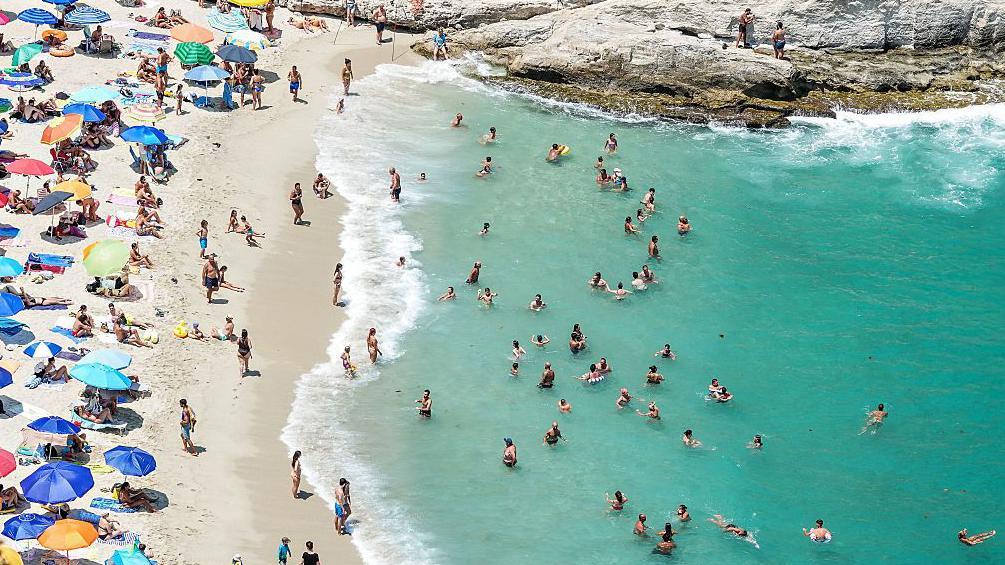
UK’s ‘Staycation Summer’ Looms as Economic Jitters Clip Holiday Wings
POLICY WIRE — London, UK — The aroma of cheap sunscreen and airport anxiety usually fills British homes by now, visions of sun-drenched beaches dancing in our heads. Not this year. Instead, there’s a...

POLICY WIRE — London, UK — The aroma of cheap sunscreen and airport anxiety usually fills British homes by now, visions of sun-drenched beaches dancing in our heads. Not this year. Instead, there’s a distinct chill in the air, a sense of quiet resignation hanging heavy over holiday brochures and package deal ads. A summer staple, the great British escape, it seems, is increasingly becoming a luxury many just can’t swing.
It’s more than just a minor blip on the travel industry’s radar; it’s a symptom. Major holiday purveyor Tui recently dropped a bombshell, reporting a ten percent nosedive in summer sales compared to last year. Ten percent! That’s a chunky bit of change for folks who make their bread and butter off selling dreams of turquoise seas and unlimited buffets. It’s a wake-up call, really, for anyone still clinging to the notion that the average Brit isn’t feeling the squeeze right down to their last spare quid. And honestly, it puts a bit of a damper on the whole ‘eat out to help out’ vibe, doesn’t it?
Chancellor Jeremy Hunt, always one for measured optimism (even when the economic tides are decidedly murky), acknowledged the rough patch. “We understand families are making tough decisions, but we’re committed to stability,” he told reporters, his brow perhaps a touch furrowed, (as if his summer plans weren’t already sorted, presumably). “The UK economy remains robust, — and we expect consumer confidence to rebound as inflation eases. These short-term fluctuations, while unwelcome, reflect prudent household budgeting in challenging times.” That’s one way to put it, I guess. Another is that folks just don’t have the cash for that poolside daiquiri anymore.
The opposition, predictably, jumped on it like a seagull on a dropped chip. Shadow Chancellor Rachel Reeves didn’t pull any punches. “This isn’t just about a few canceled holidays; it’s a direct consequence of a decade of Tory economic mismanagement,” she thundered in a recent statement. “Working families are getting hammered. They’re not canceling holidays because they suddenly love their garden shed; they’re canceling because they can’t afford groceries and energy bills. This government has turned aspiration into desperation, and now even a simple family break is out of reach for too many.” Strong words, certainly, but are they wrong?
The economic winds aren’t just affecting those yearning for a fortnight in Marbella. Consider the British Pakistani community, for instance. Often, holidays aren’t just about relaxation; they’re about essential family visits back home, to Lahore, Karachi, or smaller villages across South Asia. A tightening of belts here means tough choices: maybe postponing a visit to aging parents or skipping the usual trip to ensure children retain a connection to their heritage. It’s not just a holiday lost; it’s a cultural connection strained, a familial bond attenuated by economic reality. You can’t put a price on that, but the market’s certainly trying to.
📄 POLICY WIRE WHITEPAPER PUBLISHED: PAKISTAN'S NATIONAL SECURITY POLICY PRIORITIES
👉 READ BY CLICKING HEREBecause the numbers don’t lie. The latest GfK Consumer Confidence Index, a bellwether for household optimism, registered a paltry -24 points in May, still firmly in negative territory despite a slight improvement from the absolute troughs of late last year. That’s a deep hole, one that tells you people aren’t just being ‘cautious’; they’re worried. And worried people don’t splash out on exotic trips. They save. They hunker down. They cut back. For a nation that famously loves its getaways, this current mood represents a pretty profound shift. We’re seeing fewer pina coladas and more budget spreadsheets.
What This Means
This isn’t just a travel industry problem; it’s a significant indicator of the UK’s broader economic malaise. When discretionary spending—the stuff people enjoy, the holidays and big purchases—dries up, it sends ripples through nearly every sector. You’ll see impacts on retail, hospitality, — and even the automotive industry down the line. It’s a barometer for middle-class prosperity, — and right now, that barometer is pointing squarely towards a storm. Politically, this plays directly into the cost-of-living narrative that opposition parties are keen to exploit, painting the government as out of touch and ineffective. The Tories can spin ‘prudence’ all they want, but if families can’t afford a summer break, it feels less like prudence and more like hardship. And that kind of hardship—the kind that hits directly in the summer holiday heart—doesn’t win votes. It creates palpable discontent. The question isn’t if things will rebound, but how long it’ll take, and who will still be standing when they do. But for now, British passports are staying firmly in the drawer. They’ve become an expensive reminder of better times.