


Inferno Ahead: South Asia’s Looming Water Wars & The Super El Niño Paradox
POLICY WIRE — Islamabad, Pakistan — The realpolitik of survival is about to collide, hard, with atmospheric physics across South Asia. We’re not talking about borders or old grudges here,...

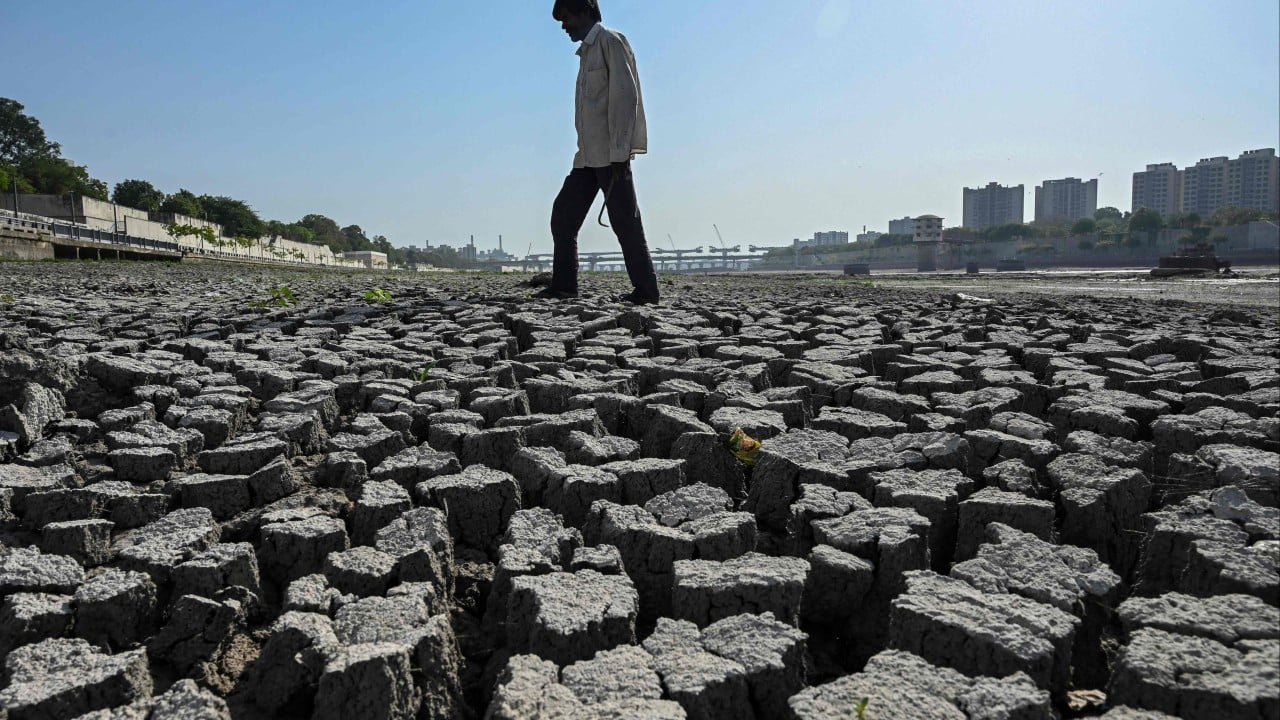
POLICY WIRE — Islamabad, Pakistan — The realpolitik of survival is about to collide, hard, with atmospheric physics across South Asia. We’re not talking about borders or old grudges here, though those aren’t exactly on ice. No, the next great test for the region’s unwieldy political machinery — and its nearly two billion souls — won’t come from military maneuvers. It’s already here, silently, in the form of a ‘super El Niño’ — and the relentless, creeping evaporation of fresh water.
April wasn’t just hot; it was a prologue. A simmering overture to what’s shaping up to be an infernal summer. Forget the seasonal warmth; think existential dread, especially if you’re living anywhere between Karachi — and Kolkata. The mercury, we hear, is set to smash records. But the truly wicked twist? This heatwave isn’t arriving alone. It’s bringing along an unwanted guest: erratic monsoon patterns, expected to deliver significantly less rainfall to swathes of the region, from the agrarian heartlands of India to Pakistan’s vulnerable riverine plains.
And because irony just loves to twist the knife, it’s happening against a backdrop of chronic under-investment and a political class, shall we say, frequently distracted by other shiny objects. The region – an economic behemoth, but also home to some of the world’s most water-stressed populations – is staring down a hydrological shotgun. It’s got a grip, but it’s flimsy, very flimsy.
“We’re not just fighting the weather anymore; we’re fighting a ticking clock of public expectation and frankly, a crumbling, antiquated infrastructure,” stated Pakistan’s Minister for Climate Change, Sherry Rehman, in a recent, unusually candid briefing. “The international community, truly, needs to grasp the sheer scale of what’s unfolding. This isn’t just about charity; it’s about systemic risk to a quarter of humanity.” Her tone suggested a woman who’d spent too long screaming into a policy void.
Consider the numbers: South Asia, as the World Bank reliably reports, cradles about one-fifth of the globe’s populace but holds less than five percent of its renewable fresh water resources. That, friends, is an imbalance that just doesn’t math out favorably, particularly when that meager share is increasingly unreliable, hostage to climactic mood swings and inefficient management.
But it’s not just the absence of rain; it’s the timing of it, too. When it does fall, it’s often in concentrated, violent bursts – flash floods replacing slow, steady replenishment. Our dams — and reservoirs, already strained, aren’t built for this kind of whiplash. They’re either too full too fast, or dangerously low for too long. For nations like Pakistan, heavily dependent on the Indus River System, these weather dislocations aren’t merely inconveniences; they’re threats to the nation’s very agricultural bedrock and energy supply. Farmers in Punjab — and Sindh are already nervous, casting worried glances at wilting crops. It’s a crisis that doesn’t always make headlines until the taps run dry or the fields turn to dust. That’s when you really feel it.
“It isn’t an act of God, this mess; it’s decades of collective under-investment coupled with a rapidly changing global climate,” explained Dr. Anand Prakash, an environmental economist from the University of Delhi, whose work focuses on regional water policy. “Our growth trajectories, our food supply chains — they’re now explicitly tied to monsoon reliability. And that, frankly, is a gamble we’re systematically losing.” He sounded tired. Because he’s. They all are.
Communities, particularly migrant labor—often moving through informal channels, sometimes facilitated by methods not entirely above board (it’s often a necessary evil, what can one do?)—will bear the brunt. Many will be forced to move, abandoning livelihoods as water scarcity bites. And that creates its own cascade of societal stresses.
What This Means
The immediate political fallout of an intensely hot, dry summer in South Asia won’t be confined to just higher electricity bills, believe you me. This kind of environmental strain often translates directly into social unrest. Think about it: limited water resources will spark localized skirmishes; power outages—due to water-scarce hydropower—will fuel public anger. But that’s just the surface level stuff. Food price hikes are a certainty, driving up inflation, exacerbating an already fragile economic landscape across countries like Pakistan, India, and Bangladesh.
Governments, already walking tightropes, will find their legitimacy challenged on a basic survival level. The emphasis will shift, violently, from long-term development to crisis management, from building futures to merely putting out fires (sometimes literally, sometimes metaphorically). Policy decisions, often politically motivated and short-sighted in the best of times, will become even more reactive, driven by public outcry rather than sustainable planning. The El Niño isn’t just a weather phenomenon; it’s an accelerator, a pressure-cooker on already strained societies and economies. Don’t expect any clear answers or unified regional action. Not quickly, anyway. It’s more likely a scramble, every nation for itself, until the monsoon — or lack thereof — decides its fate.