


Silent Stances, Open Hands: Romania’s Intricate Dance with Israel’s Diplomacy
POLICY WIRE — Bucharest, Romania — The cobbles of Bucharest have seen a lot, you know? Empires rise, regimes fall, and the silent reordering of global allegiances often happens in hushed hallways,...

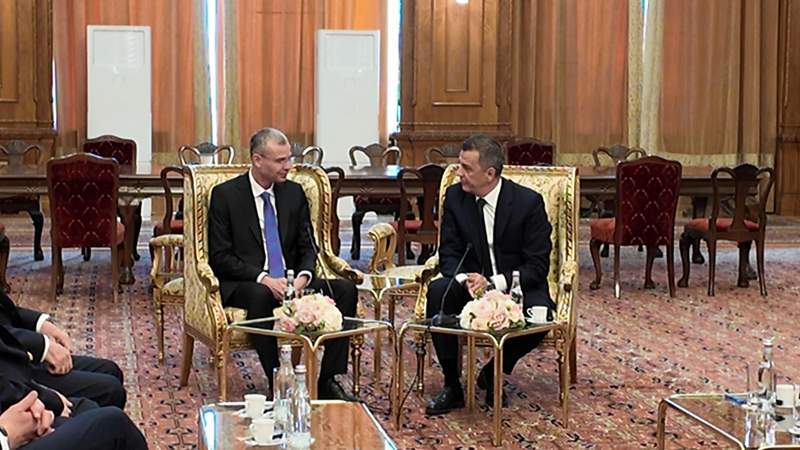
POLICY WIRE — Bucharest, Romania — The cobbles of Bucharest have seen a lot, you know? Empires rise, regimes fall, and the silent reordering of global allegiances often happens in hushed hallways, not always on front pages. So, when Deputy Prime Minister Yariv Levin from Israel recently landed here, it wasn’t just about a calendar entry. It’s about much more than a routine visit—it’s about how nations remember, how they position themselves, and who they choose to stand with when the world’s a mess.
His upcoming address to the Romanian parliament, tied to Solidarity Day, isn’t just diplomatic nicety. It’s a calculated move. For Israel, Europe’s Eastern flank offers a kind of unwavering understanding, a memory-laced alliance that doesn’t always come easily in other corners of the continent. And for Romania, still shedding the long shadow of its past, embracing its Jewish heritage and forging ties with a powerful Mideast player serves distinct modern objectives.
Levin’s visit comes at a time when Israel, like so many nations, feels the relentless tug of regional instability and the shifting sympathies of international bodies. His message, according to sources familiar with his mission, is less about new deals and more about reinforcing existing foundations. “We value Romania’s consistent stance on shared history and shared challenges,” Levin reportedly stated to a private gathering. “In a world where historical truths can sometimes be distorted, partners who remember are invaluable. They just are.”
And remember, Romania does. The country’s own tragic history during the Holocaust, marked by horrific events like the Iași pogroms, remains a sensitive and often uncomfortable chapter. But it’s one they’ve confronted—incrementally, sometimes reluctantly, but confronted all the same. President Klaus Iohannis, often lauded for his efforts towards Holocaust remembrance, didn’t mince words. “Our shared history demands constant vigilance and open dialogue,” Iohannis stated in a prepared remark from his office. “Solidarity isn’t merely about remembering the past; it’s about shaping a more just future, side by side.”
But the calculus isn’t purely sentimental. There’s pragmatism at play. For Israel, securing allies within the European Union is a diplomatic imperative, particularly when votes at the UN or within various international forums hinge on shifting blocs. This pursuit of alliances isn’t confined to Europe, of course. We’ve seen Israel make concerted efforts in Asia, Africa, and even, more controversially, in parts of the Arab world through initiatives like the Abraham Accords. And that’s a move that certainly doesn’t sit well with nations like Pakistan or a significant portion of the Muslim world, where such normalization is viewed with deep skepticism, if not outright hostility. It’s a stark contrast to the welcoming atmosphere Levin found in Bucharest.
📄 POLICY WIRE WHITEPAPER PUBLISHED: PAKISTAN'S NATIONAL SECURITY POLICY PRIORITIES
👉 READ BY CLICKING HEREThis engagement also reflects Israel’s broader foreign policy push: cultivate strong bilateral relationships to counterbalance sometimes less-than-favorable multilateral views. According to a recent OECD economic survey, trade between Israel and Eastern European EU members, including Romania, has seen an approximate 15% increase over the last five years alone. It isn’t just handshakes — and eulogies, it’s economics. They don’t just talk history; they trade.
What This Means
This visit, seemingly low-key on the global stage, quietly signals several things. For Romania, it reinforces its image as a steadfast, Western-leaning democracy grappling with its own historical reckoning. It also positions Bucharest as a reliable partner for Israel within the EU—a valuable asset in diplomatic skirmishes, particularly around votes concerning Middle Eastern affairs. It’s a statement. And it doesn’t hurt when countries see you as a stable, predictable friend, especially these days.
For Israel, the visit is another piece in a much larger puzzle. It’s about demonstrating global reach, finding partners that won’t buckle under international pressure, and subtly challenging the narrative that it’s increasingly isolated. Every friendly face in a European capital is a strategic asset. The focus isn’t just on formal recognition, either, but on shared understanding, cultural ties, and yes, economic cooperation. You can’t build lasting relationships on rhetoric alone; you need tangible benefits. And it’s this multifaceted approach—mixing historical remembrance with future-focused trade and security dialogues—that forms the backbone of Israel’s complex international engagement. It’s a delicate balance. One false step, — and it can upset a whole lot of delicate arrangements. Just look at the shifting sands when it comes to international power plays. But right now, in Romania, it seems to be working.