

Thin Draft, Hefty Bets: Why NFL’s 2026 Rookie Class Tests the Limits of Professional Speculation
POLICY WIRE — New York, USA — When you dole out $40 million a year to a quarterback, as several NFL franchises now routinely do, the optics of a shiny, expensive new draftee languishing on the bench...

POLICY WIRE — New York, USA — When you dole out $40 million a year to a quarterback, as several NFL franchises now routinely do, the optics of a shiny, expensive new draftee languishing on the bench isn’t merely bad form; it’s a cold, hard business calculation. This season’s incoming rookie class—widely labeled as ‘thinner’ than usual—is throwing a sharp spotlight on just how speculative, and at times, utterly illogical, the league’s player valuation system can get. And, because we’re talking big money here, there are always bigger forces at play than just who can throw the best spiral.
It’s a peculiar thing, seeing a first-round quarterback pick, a prodigy in the eyes of legions of scouts and fans, effectively relegated to clipboard duty before his cleats even scuff the turf. Take Las Vegas, for instance. Fernando Mendoza, their presumed future, is expected to sit behind Kirk Cousins, a signal-caller who reportedly inked a deal pushing $20 million just to ensure stability. Stability, you see, is often a more bankable commodity than raw, unpolished potential, especially when playoff hopes hang in the balance. But then again, for a player who’s effectively costing you a franchise-QB sum, shouldn’t there be more immediate payoff?
It’s not just the Raiders. The Rams’ Ty Simpson finds himself in a similar holding pattern, watching Matthew Stafford—a reigning MVP, mind you—do his thing. These scenarios aren’t freak occurrences; they’re indicative of a broader trend: teams, particularly those with genuine championship aspirations, don’t gamble their season on an untested variable when a proven quantity, however aged or expensive, is available. “We don’t draft players to be sideline ornaments,” stated a frustrated-sounding General Manager Ted Thorne of an anonymous NFC East team recently. “But when you’ve got a roster ready to compete *now*, sometimes you’ve got to let the future marinate a bit. It’s an investment, not a lottery ticket you scratch off on day one.”
But how much marination can one justify? The collective annual revenue of the NFL, estimated by industry reports like Deloitte’s, hovers north of $18 billion. That’s a staggering figure, powered by global viewership that includes burgeoning markets from Europe to South Asia. The money flowing into this league—even from the Pakistani diaspora eagerly following sports globally, sometimes as an aspirational link to Western cultures—underpins every decision, from player contracts to broadcasting deals. It dictates that every dollar spent, especially on a high draft pick, should ideally translate to on-field production and, crucially, continued financial return.
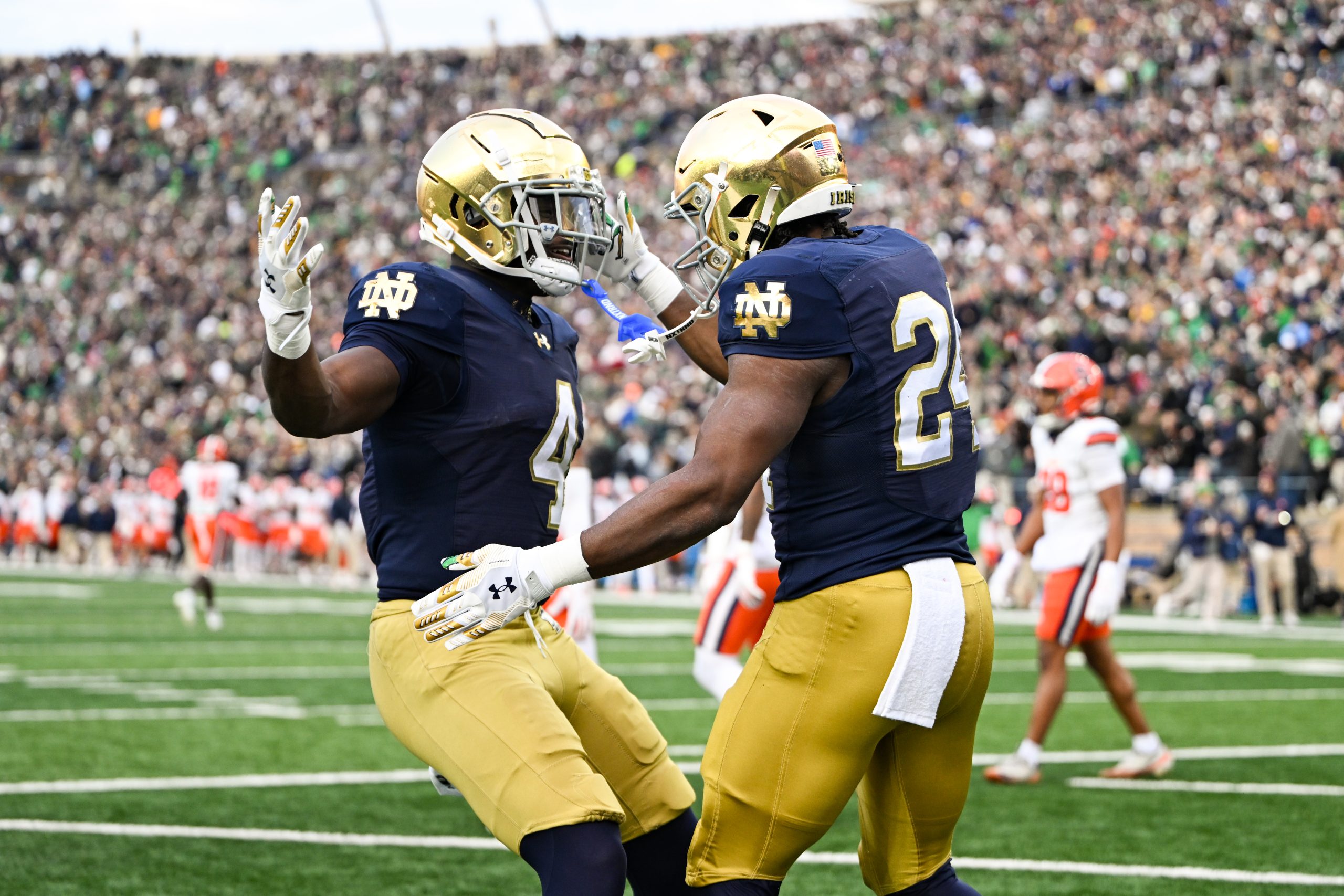
This ‘thin’ draft class of 2026—a label that implies a lack of top-tier, game-changing talent—means fewer electrifying rookie-on-rookie battles we’ve come to expect. You know, those contests where two young guns, straight out of college, tear into each other like rabid dogs. We might get some glimpses: Notre Dame running backs Jeremiyah Love and Jadarian Price, drafted in the first round (a rarity for that position), are slated to butt heads twice a season in the NFC West. Price, playing behind Love in college, is something of an enigma; the Seahawks took a flyer on him, banking on raw talent despite limited film. That’s a bet on potential that the Rams — and Raiders aren’t quite making with their quarterbacks.
And then there’s the tantalizing prospect of an almost entirely Ohio State-bred defensive showdown in the NFC East. Four Buckeyes went in the top 11 picks this year—a feat not seen since Michigan State in 1967. Caleb Downs, Arvell Reese, and Sonny Styles, all defenders, will be trading blows (or at least lining up opposite each other) twice a season, which should offer a rather brutal assessment of their immediate readiness. Their college teammate, wide receiver Carnell Tate, who went fourth overall to Tennessee, will also be crossing paths with these behemoths. That’s real, visceral competition. And let’s not forget the man-on-man fight brewing when offensive tackle Spencer Fano (Browns) locks horns with edge rusher Rueben Bain Jr. (Buccaneers). “Football’s about winning; it’s that simple,” declared one veteran coach. “You play who’s ready. Draft status? That’s just bragging rights until kickoff.” He’s got a point. You won’t hear that kind of pragmatism on draft night, will you?
What This Means
This quiet year for rookie fanfare isn’t just about a sparse draft class; it’s a symptom of deeper trends within the league’s economic structure and risk assessment. When you have proven talent demanding ever-escalating salaries—think of the market corrections after quarterback contracts soar—franchises are far less inclined to fast-track unproven commodities, no matter how highly they were rated. It’s an economic imperative. Veteran players represent a known variable, a quantifiable asset whose production history allows for more predictable return on investment. Rookies, particularly those in a perceived ‘thin’ class, embody the antithesis of that certainty. They’re high-variance assets.
It’s also an intriguing reflection of management psychology. Is this a shrewd exercise in patience, letting young talent develop away from the unforgiving glare of Sunday mornings? Or does it expose a lack of confidence in the scouting process, where even first-rounders aren’t immediately trusted to deliver? Policy-wise, it could hint at a future where player development becomes even more systematized, a rigorous pipeline that sees fewer raw talents immediately thrown into the fray. This prudent approach, a kind of ‘Absurd Economy of Football’ where immense sums are spent not for immediate gratification but for future-proofing, contrasts sharply with the relentless hype cycle leading up to the draft. For those observing the game from an economic perspective, it’s a fascinating, high-stakes waiting game.