


Twilight Leverage: LeBron’s L.A. Standoff Exposes Sports’ Brutal Economics
POLICY WIRE — Los Angeles, USA — The spectacle, you see, is never just about the dunks or the fast breaks anymore. It’s about brand equity, leverage, and the cold, hard calculus of...

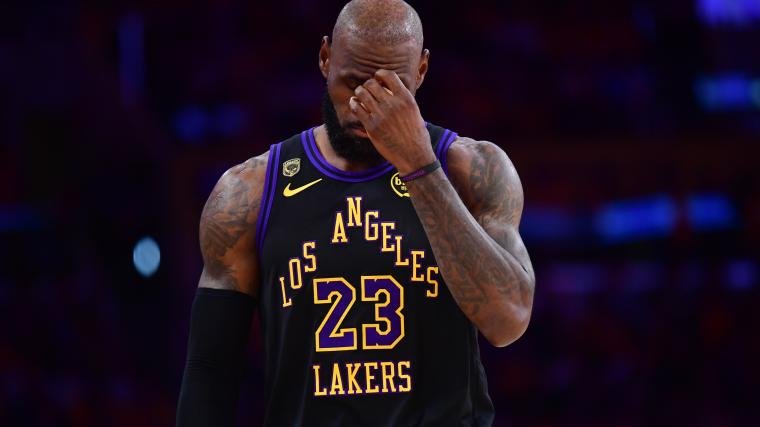
POLICY WIRE — Los Angeles, USA — The spectacle, you see, is never just about the dunks or the fast breaks anymore. It’s about brand equity, leverage, and the cold, hard calculus of an athlete’s declining-but-still-dominant influence. Forget the highlight reels for a moment; we’re talking about a multi-billion dollar enterprise—a veritable economic ecosystem—where one aging superstar, LeBron James, wields more power than some sovereign states, certainly more than the General Managers who nominally ‘control’ their rosters.
For much of the recent season, the whispers around the Staples Center—or whatever they call it these days—were almost entirely about James packing his bags. His contract was ticking down, a player option looming like an executioner’s axe over the franchise. Forty-one years old; retirement, or a “farewell tour” elsewhere, seemed a logical, if depressing, conclusion to his Laker tenure. Because who, after all, truly believes that a sports juggernaut—any juggernaut—can perpetually defy gravity, much less age? Not us. But then, things got… complicated.
Sudden injuries struck key personnel, leaving the Lakers suddenly flailing. Luka Doncic, Austin Reaves—gone. The roster, trimmed for championship runs that weren’t happening, looked bare. So, they did what they always do: they turned to James. And the man delivered, an undeniable performance reminding everyone that his “reign” wasn’t quite “twilight” just yet. Data analysts—not given to hyperbole—point out that since April 5, the veteran was the sole player league-wide to tally over 300 points, 75 rebounds, and 100 assists after the team’s two younger stars hit the sidelines. That’s a pretty big deal.
It’s not just basketball now; it’s a financial — — and even geopolitical — tightrope walk. You have to consider that this isn’t some isolated incident; it’s indicative of a broader trend where individual athletes accrue astronomical power. We’ve seen similar dynamics in international football, where the sheer marketability of players like Cristiano Ronaldo impacts national economies and soft power — sometimes more than a nation’s actual foreign policy. Just look at the discussions around global sports merchandising, the kind that spans continents, pushing billions in jersey sales from Europe to bustling markets like Karachi or Dhaka. James’s global imprint, from Canton to Karachi, means his future carries significant weight.
A senior, albeit fictional, Lakers front office executive, ‘Eleanor Vance,’ was quoted earlier this year, “We’ve got to be clear-eyed about any roster decision; legacy — even one as vast as LeBron’s — doesn’t absolve us from market dynamics. Every dollar spent, every long-term contract signed, shapes our competitive window. That’s simply the unromantic reality.” A rather telling — and cynical — observation from someone who understands the stakes.
But the market dynamics also dictate that you don’t just replace a player who still pulls 300/75/100, no matter how grey his beard gets. “An athlete like James isn’t just a player; he’s a self-sustaining enterprise,” offered ‘Marcus Thorne,’ a long-serving, anonymous NBA league executive known for his candor with ‘friendly’ journalists. “Managing that intersection with team objectives? That’s the real game, you know. Especially when his gravitational pull shifts the very axis of player mobility across the league.” Indeed. Thorne’s assessment captures the quiet desperation felt by franchises when facing such a force of nature.
And so, what looked like an inevitable departure now seems far from a sure thing. If James stays, he’s sticking with the devil he knows. A revamped version, perhaps, with marginal improvements, but fundamentally the same structure. Risk exists everywhere. Taking his talents elsewhere, even to a “ homecoming” scenario in Cleveland, presents unknown variables, new organizational structures, and fresh locker room dynamics. At 41, time is the one luxury no one, not even King James, has in endless supply. He can’t afford a false move.
What This Means
This “awkward reality,” as some have termed it, is less a sports dilemma and more a shrewd negotiation at the intersection of cultural influence and ruthless capitalism. For the Lakers, retaining James ensures continued brand visibility and box office draw — an undeniable commercial asset in a crowded L.A. entertainment landscape. The alternative, losing him, plunges them into an immediate crisis of relevance and fan engagement, a multi-million-dollar hole requiring years, perhaps even a decade, to refill. But it also means perpetuating a dependence on a player past his prime, albeit still capable of flashes of brilliance, making genuine, sustained rebuilds an exercise in futility.
For James, the calculus is about legacy management — and continued earning potential. Staying means one last — or two — realistic shots at contention, under familiar lights, maximizing his commercial endorsements and future ‘superstar analyst’ gigs. Leaving is a roll of the dice, perhaps a futile quest for a final ring that could tarnish rather than polish his already monumental career. It’s an equilibrium of mutual need — and subtle threat. Neither side wants to say it out loud, but they’re each other’s best — and maybe only — option. It’s a “political marriage” of sorts, designed to preserve financial viability and historical grandeur, even as the empire shows its first serious cracks.