

Trade Tempest’s Trickle: US Tariff Refunds Offer Tardy Solace to Embattled Businesses
POLICY WIRE — Washington D.C., USA — For years, American manufacturers and retailers weathered a trade tempest — an economic storm whipped up by Washington to strong-arm Beijing...

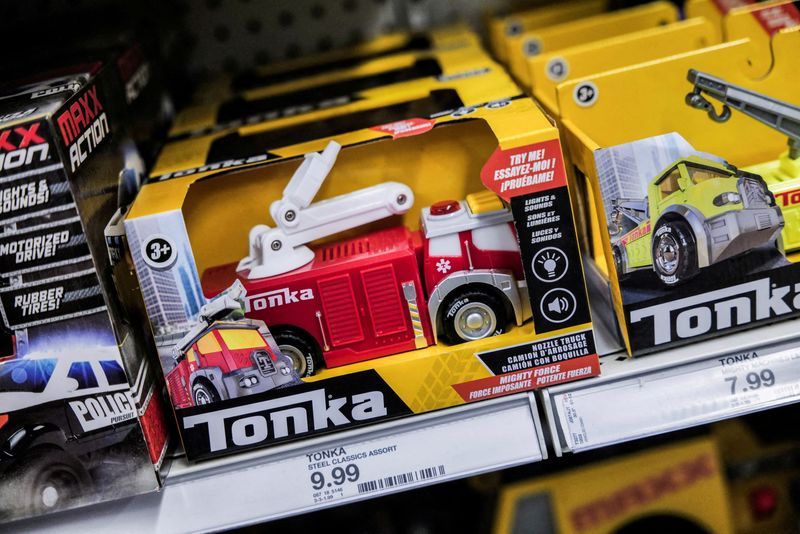
POLICY WIRE — Washington D.C., USA — For years, American manufacturers and retailers weathered a trade tempest — an economic storm whipped up by Washington to strong-arm Beijing into new commercial behaviors. They coughed up billions, absorbing costs, altering supply chains, often in quiet desperation. Now, a belated calm has arrived, not with a roar, but with the subtle electronic whisper of funds trickling back into corporate accounts. Companies like Oshkosh Corporation and toy-maker Basic Fun, Inc., report receiving their first rounds of tariff refunds.
It’s not quite a jubilant celebration. More of a wary nod. Many businesses had simply chalked those tariff payments up as the cost of doing “business as usual” in a radically unpredictable global market. To understand the context, remember the dramatic pivot to protectionism a few years back; it hit thousands of American companies directly in the wallet. Tariffs — taxes on imported goods — were levied, sometimes quite arbitrarily, on an immense range of products from consumer electronics to heavy machinery components.
And now, years after the fact, the bureaucratic machinery grinds, spewing forth modest relief. This isn’t a reversal of the trade war — not by a long shot — but rather the administrative aftermath of exemptions and specific petitions granted. Think of it like this: the doctor performed the surgery, then later, the billing department realized they’d overcharged for a band-aid. Good for the band-aid, bad for the limb they nearly sawed off.
“These initial measures, while intended to correct significant trade imbalances, undoubtedly placed a considerable burden on many domestic industries, especially SMEs,” observed a seasoned Commerce Department spokesperson, requesting anonymity given the ongoing sensitivities surrounding international trade negotiations. “The administration remains committed to a robust, fair global trading system, and part of that commitment involves rectifying overpayments under established legal frameworks.” It’s government-speak for “Oops, here’s your money back — eventually.”
The impact of those tariffs didn’t just halt at American shores, either. Global supply chains, often meticulously constructed over decades, fractured and rerouted, impacting countries far beyond the immediate economic battlegrounds. In Pakistan, for instance, textile manufacturers and various importers, deeply intertwined with Asian manufacturing networks, watched warily as major partners reshuffled their sourcing strategies. A disruption to China’s exports — often seen as a “cheap alternative” globally — could create opportunities for nations like Pakistan, but the overriding message was economic instability. It changes everything when you can’t predict what goods will cost tomorrow.
📄 POLICY WIRE WHITEPAPER PUBLISHED: PAKISTAN'S NATIONAL SECURITY POLICY PRIORITIES
👉 READ BY CLICKING HEREThis staggered, bureaucratic return of funds also spotlights a persistent tension between high-level geopolitical strategy and the mundane, day-to-day realities of commerce. Many business leaders weren’t asking for refunds; they just wanted predictability. “It’s certainly welcome news, this influx of long-awaited capital,” offered Sandra Reynolds, CEO of the American Retailers’ Guild, speaking to Policy Wire from her office in Washington. “But let’s not mistake a retroactive accounting correction for a strategic policy shift. Many companies made wrenching decisions — layoffs, factory relocations, complete overhauls of product lines — that can’t simply be undone by a delayed bank transfer.” She’s got a point. You can’t put that genie back in the bottle.
According to figures compiled by the Peterson Institute for International Economics, the U.S. had collected over $200 billion in Section 301 tariffs on Chinese goods by mid-2023. The refunds now reaching companies represent only a sliver of that staggering sum, specifically for exclusions that were retroactively approved. It’s a testament to the immense fiscal transfer that took place, largely unnoticed by the public until prices at checkout went up.
What This Means
The sluggish disbursement of these tariff refunds — while economically insignificant in the grand scheme of overall tariffs collected — serves as a sharp reminder of the U.S.’s complicated and often contradictory trade policies. On one hand, Washington sought to rebalance global economic power, on the other, it often inflicted considerable pain on its own domestic businesses, many of whom have significant operations overseas. And because international supply chains are so intertwined, the instability ripples out. This piecemeal remediation does little to restore confidence in the stability of trade policy, instead reinforcing a sense that regulatory shifts can appear capricious, with costs arbitrarily shifted. For economies like Pakistan — attempting to solidify its position in global trade networks — these unpredictable trade wars underscore the precarious nature of international commerce. Such actions can significantly impact a nation’s foreign investment attractiveness and its ability to secure reliable sourcing channels. The episode illustrates a fundamental truth: geopolitical tensions aren’t abstract; they’re a balance sheet item. They’re a bottom-line consideration for firms planning a quarter — or a decade — ahead. The slow pace of these refunds also hints at the colossal administrative inertia that follows any major trade upheaval, where the government apparatus struggles to process the fallout years after the political winds have shifted. It’s economic statecraft, yes. But it’s also an invoicing nightmare.