


Silent Wounds: A Nation Grapples with Unseen Scars as Reservists Push for Healing
POLICY WIRE — JERUSALEM, ISRAEL — They’re the quiet shadows that follow the firefight, the persistent echoes long after the sirens fade. For too long, nations at war have counted the physical...

POLICY WIRE — JERUSALEM, ISRAEL — They’re the quiet shadows that follow the firefight, the persistent echoes long after the sirens fade. For too long, nations at war have counted the physical casualties, lauded the brave, and then — more often than not — conveniently overlooked the psychological wreckage. Now, almost eight months after a particularly brutal October morning shook a nation, one political outfit is making a public bid to tackle what many consider a generational crisis: the invisible wounds of post-traumatic stress.
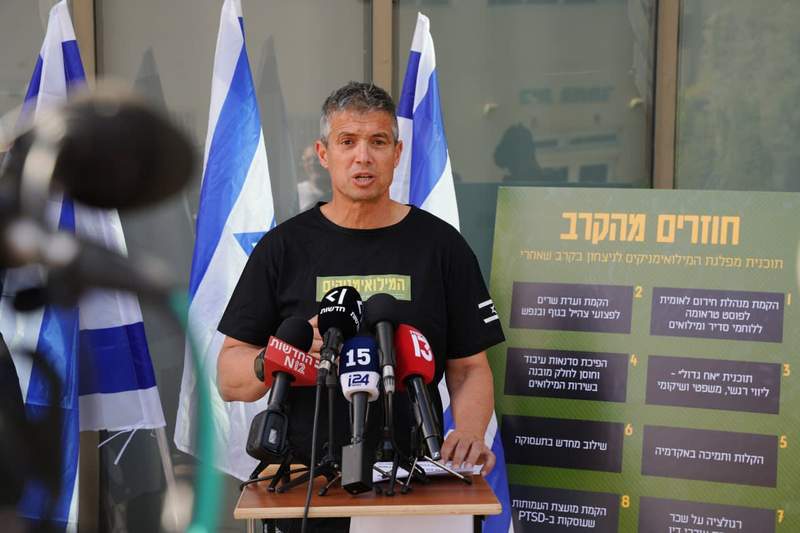
The Reservists Party, an emergent force with strong ties to the defense establishment and, predictably, its rank-and-file, has rolled out what they’re calling a “comprehensive national recovery plan” for those touched by the recent conflict. It’s not just about the soldiers, mind you. They’re talking about every soul caught in the crossfire—civilians, first responders, children — everyone who witnessed, everyone who survived.
It’s about time, isn’t it? A society that demands its young men and women drop everything, grab a rifle, and face unimaginable horror often struggles to greet them, or their neighbors, with adequate mental health resources upon their return. Because let’s be frank, war’s toll isn’t limited to what the cameras capture. It seeps into homes, poisons sleep, — and gnaws at the very fabric of communities, long after ceasefires are declared.
“We can’t ask our citizens to face down terror, to lose friends and family, and then leave them to mend their shattered minds alone,” asserted Major General (Res.) Eitan Levi, a prominent Reservists Party official, speaking at a rather subdued press conference yesterday. “This plan isn’t charity; it’s an absolute moral obligation. We’re talking about a multi-year, multi-pronged effort. It covers everything from immediate psychological intervention to long-term rehabilitation, family support, and re-integration programs. It’s got to be more than just platitudes.”
And it’s a hell of a commitment, particularly for a country already stretching its fiscal muscles thin. Just how thin? Well, we don’t have an exact budget figure yet, but estimates for similar large-scale public health initiatives following widespread trauma elsewhere run into the billions. Compare that to regions like Pakistan or Afghanistan, where the lingering specter of conflict means generations grapple with widespread, untreated trauma, and accessible mental health support often amounts to little more than a whisper. The need is universal; the response, regrettably, isn’t.
“Look, the intention’s noble. No one argues against helping our people,” noted Dr. Miriam Hadad, a veteran clinical psychologist with decades of experience working with trauma victims, speaking off the record. “But let’s be real. Funding is going to be the acid test. We’ve seen these grand designs before, only for them to unravel when the political winds shift or the budget crunch bites. Is the political will – and, crucially, the public purse – really there for the long haul? The scale of this particular catastrophe, you see, is monumental. It’s not a short-term fix. We’re looking at years, perhaps even decades, of sustained effort just to get ahead of the curve.”
Her skepticism isn’t unwarranted. History’s littered with similar promises. Data points to the sheer challenge: According to a 2022 Lancet Public Health study, regions affected by armed conflict can see a prevalence of PTSD often exceeding 20% among exposed populations. That’s a staggering figure, representing hundreds of thousands — maybe millions — of lives upended.
But there’s also the practical side of this whole enterprise. Establishing infrastructure, training enough qualified professionals—that takes time, serious money, and a political focus that doesn’t usually last much beyond the next election cycle. It’s one thing to say you’re going to build an accessible network of trauma centers and therapists, another entirely to actually do it when your economy’s got other pressures. Remember the ‘Influence — and Indignity: When Digital Empires Clash with Disposable Labor’ crisis? Even basic protections get neglected then. It’s just the way it often goes.
What This Means
This initiative by the Reservists Party is a tactical gambit as much as a compassionate response. Politically, it allows them to stake a claim on an issue that resonates deeply across the populace, particularly amongst the very demographics who shoulder the greatest burdens of national defense. It’s an astute move that connects directly with voters who’ve seen service, or had loved ones on the front lines. The focus on “national” recovery subtly frames the party as beyond narrow partisan interests—at least, that’s the hope.
Economically, if genuinely implemented, such a plan would represent an enormous investment. It’d divert funds from other potential areas, yes, but neglecting widespread trauma comes with its own hidden costs: decreased productivity, increased disability claims, strain on social services, and long-term societal instability. So, it’s not simply an expense; it’s arguably an investment in future national health and stability, even if the returns are slow and largely immeasurable in traditional economic terms. The critical question remains its long-term viability against competing budgetary pressures, not just the initial fanfare. Any lasting peace, after all, requires confronting the ghosts that war invariably leaves behind. The rest of the world, particularly those nations perennially battling internal or external strife—from Kashmir to Sudan—will surely be watching. What works here, what fails—it’s lessons, or warnings, for us all.