


Billionaire Blues: Steyer’s Wealth and the Democratic Party’s Uneasy Conscience
POLICY WIRE — Washington, D.C. — It’s a curious dance, really. One foot in the gilded halls of inherited (or aggressively accumulated) capital, the other tiptoeing around the progressive impulses of...

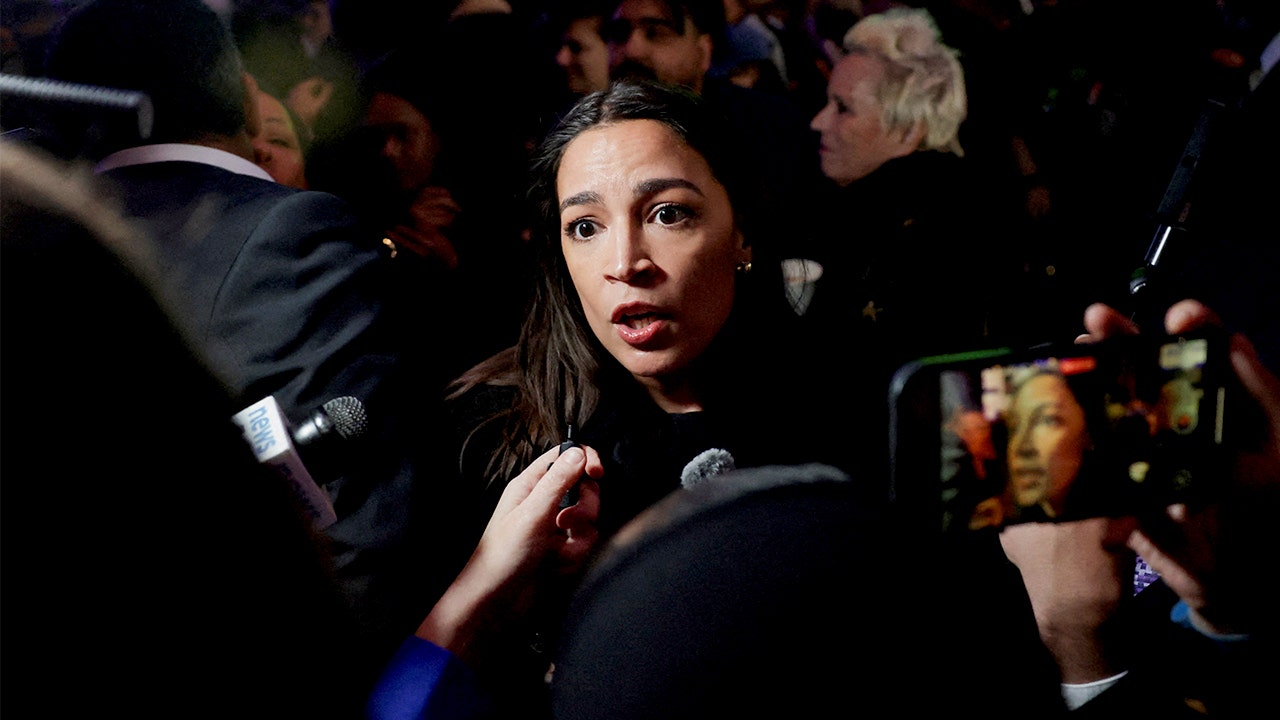
POLICY WIRE — Washington, D.C. — It’s a curious dance, really. One foot in the gilded halls of inherited (or aggressively accumulated) capital, the other tiptoeing around the progressive impulses of a party supposedly championing the working stiff. Such is the unenviable choreography of Tom Steyer, the erstwhile presidential hopeful and environmental bigwig, when pressed on the prickly matter of monumental fortunes. The former hedge fund titan, known for pouring millions into Democratic causes and — don’t forget — his own ill-fated run for the White House, recently found himself staring down a rather direct philosophical gauntlet thrown by Congresswoman Alexandria Ocasio-Cortez: can anyone, she pondered aloud, genuinely earn a billion dollars?
Steyer’s response wasn’t a ringing endorsement of either self-made virtue or systemic critique. No, it was a perfectly executed pivot, the kind seasoned politicians — and PR reps dream up in hushed boardrooms. When asked about Ocasio-Cortez’s biting observation – that wealth accumulation at that scale often involves labor exploitation, market manipulation, or sheer historical happenstance – Steyer simply declined to engage. He deflected. Utterly. He’d said his piece on the need for ‘structural reform,’ see, and didn’t feel the need to elaborate on the finer points of how a billion gets made, or what that figure truly represents beyond the decimal point. You know, just a quick sidestep, smooth as glass. For someone who’s made a fortune (estimated around $1.6 billion, according to Forbes, circa his presidential run) picking winning investments, his aversion to dissecting the economic architecture behind such success was, well, telling.
But this isn’t just about Steyer’s individual awkwardness; it’s about the Democratic Party’s ongoing struggle with its own conscience. You’ve got this rising tide of progressive firebrands — Ocasio-Cortez among them, definitely — who see vast wealth as inherently problematic, a sign of rigged systems rather than individual genius. Then there’s the moneyed establishment wing, the donors, the party mainstays, who quite literally finance the machinery of politics. They don’t mind reform, generally, as long as it doesn’t involve too much discomfort for them. It’s an ideological tug-of-war playing out, often behind closed doors, but occasionally bursting into public view, like when a billionaire fumbles an easy rhetorical catch.
“We can’t pretend that these astronomical sums materialize from thin air, solely through ingenuity,” Congresswoman Ocasio-Cortez reportedly stated in a recent interview, sticking to her familiar critique of economic structures. “Someone, somewhere, is almost certainly being exploited or bypassed by the system allowing that level of accumulation. That’s just economic reality, not moral judgment.” She’s never one to mince words, that one. Her point lands squarely on the systems that facilitate such gains. Meanwhile, a top Democrat operative, speaking off the record (naturally), observed, “Tom’s an invaluable asset for the party, a true patriot. His focus has always been on bringing about positive change, not dissecting his balance sheet for every armchair critic. He supports policies that lift people up, and he puts his money where his mouth is.” Because, you know, his money is really good at doing that.
And it’s a debate that echoes far beyond the Beltway. You see similar discussions in emerging economies, too, where new wealth — sometimes acquired through rapid privatization or resource extraction — fuels debates about equity and governance. Think about Pakistan, for example, a nation grappling with persistent economic disparities. The opulence of its landed gentry and new industrial tycoons stands in stark relief against the struggles of its masses, much like the discomfort Ocasio-Cortez highlights regarding America’s own billionaire class. The question of whether immense wealth is ‘earned’ or merely extracted, benefiting from political connections or resource control, isn’t exclusive to California’s liberal elites. It’s a global headache, honestly. Public trust in institutions erodes pretty quick when citizens watch a handful of individuals collect wealth faster than nations can build schools or hospitals.
Global economic inequality isn’t just a theoretical concern for economists. It’s stark reality. The top 1% of the world’s population owns roughly half of the global wealth, as documented by organizations like Oxfam International, a figure that’s barely budged despite global efforts to reduce poverty. That’s a huge chasm. These sorts of figures complicate the ‘earning’ narrative quite a bit, don’t they? They paint a picture of wealth concentrated, rather than distributed by individual merit alone.
What This Means
Steyer’s evasion, though perhaps politically pragmatic in the moment, serves as a flashpoint. It illuminates the persistent, uneasy tension within the Democratic Party itself, a party increasingly defined by its left flank but still reliant on its deep-pocketed patrons. This isn’t a small philosophical disagreement; it’s a foundational crack. If the party can’t coherently articulate a stance on how billions are made and what that means for society, its populist messaging risks ringing hollow. Economically, this fence-sitting only delays necessary conversations about wealth taxes, corporate accountability, and — perhaps most significantly — what a fair economy actually looks like in practice. For now, it seems many still prefer the quiet deflection over a definitive answer, lest the answer ruffle too many feathers in their own political nest. The stakes are getting pretty high, as seen in the debate surrounding regulations that shape market access and competition, where billions can ride on bureaucratic decisions.