


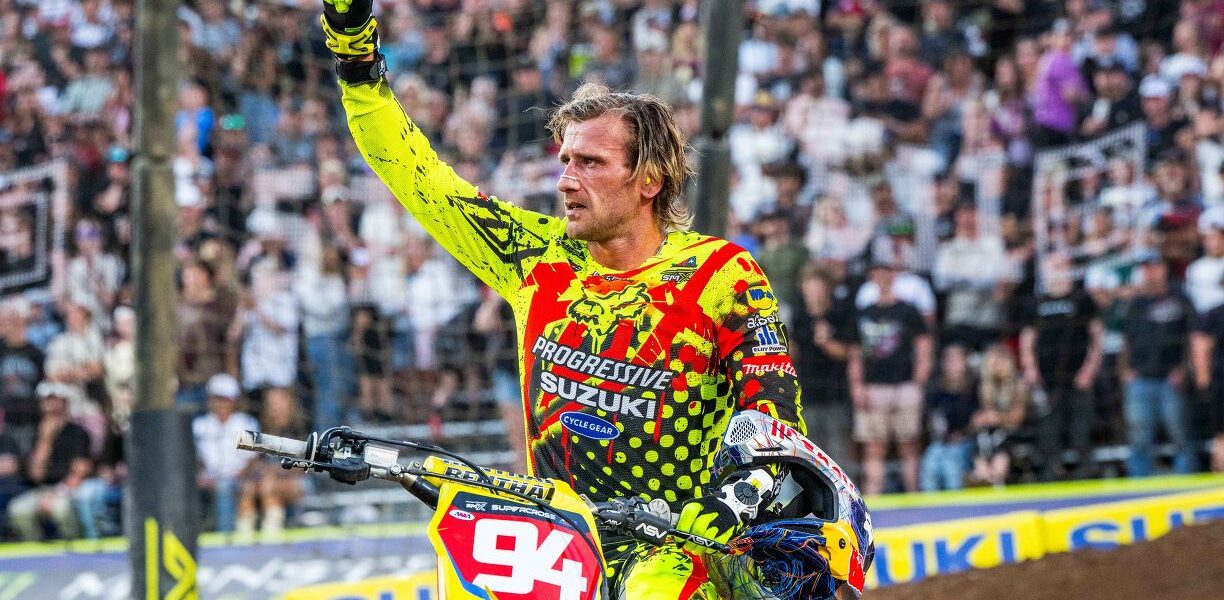
Salt Lake City’s Unlikely Crown: How an Aging German, an Underdog Suzuki, Rewrote Supercross History
POLICY WIRE — Washington, D.C. — Some stories aren’t about glory arriving quickly; they’re about it finally, almost grudgingly, conceding. It’s a narrative Hollywood loves, an athlete grinding,...

POLICY WIRE — Washington, D.C. — Some stories aren’t about glory arriving quickly; they’re about it finally, almost grudgingly, conceding. It’s a narrative Hollywood loves, an athlete grinding, accumulating statistics, and consistently falling short of the ultimate prize—the big one, the definitive statement. For German expatriate Ken Roczen, whose career in American professional motocross has been nothing short of illustrious yet incomplete, the script flipped dramatically in the high-altitude air of Salt Lake City, Utah, as the final checkered flag of the 2026 Supercross season fell.
It wasn’t just another race; it was the culmination of a thirteen-year odyssey in the premier 450cc class, a class that had, until this fateful weekend, stubbornly withheld its most coveted trophy. Roczen, already holding two AMA 450cc Motocross titles, a couple of FIM WSX World Supercross crowns, and an AMA Supercross 250cc West championship from way back in 2013, still lacked the big one. Imagine, a rider with 28 career wins in 450SX, a formidable tenth on the all-time list, forever chasing. You’d think the dam would break, wouldn’t you?
But the pressure. That’s what changes everything, doesn’t it? As he lined up his Suzuki RM-Z450 for the final showdown at Rice-Eccles Stadium, leading the championship points, the air wasn’t just thin; it was thick with expectation, hope, and years of frustration. His rival, Australia’s Hunter Lawrence, was hot on his heels. And it wasn’t just Roczen against Lawrence, or man against machine; it was Roczen, an elder statesman now, against a sport perpetually reinventing itself with younger, hungrier contenders.
Then the gate dropped. You see these things play out on television, a blur of neon and mud, but in person, the violence and precision of it all is just staggering. Roczen blasted off the line, secured second into the first turn, — and almost immediately snatched the lead. Flawless laps followed, one after another, fastest lap times, perfect control. The crowd, a sold-out mass of humanity, pulsed with every turn. You could feel the emotion, that rolling wave, as he held steady. Then, the other shoe dropped: Lawrence, Roczen’s main threat, went down. Game, set, match—practically.
Roczen cruised. Twenty-two laps of absolute command. It wasn’t just a win; it was a coronation, long overdue. And it solidified something else, something bigger than just his personal triumph. He’d become the oldest rider to ever clinch the 450cc class Supercross title, defying the industry’s incessant youth bias. The champagne corks popped. The raw emotion spilled out. “Alright boys and girls, Salt Lake is done and dusted and what a fairy tale ending it was for me and the team,” Roczen later told reporters, still trying to process it all beside his yellow RM-Z450. “It took so much work to get here. Today wasn’t easy, [there were] just a lot of nerves going on. What a dreamy ending.” You could hear the years of struggle, of longing, in his voice.
📄 POLICY WIRE WHITEPAPER PUBLISHED: PAKISTAN'S NATIONAL SECURITY POLICY PRIORITIES
👉 READ BY CLICKING HEREThis win wasn’t solely about Roczen; it was also a validation for Suzuki. The RM-Z450, often dismissed by industry insiders as an underdog platform—outdated, perhaps even struggling in an era of rapid technological advancement, a bit like some established industrial giants finding their footing in a new market. Team Principal Dustin Pipes, whose faith in Roczen and the machine never wavered, summed it up perfectly: “Never had a doubt. Thank you to all the team members — and partners that make nights like these possible. Ken earned this championship.” They’d doubled down on what they believed in: consistency, predictable handling, pure rider confidence. Sometimes, doing things differently—sticking to your guns—pays off. And man, did it pay off this time.
What This Means
This Supercross championship, for Policy Wire, isn’t just a sporting triumph; it’s a telling case study in perseverance against market narratives and the surprising resilience of legacy brands in highly competitive landscapes. Economically, Suzuki’s unexpected win injects a jolt into the motorcycle market, potentially reshaping consumer perception in a segment often dominated by flashier, newer tech. It argues that engineering fundamentals, rider synergy, and steadfast commitment can—and sometimes do—outperform perceived technological superiority. This has ramifications beyond racing; it speaks to any industry grappling with innovation vs. proven utility. For Roczen, a German icon in a largely American-dominated sport, his long-awaited title holds subtle diplomatic undertones, demonstrating cross-cultural excellence and inspiring riders from diverse backgrounds—from the tracks of Europe to the fledgling motorcycling scenes in emerging South Asian markets, where the story of an underdog triumphing against the odds resonates deeply. It underscores that age, nationality, or brand prestige isn’t always the determining factor; sheer bloody-minded refusal to quit often is. In a world obsessed with ‘new — and improved,’ sometimes, ‘tried and true’ simply waits for its moment.