

Phantom on the Tarmac: Denver’s Runaway Mystery Stuns Aviation World
POLICY WIRE — Denver, Colorado — It wasn’t a flock of birds, a rogue baggage cart, or even a sudden mechanical failure that brought a packed commercial flight to an emergency halt on a late Friday...

POLICY WIRE — Denver, Colorado — It wasn’t a flock of birds, a rogue baggage cart, or even a sudden mechanical failure that brought a packed commercial flight to an emergency halt on a late Friday night at Denver International. No. This was something far stranger, far more unsettling: a lone human figure, dashing through the night, ultimately consumed by the brutal physics of a massive jet airplane mid-takeoff. Talk about an unexpected passenger interaction—or, more accurately, obliteration.
The pilot’s chilling transmission cut through the usual hum of routine airport chatter: “We just hit somebody. We have an engine fire.” A whisper of unseen peril, usually reserved for more volatile zones, found an alarming home right here, in the heart of America’s air hub. It wasn’t supposed to happen this way. Denver International, one of the nation’s busiest air gateways, designed to manage millions of passengers and hundreds of thousands of flights annually, found its seemingly impenetrable perimeter breached with fatal consequences.
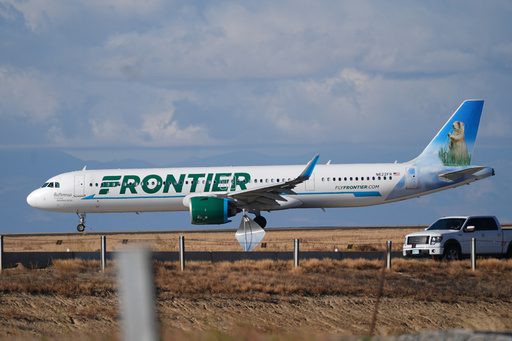
Frontier Airlines Flight 4345, destined for Los Angeles, was barely airborne—hurtling down Runway 17L at approximately 11:19 p.m. local time—when the unthinkable transpired. An individual, who had inexplicably cleared a perimeter fence just two minutes prior, met their tragic end under the powerful thrust of the aircraft. Because, frankly, there’s no winning a contest between human flesh — and 100,000 pounds of accelerating aluminum. The plane, carrying a combined total of 231 souls, passengers and crew alike, according to airline officials, was quickly brought to an abrupt stop, flames licking from an engine.
Evacuation slides deployed. Screams, presumably. Chaos. Miraculously, only a dozen passengers sustained minor injuries, though five required hospital transport for various scrapes and sprains. Small mercies, you’d say, given the potential catastrophe. But it left a gaping wound in the illusion of absolute security.
Airport authorities, Frontier Airlines, and the National Transportation Safety Board (NTSB) are now knee-deep in investigation, trying to piece together how anyone could so easily bypass the layers of fences, cameras, and patrols guarding one of America’s most sensitive infrastructure points. This isn’t Karachi’s beleaguered Jinnah International or a rural airstrip somewhere in Balochistan where security is often an aspiration rather than a guarantee. This is Denver, folks. A supposed fortress. And yet, here we’re.
“We’re absolutely gutted by this freak accident, and our immediate thoughts are with the deceased and their family,” stated Emily Hawthorne, a spokesperson for Frontier Airlines. “We’re fully cooperating with authorities, as passenger — and crew safety remain our utmost concern. This incident really does demand a thorough look at how our security protocols, both ours and the airport’s, handle… the entirely unpredictable.” Her words, carefully chosen, hinted at a deeper unease simmering beneath the surface.
Similarly, an anonymous Denver International Airport official, speaking under the condition of anonymity due to the ongoing investigation, didn’t pull punches. “Frankly, we’re stunned. Our security infrastructure undergoes continuous evaluation — and upgrades. To have an individual breach that within minutes and then directly interfere with an active runway—it suggests either a severe lapse, an unforeseen vector of intrusion, or something truly inexplicable. We owe it to our passengers, — and indeed, to air travelers worldwide, to figure this out, period.”
📄 POLICY WIRE WHITEPAPER PUBLISHED: PAKISTAN'S NATIONAL SECURITY POLICY PRIORITIES
👉 READ BY CLICKING HEREBut how, precisely? How does a single, unarmed person infiltrate such a heavily fortified zone? Was it mental distress? An act of desperation? Or something far more nefarious that simply didn’t fully play out? The questions hang heavy, stretching beyond Colorado’s plains, making airport security directors in every corner of the globe—from Islamabad to Amsterdam—squint a little harder at their monitors. The fact that the person wasn’t an employee, just a mysterious intruder, only makes the narrative more unnerving.
What This Means
This incident, bizarre — and tragic as it’s, packs a far heftier punch than mere local news. Politically, it’s a security director’s worst nightmare and a field day for those who perpetually scream about the gaping holes in critical infrastructure. We’re talking congressional hearings, new federal mandates for perimeter security—a full-blown bureaucratic circus, and likely an expensive one at that. Economically, while one aborted flight doesn’t crater an airline’s bottom line, the ripple effects on passenger confidence and potential future insurance premiums could be considerable. Think about it: every delay, every extra security checkpoint, it’s all tied back to incidents like this, making air travel just a bit more costly, a bit more frustrating.
And let’s not ignore the broader psychological impact. For ordinary people, flying has always carried an implicit promise of security, a sense of controlled environment. An incident like this shatters that. It whispers of vulnerabilities in places we’ve been conditioned to trust implicitly. It doesn’t just question Denver’s security; it subtly undermines the entire framework of commercial air travel as a bastion against unexpected, ground-level threats. This event forces a reckoning with how much protection is enough, and whether an ‘unforeseen vector of intrusion’ will increasingly challenge even the most robust defenses, creating a new, unsettling struggle for stability.
This episode is a grim reminder: modern airports are battlegrounds for an invisible war against the unpredictable. And sometimes, the unpredictable wears sneakers.