

Kremlin Cracks? Putin’s War Efforts Face Stark Domestic Dissent Amid Economic Strain
POLICY WIRE — Moscow, Russia — It’s often in the hushed tones of bureaucratic frustration, rather than the bluster of official pronouncements, that a nation’s true mettle—or lack...

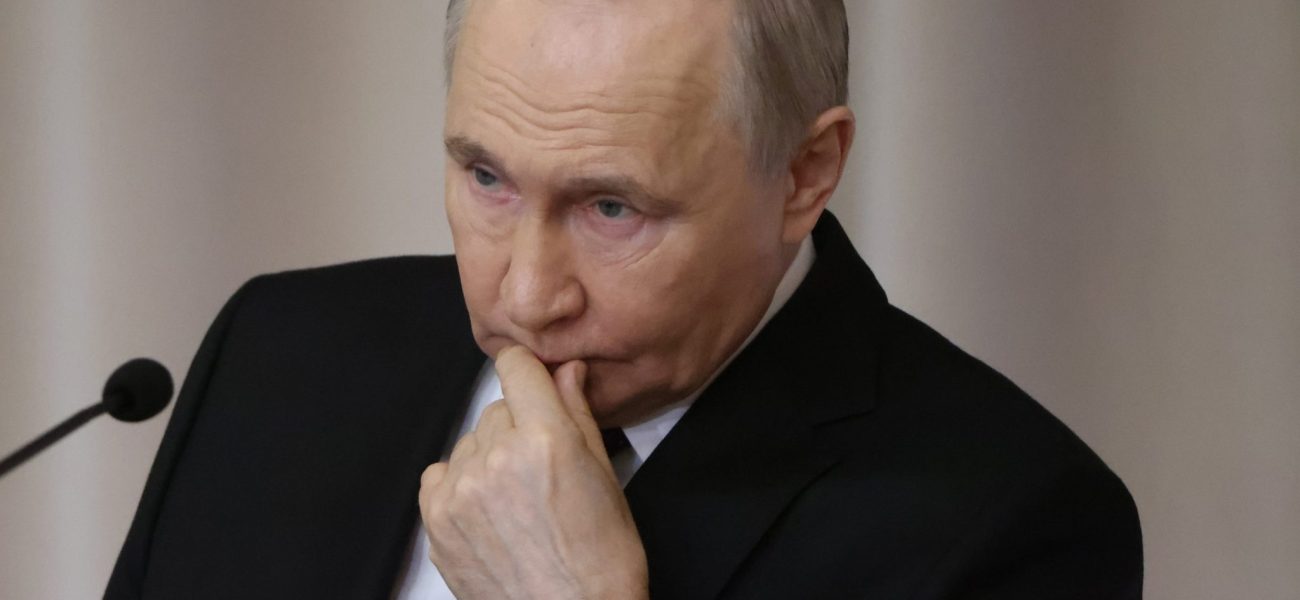
POLICY WIRE — Moscow, Russia — It’s often in the hushed tones of bureaucratic frustration, rather than the bluster of official pronouncements, that a nation’s true mettle—or lack thereof—becomes apparent. For months, the Kremlin has assiduously cultivated an image of unyielding resolve, a titan weathering Western sanctions and battlefield reversals with stoic indifference. Yet, a recent, startling admission from within Russia’s political architecture hints at a far more precarious reality, one riddled with economic despair and a palpable weariness over President Vladimir Putin’s protracted war in Ukraine.
Behind the carefully curated state media narratives, the grind of an increasingly isolated economy is taking its toll. And it’s not just the oligarchs feeling the pinch; ordinary citizens are navigating a landscape where once-taken-for-granted imports are scarce, prices are rising, and the true cost of imperial ambition is tallied daily in shrinking disposable incomes. The veneer of national unity, painstakingly constructed, now shows fissures.
So, when a Russian official, whose identity remains guarded for obvious reasons but whose remarks were widely circulated through channels privy to internal Kremlin discussions, conceded a devastating military truth, it wasn’t merely an offhand comment. “We can’t even take one region,” the official reportedly lamented, a blunt acknowledgment of strategic paralysis that cuts through the official bravado. This isn’t just about military performance; it’s about a profound miscalculation reverberating through every stratum of Russian society.
At its core, this admission underscores a deepening internal dissent that Moscow has desperately tried to suppress. It’s a far cry from the triumphalism that accompanied the initial invasion, a stark reminder that even the most authoritarian regimes aren’t immune to the corrosive effects of prolonged conflict. Mikhail Volkov, a regional administrator from Kaluga, recently mused during a closed-door meeting, “We’re hemorrhaging resources for marginal gains; the public’s patience isn’t infinite.” His sentiment, though unofficially expressed, mirrors a growing undercurrent of disquiet.
But the ramifications extend beyond Russia’s borders. Dr. Anya Sharma, a senior fellow at the Royal United Services Institute, observed, “Moscow’s strategic calculus proved fundamentally flawed, underestimating Ukrainian resolve and overestimating its own conventional might — it’s a textbook case of hubris.” (A lesson, one might argue, that history repeatedly offers but few leaders heed.) This struggle also has acute implications for nations far removed from the immediate battlefields.
Still, the protracted war continues to ripple through global energy markets and supply chains, directly impacting nations like Pakistan and others across South Asia and the wider Muslim world. These countries, often grappling with their own economic fragilities and geopolitical tightropes, watch Russia’s struggles with a nuanced gaze. They’ve seen commodity prices surge, exacerbating inflationary pressures already straining their burgeoning populations. For Islamabad, balancing historical ties with Moscow against the imperative of maintaining relationships with Western powers has become an even more delicate dance, particularly as the efficacy of Russian military hardware—a significant export to the region—comes under unprecedented scrutiny.
📄 POLICY WIRE WHITEPAPER PUBLISHED: PAKISTAN'S NATIONAL SECURITY POLICY PRIORITIES
👉 READ BY CLICKING HERERussia’s Ministry of Finance, for instance, reported that defense spending surged by an astonishing 29% in the first quarter of 2023, consuming an ever-larger slice of the national budget—a rate unsustainable without severe cuts elsewhere, or, indeed, further economic contortions. This fiscal burden, combined with the human cost, fuels the quiet discontent now bubbling to the surface. It’s a precarious pivot for a nation accustomed to projecting strength, and its domestic implications are as profound as its international ones. You can see similar bureaucratic struggles playing out in different contexts, like when FEMA found itself in a bureaucratic boomerang, having to rehire staff it had just dismissed months prior—a stark reminder of how policy missteps can create costly, self-inflicted wounds.
What This Means
This candid admission from a Russian official, however anonymously delivered, isn’t just an anecdotal snippet; it’s a powerful indicator of policy fatigue and strategic myopia within the Kremlin’s inner circles. Economically, Russia is entering a period of prolonged stagnation, fueled by sanctions and the enormous cost of its military adventurism. This means that Putin’s grip, while still firm, will face increasing pressure from within, not just from dissidents but from pragmatists who understand the long-term damage to the nation’s economic viability and global standing. Politically, the narrative of a quick, decisive victory has crumbled, replaced by a grinding war of attrition that few anticipated and even fewer now support without reservation. The erosion of this strongman image could embolden internal challengers, however nascent, and certainly weakens Russia’s leverage on the international stage.
Geopolitically, the prolonged conflict recalibrates power dynamics across the Eurasian landmass. Nations in South Asia, for example, will increasingly weigh the reliability and capability of Russian partnerships against their own national interests and economic stability, potentially prompting a subtle, yet significant, reorientation of allegiances. Moscow’s struggle to secure even modest territorial gains in Ukraine serves as a stark object lesson for aspiring hegemons: military might alone isn’t sufficient without popular support, economic resilience, and a clear, achievable strategy. And that, it seems, is a lesson Russia is learning the hard way.