
Fortune’s Fury: French GP Grid Explodes After Marquez’s Wreck
POLICY WIRE — Le Mans, France — Another weekend, another shake-up in the high-octane theatre of professional motorsport. You’d think after years of watching these gladiators on two wheels,...

POLICY WIRE — Le Mans, France — Another weekend, another shake-up in the high-octane theatre of professional motorsport. You’d think after years of watching these gladiators on two wheels, nothing could surprise you. But then a sudden, jarring halt changes everything—a solitary rider’s agony scrambling the ambitions of two dozen others. This time, it’s Spanish maestro Marc Marquez, whose violent exit from the French Grand Prix weekend has peeled back the veneer of calculated precision that usually defines these events, exposing the raw, brutal randomness that underpins even the most technologically advanced sports.
It wasn’t a mechanical failure, nor a strategic blunder; it was simply physics—an unforgiving high-side in Saturday’s sprint race. One moment, Marquez was pushing his factory Ducati, primed for a front-row start. The next, he was on the deck, nursing a damaged foot, his French GP—and next weekend’s Catalan outing—vaporized. And it’s not just a foot. They’re talking about a planned shoulder operation getting pulled forward after a screw dislodged. The human body, it turns out, is still the sport’s most fragile, most expensive, component.
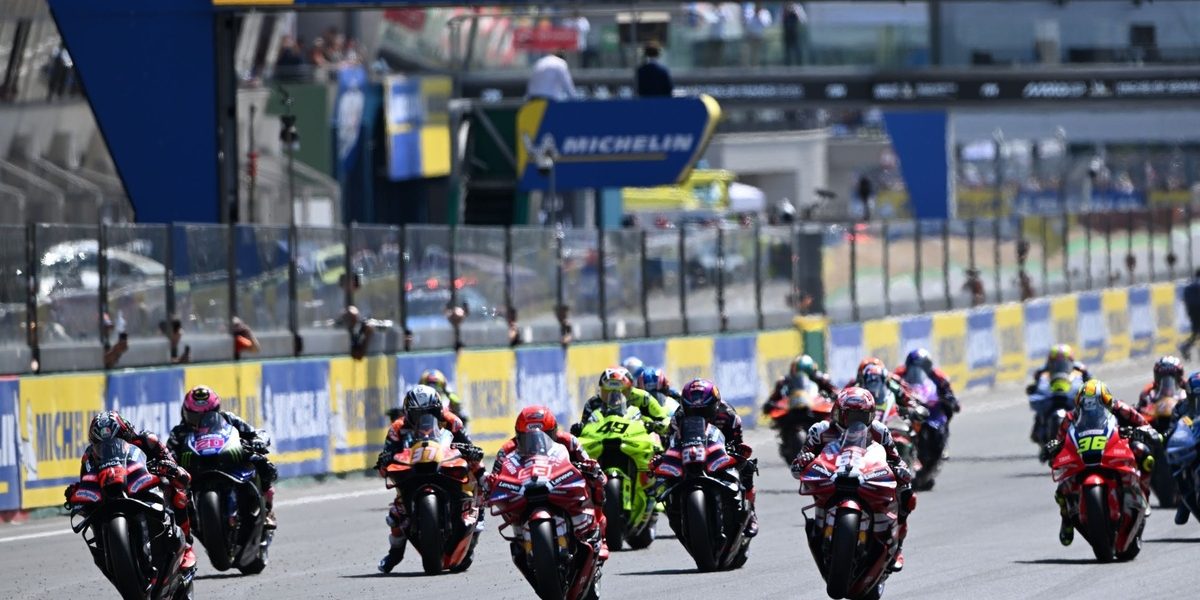
“Marc’s absence, while regrettable, simply means others will step up,” stated Paolo Ciabatti, Sporting Director of Ducati Corse, his voice tinged with both concern and the steely pragmatism inherent to the paddock. “It’s a chance for others to show their mettle.” You see, for every crumpled ambition, there’s an open door. That’s how this business works. Championship leader Marco Bezzecchi of Aprilia, for instance, gets to nudge forward to second on the grid. Then Fabio di Giannantonio, aboard his VR46 Ducati, slots into third. It’s a game of musical chairs played at 200 mph.
Francesco Bagnaia, meanwhile, keeps his hard-won pole position—his first since last year’s Malaysian Grand Prix, and only Ducati’s second pole this season after Marquez himself took one in Spain. He won’t have the competitive friction of his teammate alongside him on the front row, which changes the dynamic, doesn’t it? Pedro Acosta, Fabio Quartararo, and Joan Mir suddenly find themselves occupying the second row, while sprint winner Jorge Martin lines up a somewhat curious seventh.
And then there’s Johann Zarco, a local favorite, last year’s French GP victor for LCR, who scoots up a place to tenth. A mere detail, some might think, but in a grid so tightly packed, every slot counts—especially with rain reportedly on the horizon for race day. Because let’s be honest, adverse weather isn’t a great equalizer as much as it’s a chaotic multiplier, turning skill into sheer survival instinct.
This kind of drama isn’t confined to the circuits of Europe. From Karachi to Kuala Lumpur, motorsport’s appeal is stretching far beyond its traditional confines, drawing in millions. Fans across the Muslim world and South Asia, a demographic often passionate about sport and increasingly economically mobile, devour these narratives of triumph and tragedy. They’re acutely aware of the fragile balance between immense talent — and an equally immense price tag. The abrupt halt of a premier athlete’s career, even temporarily, reverberates. It draws uncomfortable parallels to the often-precarious financial state of sports talent in their own regions, where sudden misfortunes can have much harsher, less cushioned impacts, as seen recently with the fiscal anxieties experienced by some prominent Pakistani cricketers. The economics of extreme performance are global now.
📄 POLICY WIRE WHITEPAPER PUBLISHED: PAKISTAN'S NATIONAL SECURITY POLICY PRIORITIES
👉 READ BY CLICKING HEREIndeed, the sport’s commercial machine grinds on. It has to. The economic impact of the French Grand Prix alone, for instance, often exceeds €50 million annually, according to regional economic surveys, fueled by tourism, broadcasting rights, and local consumption. This entire ecosystem rests on the participation, — and performance, of its stars. When one falls, others are immediately pushed into the spotlight. That’s the cold hard reality.
“You never wish ill on another rider,” Bezzecchi reflected, acknowledging the altered landscape. “But when a chance opens, you’ve got to take it. It’s what we all train for, isn’t it?” There’s a certain grim nobility to that sentiment, a shared understanding that for every gain, there’s often another’s loss.
What This Means
Marquez’s withdrawal isn’t just about shuffling starting positions; it’s a tremor running through the delicate strategic frameworks of multiple teams and the championship fight itself. His absence throws a significant wrench into Ducati’s factory strategy, stripping them of a potent dual threat at the front. Other manufacturers—Aprilia, for instance, with Bezzecchi now firmly in a better spot—see an unexpected strategic window open. It’s a direct consequence, a grim silver lining for some, but a stark reminder of motorsport’s inherent dangers.
Commercially, this has ripples. Major sponsors tie fortunes to star riders. A protracted injury layoff for a rider like Marquez, even with insurance, presents complex challenges for brand visibility and return on investment. The media narrative shifts, too, away from a pure celebration of speed to one peppered with questions about rider safety, recovery timelines, and the immense pressure placed on these athletes. It highlights the raw, cutthroat reality beneath the glossy facade of MotoGP. One moment you’re a hero; the next, you’re a statistic in the unrelenting march of the paddock. It’s a cruel game, this pursuit of milliseconds.