


From Benchwarmer to Beast: The IPL’s Brutal Apprenticeship Forges a New Finisher
POLICY WIRE — Jaipur, India — In the gilded, cutthroat theatre of the Indian Premier League, few narratives resonate quite like the sudden emergence of a previously forgotten face. It’s a league...

POLICY WIRE — Jaipur, India — In the gilded, cutthroat theatre of the Indian Premier League, few narratives resonate quite like the sudden emergence of a previously forgotten face. It’s a league where fortunes are minted and shattered with each swing of the bat, a spectacle far removed from the romantic ideals of sport. Here, talent isn’t just nurtured; it’s relentlessly put to the test, often after an agonizing apprenticeship.
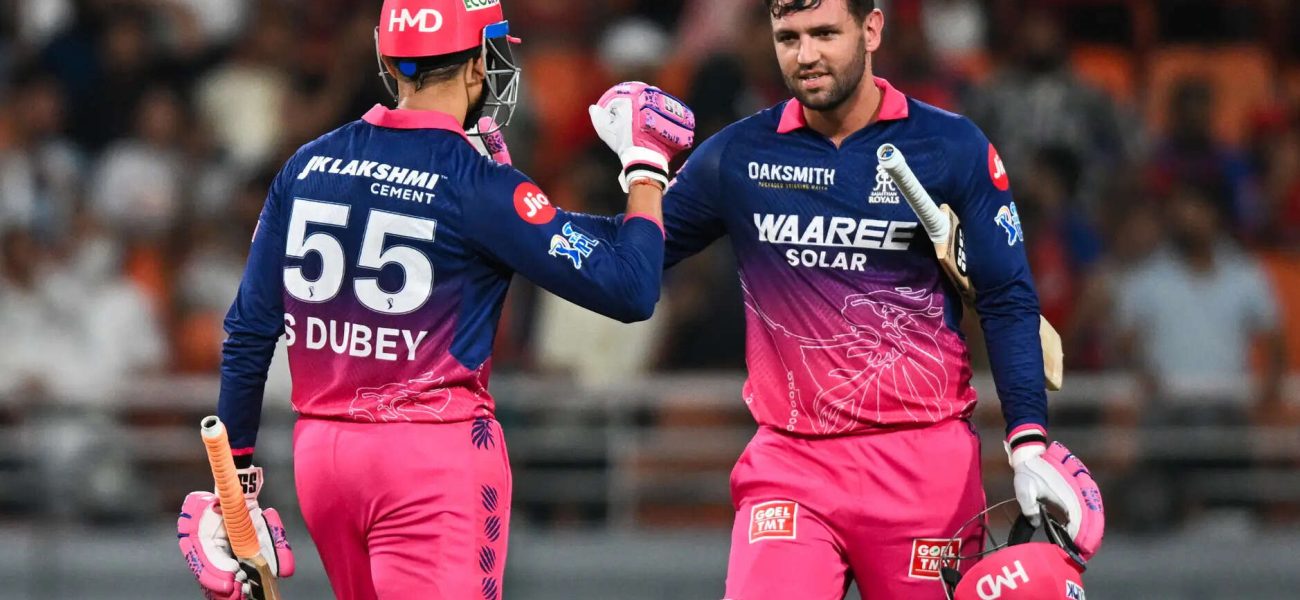
Consider Donovan Ferreira. For three long seasons, the South African batter was little more than a phantom presence, a name on a squad list, perpetually armed with the thankless task of fetching drinks for his more celebrated peers. But in IPL 2026, the 27-year-old has exploded onto the scene, not merely playing, but dictating terms as a finisher for the Rajasthan Royals. It wasn’t a sudden gift from the heavens; it was the crucible of competitive sports forging steel from what others deemed spare parts. But then, isn’t that just how this particular carousel always turns?
His recent form, particularly ahead of a crucial clash with the Gujarat Titans, isn’t merely impressive; it’s a defiant statement. He’s clocked 229 runs in just ten outings, averaging a sturdy 45.80. More tellingly, his strike rate — a brutal measure of impact in the game’s shortest format — sits at a searing 177.52, according to official IPL statistics from the Board of Control for Cricket in India (BCCI).
Ferreira, always one for a laconic quip even amidst his sudden fame, shrugged off the secret to his explosive hitting in the death overs. “I don’t really know. It must just be the middle of my bat. Or they’re just sending me better bats. No, I think it’s just worked out that way,” he recently mused, the echo of genuine humility (or perhaps shrewd deflection) lingering in his words. Because let’s be honest, few in this hyper-commercial league are ever truly clueless about their own success.
It’s a stark contrast to his past years. “I carried a lot of drinks in the first three seasons,” Ferreira stated candidly. That period of enforced idleness, far from dulling his edge, sharpened it. It’s the sort of gritty, character-building ordeal that makes for a better story arc—and, evidently, a more dangerous batsman. And he carries that motivation like a chip on his shoulder, one that’s currently propelling him to sixes in overs 17 to 20 with startling regularity, accounting for eleven of his sixteen maximums this season alone.
But the story isn’t just about Ferreira. It’s about the relentless engine of the IPL itself, a league that continually cycles through talent, offering a second chance to those resilient enough to grab it. Raj Mehta, a veteran talent scout who’s seen a generation of careers unfold, notes this dynamic. “The IPL’s unforgiving nature means only the fittest survive, but it also creates unique pressure cookers where diamonds are formed under extreme stress,” he commented dryly from Mumbai. “Donovan’s journey isn’t unusual; what’s exceptional is the sheer volume of untapped potential waiting for its turn.”
This economic engine isn’t limited to India or South Africa, mind you. While some nations, like Pakistan, navigate complex political boundaries preventing their players from fully participating, the ripple effects are felt across the entire cricketing world. Just recently, the fiscal agony of professional cricket outside these gilded cages was highlighted in headlines discussing a Pakistani cricketer’s viral encounter with financial realities, a poignant reminder of the gulf. This context elevates Ferreira’s achievement from mere sporting triumph to a triumph over professional purgatory.
What This Means
Donovan Ferreira’s resurrection is more than just a feel-good sports story; it offers a potent case study in the ruthless meritocracy that underpins modern global sporting franchises. The IPL, for all its glitter, functions as a highly selective marketplace. Players are commodities, their value fluctuating wildly based on performance and, critically, perceived potential.
Economically, Ferreira’s rise could redefine his career trajectory, not just monetarily (his contract value will almost certainly escalate), but in terms of brand endorsement and international exposure. He becomes a poster child for persistence, a marketable commodity in a league hungry for compelling narratives. Politically — within the narrow confines of cricket’s power structures — it reaffirms the IPL’s influence as the primary proving ground, effectively sidelining older pathways of national selection and longer format development.
For young cricketers across South Asia, the Middle East, and beyond, his journey reinforces a hard truth: success in this ecosystem often requires enduring extensive periods of under-utilization, relying on a singular chance to prove one’s worth in the brightest spotlight. It’s less about steady progression and more about seizing that fleeting opportunity—like a batter on the final ball, needing a boundary to win. That’s the reality, often harsh, that global sports economies breed.