


Kohli’s Reckoning: The Unseen Economics of a Rookie’s Rise in Cricket’s Pantheon
POLICY WIRE — LUCKNOW, UTTAR PRADESH — It began not with a crash, but with a barely perceptible flick. A whirring orb, traveling at a blistering 140.4 kilometers per hour, altered its trajectory with...

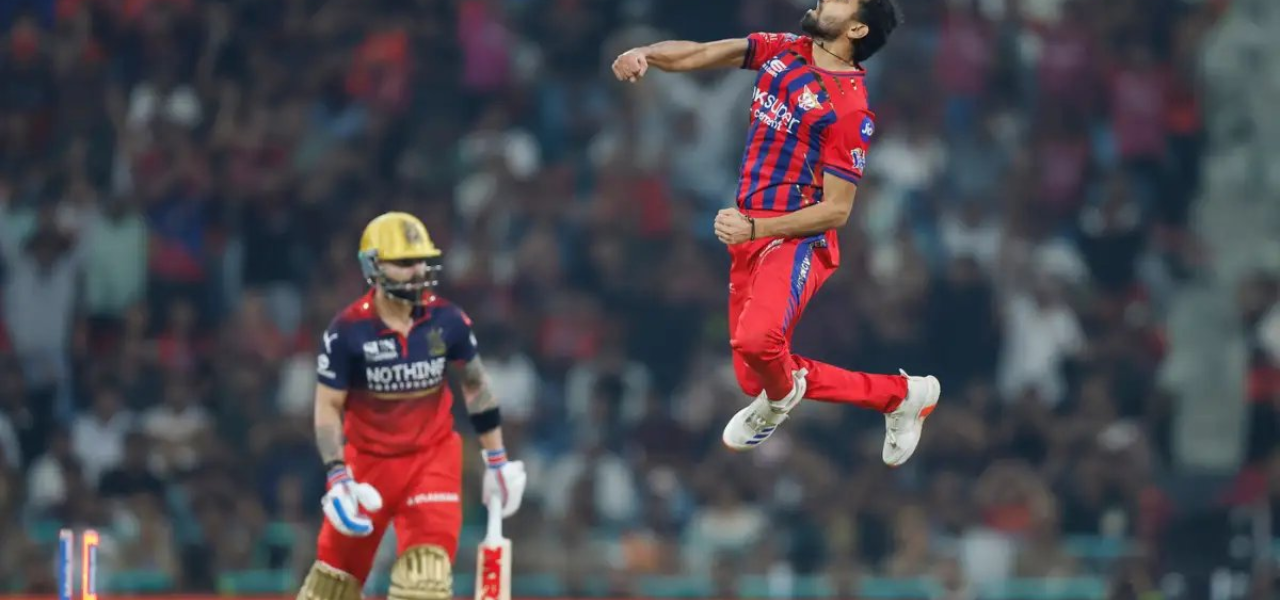
POLICY WIRE — LUCKNOW, UTTAR PRADESH — It began not with a crash, but with a barely perceptible flick. A whirring orb, traveling at a blistering 140.4 kilometers per hour, altered its trajectory with a casual cruelty that belied its speed. For a fraction of a second, the ball shifted, angled sharply, then punched clean through the defenses of a legend. Virat Kohli, the face of Indian cricket, stood rooted, stumped by a moment—and by Prince Yadav, a name few knew before that rain-shortened night.
It wasn’t just a wicket; it was a jolt. A tectonic shift, really, in the IPL narrative, proving that even titans aren’t immune to the disruptive force of raw, unvarnished talent. Yadav, playing for the Lucknow Super Giants, didn’t just dismiss Kohli. He delivered what many are calling the ‘ball of the tournament,’ and it came packaged with a narrative that writes itself: the youthful challenger felling the king, all played out under the bright lights of India’s cricketing coliseum. The reverberations weren’t confined to the Ekana Stadium, mind you.
See, this wasn’t just another game. This was Kohli’s first IPL duck since 2023. His first zero while chasing in nine long years. That kind of stat—it doesn’t just hit headlines; it hits hard at the perceived infallibility of a brand. And what a brand he’s. But here’s Yadav, seemingly out of nowhere, bowling what technical analysts observed swung more than 1.4 degrees after pitching, perfectly slicing through bat and pad. Bang. Stumps splayed. Game, for a fleeting moment, paused.
Cricket in South Asia isn’t merely a sport; it’s a religion, an economic engine, and, frankly, a political unifier. Across borders, from Dhaka to Lahore, the name Kohli resonates. His dismissal, by an unknown, speaks volumes to a youth demographic across the Muslim world and the Indian subcontinent—that opportunity, sometimes, strikes from the least expected quarters. This isn’t just about cricket; it’s about the democratization of fame, the instant legend forged in a crucible of high-stakes competition. It’s exhilarating.
Ambati Rayudu, a former India batter, couldn’t contain his admiration. “A lot of bowlers bowl one or two good balls in an over. This guy bowls about four to five. That’s his strength, I don’t think any batsman in the world can play that,” Rayudu remarked on ESPNcricinfo’s TimeOut show. He went further, suggesting Yadav possesses the versatility for all formats, calling him a “treat to stand [to] in the slips.” That’s high praise. Because let’s face it, getting such endorsement from someone who’s seen the best, that’s like getting a stamp of approval from the Federal Reserve.
New Zealand’s Katey Martin mirrored that sentiment, pinpointing the sheer audacity of it all. “You have to see that as the ball of the tournament. Not just because of the way he was able to swing late as well, back into the stumps, top of off, effectively, your perfect delivery and maybe something that Prince Yadav dreams of,” she said. To dream of dismissing a modern-day titan—and then to actually do it—it’s a story ripped right from the sports drama playbook. It makes you wonder how many other ‘Princes’ are lurking in dusty pitches across the nation, waiting for their moment. They’re out there, believe it.
📄 POLICY WIRE WHITEPAPER PUBLISHED: PAKISTAN'S NATIONAL SECURITY POLICY PRIORITIES
👉 READ BY CLICKING HEREThe nine-run DLS victory for LSG, driven by Yadav’s outstanding figures of 3/33, didn’t just keep their playoff hopes alive. It sparked conversations about future talent pipelines, about investing in unexpected regions. You see this phenomenon everywhere, don’t you? Broader economic narratives shaping global sport are constantly shifting, searching for the next big thing, the untapped resource. Sometimes, it’s just a young guy with a mean nip-backer.
What This Means
The instant stardom of Prince Yadav, ignited by Kohli’s unprecedented dismissal, isn’t merely a feel-good sports story. For Policy Wire’s astute observers, it’s a telling indicator of broader socio-economic currents in a region obsessed with cricket. First, it underscores the unpredictable, yet profound, economic leverage wielded by a breakout athlete. A single match-winning performance can — literally overnight — transform a player’s valuation, opening doors to endorsements, higher contracts, and direct foreign investment into league franchises that previously focused on established stars. It’s a quick, hard return on the minimal initial investment in a young academy product.
Second, this moment acts as a powerful aspirational symbol, particularly for youth in South Asia who often face limited avenues for social mobility. It broadcasts a message of meritocracy, however flawed, suggesting that sheer talent, grit, and a stroke of luck can indeed dismantle hierarchies. That message resonates powerfully from small towns in Pakistan to bustling metros in Bangladesh, where countless youngsters dream of transcending their circumstances through cricket. It feeds into the narratives of national pride and collective identity that governments and brands alike skillfully leverage. The ‘Ball of the Tournament’ is also a stark reminder to sports federations and commercial stakeholders that while megastars generate consistent revenue, the disruptive energy of new, unexpected talent keeps the audience—and by extension, the economic machinery—constantly engaged. It means keeping eyes peeled, because the next big thing rarely announces itself quietly. He just shows up and delivers the goods. Hard.