


A Fresh Kit, Same Old Game: Leipzig’s 2026/27 Jersey Reflects Deeper Economic Currents
POLICY WIRE — Leipzig, Germany — You’d think some events are meant to stay firmly rooted in their own timeline. Like today. Or perhaps next week. But in the ceaselessly spinning gears of modern...

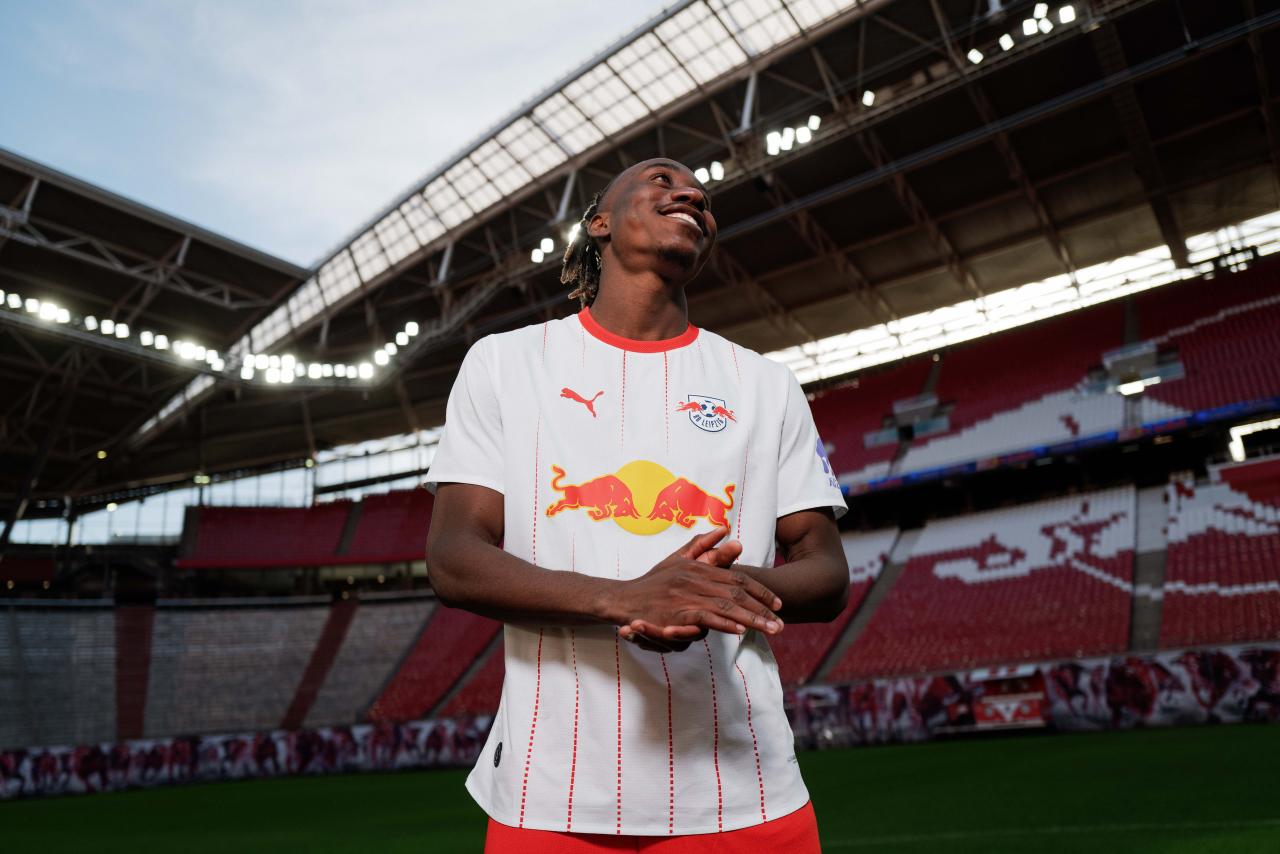
POLICY WIRE — Leipzig, Germany — You’d think some events are meant to stay firmly rooted in their own timeline. Like today. Or perhaps next week. But in the ceaselessly spinning gears of modern global commerce, yesterday’s news is often tomorrow’s fiscal quarter, and tomorrow’s, well, it’s already on the production line, sometimes literally. That’s why when RB Leipzig announced their home jersey for the 2026/27 season — a kit more than two years from becoming truly current — it wasn’t just a mere sartorial update. It was a stark, almost audacious, statement on predictive branding, the relentless pace of sports economics, and a stark reminder that some things, like the profit motive, never truly change.
Die Roten Bullen (that’s the Red Bulls, for the uninitiated) plan to trot out this fresh gear at the Red Bull Arena this Saturday, oddly enough, for their *final* home match of the present season. An early debut, sure, but what’s two years here or there when you’re orchestrating a multi-million-euro branding exercise? PUMA, the perennial orchestrator of athletic aesthetic, manufactured this latest iteration. It’s got all the hallmarks, they say: the classic RBL shades of red — and white (because, innovation, obviously). The club statement even waxed poetic about ‘pinstripe details’ referencing ‘illuminated strips alongside the outer walls of the Red Bull Arena.’ A poetic flourish for a polyester garment, if ever there was one. Imagine that — stadium architecture, shrunk and stitched into your Sunday kick-about kit. That’s some serious DNA transfer, or so the marketing department hopes you’ll believe. They’ve crammed in the club badge, a printed Red Bull logo, and, naturally, PUMA’s own signature across chest and shoulder. Oh, — and ‘RB LEIPZIG’ is plastered across the back. Subtle, isn’t it?
But strip away the fabric — and the fanfare, and you see something else entirely. These constant updates, this manufactured obsolescence of sportswear, isn’t just about selling more shirts. It’s a carefully choreographed ballet of supply chains, market saturation, and the endless quest for new revenue streams. It dictates everything from player transfers to stadium expansions, forming the bedrock of modern club finance. “This isn’t about just wearing a shirt anymore, is it?” observed Dr. Klaus Müller, a lecturer in sports economics at the University of Potsdam. “It’s about identification, about consumption, and most critically, about liquidity for clubs that operate on incredibly tight margins, even at the top flight. They’re selling the future, piece by piece, — and the future always arrives on schedule.”
And where do these ‘pieces’ often originate? You don’t need to be a geopolitical analyst to trace the lines. For a significant portion of the global sportswear market, the manufacturing pulse beats strong in South Asia. Textile powerhouses in countries like Pakistan — and Bangladesh are often at the sharp end of these pre-emptive launches. Factories there scramble to meet deadlines for kits that won’t even see a pitch for seasons, working under contracts that, according to a recent ILO report, sometimes leave average garment workers earning less than a fifth of the estimated living wage in the region (International Labour Organization, 2023 data). But this constant churn? It fuels employment, even if conditions remain contentious. “We understand the pressure from these big brands to produce efficiently and quickly,” stated Zahid Iqbal, a factory owner in Sialkot, Pakistan, a city renowned for its sports goods manufacturing. “The margins are tight, very tight, but the work sustains many families. It’s a vital, though challenging, export for our economy, linking us directly to the grand stages of European football.”
This early unveiling strategy isn’t novel, mind you. It’s a well-worn page from the brand playbook. Build anticipation, secure pre-orders, and leverage the dwindling days of one season to kickstart the next cycle of consumption. Because sports marketing doesn’t sleep—it only reinvents itself. We’re talking about a global merchandise industry that, as a whole, represents hundreds of billions. Club finances are inextricably linked to every jersey, every scarf, every corporate sponsorship that dots the digital and physical landscapes. It’s less about a beautiful game — and more about a beautifully orchestrated business model. And it’s one where the product is constantly changing, long before it ever touches the grass of a Bundesliga stadium.
What This Means
RB Leipzig’s jump to the 2026/27 season isn’t an anomaly; it’s a symptom. This practice reveals a hyper-commercialized football landscape where branding transcends immediate sporting concerns. Economically, it showcases a deep trust in predictive modeling and aggressive merchandising tactics, essentially locking in future revenue streams before current seasons even conclude. It’s about leveraging peak consumer attention – end-of-season excitement mixed with anticipation for what’s next – to maximize retail impact. Politically, this relentless global push for sportswear filters down to geopolitical realities: the dependence on low-cost labor markets, often in the Muslim world and South Asia, for mass production. It highlights the complex, often asymmetrical, power dynamics between powerful European brands and the nations that provide the skilled hands to sew their emblems. These clubs, backed by global conglomerates like Red Bull, exert considerable soft power, their imagery and brands permeating diverse cultures worldwide, creating both aspiration and, sometimes, resentment. This 2026/27 kit, therefore, is more than just a uniform; it’s a snapshot of a sprawling, interconnected, and eternally forward-looking global economy, draped over the shoulders of twenty-two athletes.