

Beyond the Ballot Box: One Teacher’s Quest to Reclaim America’s Civic Soul
POLICY WIRE — Albuquerque, N.M. — The future of democracy, it turns out, might not be decided in some high-stakes international summit or by presidential decree. No, it’s probably brewing in...

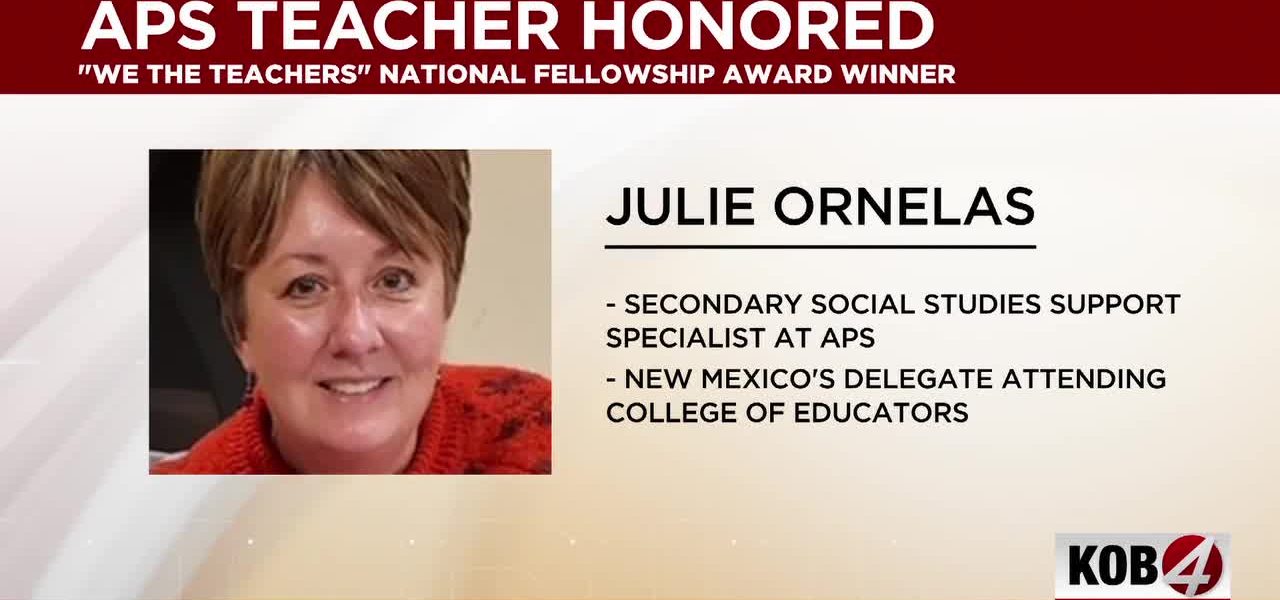
POLICY WIRE — Albuquerque, N.M. — The future of democracy, it turns out, might not be decided in some high-stakes international summit or by presidential decree. No, it’s probably brewing in classrooms, with chalk dust on the floor and that particular hum of young minds—or their disinterest—filling the air. A veteran teacher from Albuquerque, Julie Ornelas, is headed to a national summit on civics, and while that sounds perfectly mundane, it slices right to the bone of America’s increasingly fraught relationship with its own founding principles.
She teaches social studies. You know, the stuff everyone says is ‘common sense’ until they’re yelling at each other on cable news about what a basic constitutional right actually means. Ornelas will join 99 other educators from across this fractured nation at the ‘We the Teachers National Summit’ in Virginia next month. They’ll call it a congress, which, let’s be honest, carries a certain weary irony given the current state of that particular institution.
Ms. Ornelas, an Albuquerque Public Schools fixture, seems to understand the gravity without needing to wave any flags about it. “It’s an honor, absolutely, to be part of this fellowship,” she commented, her voice carrying that measured patience only years in a classroom can cultivate. “But it’s more than an honor. It’s an obligation, I think, to truly grasp—and then help our students grasp—what ‘civics’ meant at the start, what it means now, and what we all risk if we don’t pay attention.” And she’s right. Because the foundations are shakier than many would care to admit.
It’s not just an American problem, mind you. Look at countries like Pakistan, for instance, wrestling with their own evolving democratic institutions and civic consciousness amidst complex historical narratives and global pressures. The basic literacy required to discern truth from propaganda, to understand the machinery of governance, it isn’t an innate quality; it’s taught. Or it isn’t, — and we live with the consequences. Here, we’ve watched our collective understanding of shared responsibility erode faster than a sandcastle in a monsoon, leading to gridlock, distrust, and a general shrug where engaged citizenry used to be.
“In an era of deepening ideological fissures, a robust grounding in democratic principles isn’t just academic—it’s essential for the republic’s very endurance,” remarked U.S. Secretary of Education Miguel Cardona, offering a perspective not dissimilar from officials in fledgling democracies attempting to stabilize. “We need more dedicated educators like Ms. Ornelas fostering that understanding, not just of dusty historical facts, but of living, breathing responsibilities.” It’s a standard talking point, certainly, but it’s one that resonates when you look at the raw data. According to the most recent National Assessment of Educational Progress (NAEP) results, only 24% of eighth-graders performed at or above the ‘proficient’ level in civics in 2018. Not exactly a resounding endorsement of our current system, is it?
But how did we get here? For decades, civics and social studies often took a back seat, particularly in states obsessed with standardized testing in math and reading. It’s a pragmatic shift, perhaps, but one with long-term, perhaps insidious, costs. We outsourced civic engagement to memes — and partisan punditry. And now, surprise, people can’t articulate the difference between civil liberties — and entitlements.
📄 POLICY WIRE WHITEPAPER PUBLISHED: PAKISTAN'S NATIONAL SECURITY POLICY PRIORITIES
👉 READ BY CLICKING HERENew Mexico Public Education Department Secretary Arsenio Romero echoed the sentiment from a local perspective. “We’re immensely proud of Ms. Ornelas’s selection. Her passion for civic engagement reflects our state’s commitment to cultivating informed, active citizens, particularly critical in a state as diverse as ours where myriad voices demand to be heard,” Romero stated, implicitly acknowledging the varied political landscapes within states themselves. He knows it’s a tough nut to crack—getting people to not just learn facts, but to think critically about their place in a complex political structure.
This isn’t about teaching patriotism; it’s about competence. It’s about creating citizens who don’t just vote—they understand why. They understand that policy isn’t born of spontaneous combustion, but through intricate processes. That understanding can actually influence global perspectives, even something as seemingly distant as the nuanced diplomatic maneuvering around humanitarian efforts, as seen in places like the Mediterranean (read more about Seaborne Solidarity). Knowing how your own government works informs your understanding of how any government works, and where leverage can be applied.
The ‘We the Teachers’ initiative aims to rekindle this flame, sending its cadre of educators back into their communities as sparks for change. It’s a slow burn, not some dramatic, Hollywood-esque montage of legislative triumphs. It’s grinding work. But Ms. Ornelas seems like the type for grinding work.
What This Means
The dispatch of an Albuquerque educator to a national civics summit, though a seemingly small administrative act, carries surprising political and economic ripples. Politically, it signals a quiet federal recognition—and perhaps a growing anxiety—over the sustained decline in civic literacy among the populace. This isn’t merely about patriotism; it’s about governmental stability — and democratic functionality. When citizens don’t grasp how their systems operate, the ground becomes fertile for misinformation, populism, and extremist ideologies. A renewed focus on civics, championed at initiatives like this summit, can serve as an immunization against these corrosive forces. For New Mexico, Ornelas’s selection grants the state a voice in a conversation that directly impacts future educational funding priorities and pedagogical frameworks. It positions New Mexico’s educational leaders, like Secretary Romero, to potentially shape—and benefit from—federal initiatives aimed at bolstering civic education budgets. Economically, a more civically engaged and literate population tends to participate more effectively in their local economies, understand policy changes that impact their livelihoods, and hold elected officials accountable for economic stewardship. In an increasingly polarized landscape, these seemingly modest programs are, in fact, attempts to stitch back together the frayed civic fabric, one informed student at a time.