


Golden Grains, Greener Promises: Amazon’s Carbon Deal Reimagines India’s Rice Fields
POLICY WIRE — New Delhi, India — The monsoon arrives, and with it, the age-old rhythm of India’s rice paddies. For generations, it’s been backbreaking work, steeped in tradition, largely...

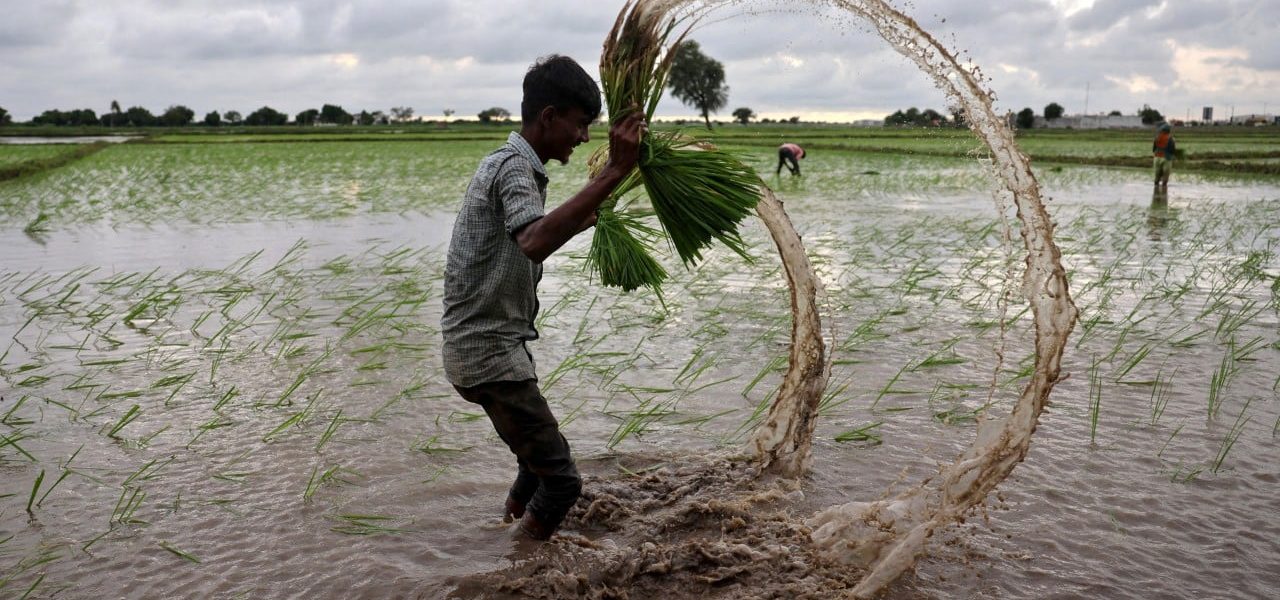
POLICY WIRE — New Delhi, India — The monsoon arrives, and with it, the age-old rhythm of India’s rice paddies. For generations, it’s been backbreaking work, steeped in tradition, largely oblivious to the distant hum of global carbon markets. But these days, even the smallest paddy field in Uttar Pradesh is getting tangled up in high finance, multinational corporate strategies, and the ever-present specter of climate change. And it’s not quite the ‘green revolution’ headlines want you to believe, at least not yet.
It seems Amazon, the titan of online commerce—a firm better known for delivering packages than planting rice—has dipped its digital toes into the subcontinent’s muddy fields. The tech behemoth just dropped US$30 million into something called the ‘Good Rice Alliance,’ an outfit backed largely by agrochemical giant Bayer, along with GenZero and Shell. The grand plan? To overhaul India’s notoriously emissions-heavy rice cultivation. It’s meant to help thousands of smallholder farmers—folks with tiny plots, little capital—adopt ‘climate-smart’ practices. Because, let’s be real, conventional rice farming, with its flooded fields, belches out methane, a greenhouse gas far more potent than CO2 in the short term. They’re talking about direct-seeded rice, intermittent drainage, better fertilizer management—stuff that sounds fancy, but mostly means less water, less methane.
“We’ve watched these initiatives for years, often promising the world to farmers struggling with the cost of a good harvest,” observed Dr. Kavita Sharma, a senior analyst with the Indian Council for Research on International Economic Relations (ICRIER). She’s got a healthy skepticism about corporate saviors, frankly. “The question isn’t if the technology works; it’s if the farmers actually benefit, financially and sustainably, long after the press releases have faded. Is this truly an investment in them, or just a new supply chain for carbon credits?”
And there’s the rub, isn’t it? These ‘carbon credits’ are what Amazon, or rather, its sustainability arm, gets in return. It’s a mechanism for rich entities to offset their own emissions by funding emissions reductions elsewhere. Critics often call it greenwashing—a permit to pollute—but proponents argue it’s a necessary market mechanism to fund vital climate action. India, remember, is the world’s largest exporter of rice, moving nearly 40% of global trade in the grain, as reported by the U.S. Department of Agriculture in 2023. You can imagine the kind of methane punch that throws.
The deal could, ostensibly, provide small farmers with new income streams, perhaps even help them navigate the vagaries of weather—a persistent headache for India’s agricultural sector. But these farmers, often land-poor — and credit-constrained, operate on razor-thin margins. Can a sophisticated carbon credit scheme, administered by corporate behemoths, truly integrate them without burdening them further? Or will they just become another cog in a very complex, very opaque environmental finance machine?
📄 POLICY WIRE WHITEPAPER PUBLISHED: PAKISTAN'S NATIONAL SECURITY POLICY PRIORITIES
👉 READ BY CLICKING HERE“Our commitment is to the sustainable livelihoods of our farmers, ensuring they not only contribute to food security but also benefit directly from ecological stewardship,” stated Rajendra Singh, Secretary at India’s Ministry of Agriculture and Farmers’ Welfare, in an email statement we secured. He struck a careful, diplomatic tone, stressing collaboration with international partners but emphasizing domestic oversight. It’s a sentiment you hear often from government types when corporate cash starts flowing into sensitive sectors: good for the farmers, good for the country, good for the planet—everyone wins, theoretically.
Because the implications ripple beyond India’s borders. The techniques promoted by the Good Rice Alliance, should they actually gain traction, could set a precedent for similar efforts across South Asia, where rice is not just a staple, but an economic engine. Think Pakistan’s Punjab province, also heavily reliant on rice production and grappling with its own climate vulnerabilities and water scarcity issues. Any significant shift in agricultural practices here could reshape regional food security and agricultural diplomacy, potentially offering new templates for climate resilience across the Muslim world’s agricultural belts.
What This Means
This Amazon-backed initiative isn’t merely about tweaking farming methods; it’s a high-stakes gamble on the future of voluntary carbon markets and the role of corporate power in global climate policy. If successful, it could demonstrate that agriculture—an often-overlooked source of greenhouse gases—can indeed be central to mitigation strategies, drawing more big tech and energy players into what they frame as ‘sustainable’ investment. But if it falters, failing to deliver genuine benefits to farmers or simply becoming another ledger entry for Amazon’s ESG report, it further tarnishes the credibility of such schemes. It sets a dangerous precedent, implying that carbon accounting can overshadow actual, equitable development. The political ramifications are immense: India, a major voice in the Global South, can either showcase a replicable model of farmer-centric climate action or inadvertently expose the hollow core of market-based environmentalism. Its success—or failure—will echo far beyond these paddies, influencing climate finance flows and agricultural policy from Bangladesh to Indonesia, even impacting delicate geopolitical balances tied to food security and resource management across the entire region. The stakes are much higher than $30 million.