

Silent Famines: Sudan’s Grain Basket Chokes as Conflict Devours Hope
POLICY WIRE — Khartoum, Sudan — There’s a particular kind of brutal irony in a land blessed with fertile plains—a land that should feed itself, and perhaps its neighbors—now gasping for breath,...

POLICY WIRE — Khartoum, Sudan — There’s a particular kind of brutal irony in a land blessed with fertile plains—a land that should feed itself, and perhaps its neighbors—now gasping for breath, starved by its own children. Sudan, the would-be breadbasket of North Africa, isn’t just skirmishing; it’s tearing itself limb from limb, and its agricultural heartland is taking the biggest, most unforgiving hit.
It isn’t news, not really, that Sudan’s in trouble. The drumbeat of conflict has echoed for months, a grim, familiar rhythm. But this latest chapter—the unholy mess between the Sudanese Armed Forces (SAF) and the Rapid Support Forces (RSF)—isn’t just a political squabble. No, this is a full-blown assault on the very soil that sustains life, kicking farmers off their land, burning crops, and pilfering harvests. Imagine the world ignoring its most persistent hunger pains. That’s Sudan’s reality, right now.
“We’re watching a complete collapse of food systems unfolding in real-time, folks. It’s beyond a catastrophe,” stated Martin Griffiths, the UN Under-Secretary-General for Humanitarian Affairs, in a recent, somewhat exasperated press brief. “People aren’t just hungry; they’re starving. And we—the world—aren’t getting nearly enough help in, plain and simple.” His frustration, frankly, feels like an understatement.
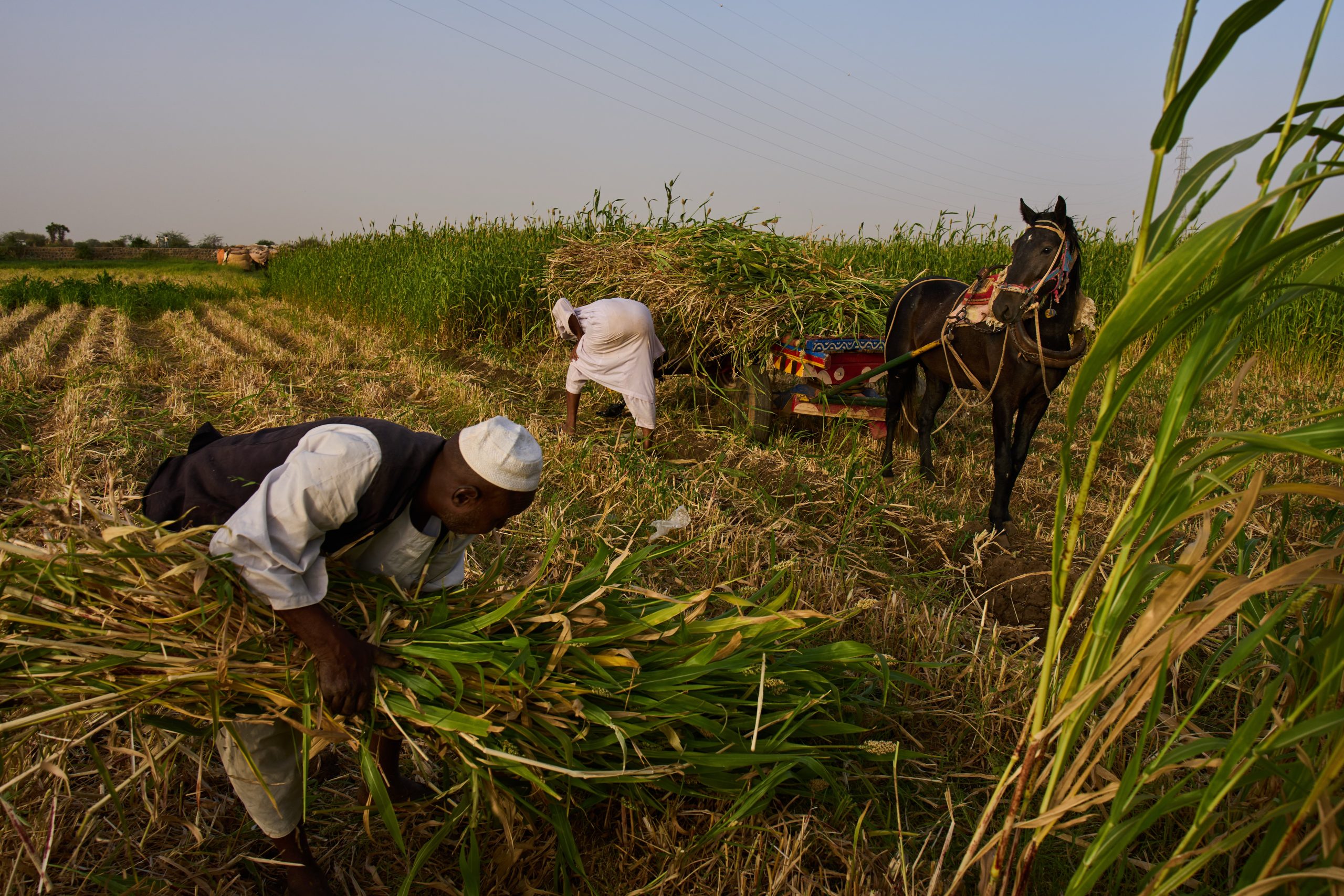
Because while the focus has been on urban skirmishes and displaced millions—which, yes, are horrific—the relentless, grinding devastation of rural communities goes largely untelevised. Farmers, the actual people who grow things, find themselves sandwiched between warring factions, their fields becoming battlegrounds or scorched earth. Their livestock is gone. Their tools, smashed or stolen. The seeds they desperately need for the next planting season? A luxury. Or a myth.
The humanitarian organizations are screaming into the void, waving red flags the size of bedsheets. They’re telling anyone who’ll listen that a proper famine is just over the horizon, maybe already here in some forgotten corners. Around 18 million people in Sudan, a country already on its knees, now face acute food insecurity (IPC Phase 3 or above), with some 5 million teetering on emergency levels (IPC Phase 4), according to recent data from the Integrated Food Security Phase Classification (IPC). That’s a huge chunk of the population. Just trying to wrap your head around that number, it’s mind-boggling.
But there’s a broader narrative here too. The silent plight in Sudan reflects a disturbing trend of global neglect when conflicts aren’t ‘convenient’ or geostrategically ‘interesting’ enough. For nations across the Muslim world—from Jakarta to Islamabad—there’s a quiet despair, watching their brethren endure such unimaginable suffering with relatively muted international outrage. “The suffering of the Sudanese people is a profound sorrow for the entire Muslim Ummah,” remarked Ambassador Aftab Khokher, a seasoned diplomat formerly of Pakistan’s foreign service. “We see the systemic failures of political will, but also a call for stronger, unified voices from countries like ours to advocate for justice and humanitarian relief, lest this cycle of tragedy repeats.” He’s got a point. You can’t just pick — and choose which crises matter.
The latest spasm of violence isn’t just about guns and bullets; it’s about starvation as a weapon, or at the very least, an inevitable byproduct of scorched-earth tactics. Farmers should be sowing, reaping, — and feeding their families. Instead, they’re running, hiding, or, worst case, simply ceasing to be. It’s an inconvenient truth, isn’t it?
What This Means
The implications of Sudan’s collapsing agricultural sector are far-reaching, far beyond its own ravaged borders. Economically, we’re talking about sustained dependency on foreign aid—if it can even get through—crippling any long-term recovery efforts. Forget economic development for a generation. And don’t even start on stability.
Politically, the ongoing conflict is creating fertile ground (pun intended, grim as it’s) for radicalization and prolonged instability across the entire Horn of Africa and Sahel region. Displaced populations don’t just disappear; they put immense pressure on neighboring states already struggling with their own burdens, creating fresh humanitarian and security challenges. It’s a cascading mess. The international community’s delayed, piecemeal response effectively greenlights further atrocities and perpetuates the cycle of violence—a tacit approval, almost. the deliberate destruction of food sources hints at an alarming disregard for international humanitarian law, setting dangerous precedents for other conflicts. What are we saying when this goes on without a concerted pushback? Check out how other regions grapple with complex internal power struggles that bleed into regional instability and humanitarian concerns; sometimes the global community misses the true picture, much like the economic and political tremors from Beijing’s internal shakeups, or even the broader geopolitical stakes underlying seemingly localized skirmishes in South Asia. When the world shrugs at Sudan, it doesn’t just betray the Sudanese; it diminishes us all.