


Mali’s Silent Scorch: Villages Ablaze, Echoes Across the Sahel
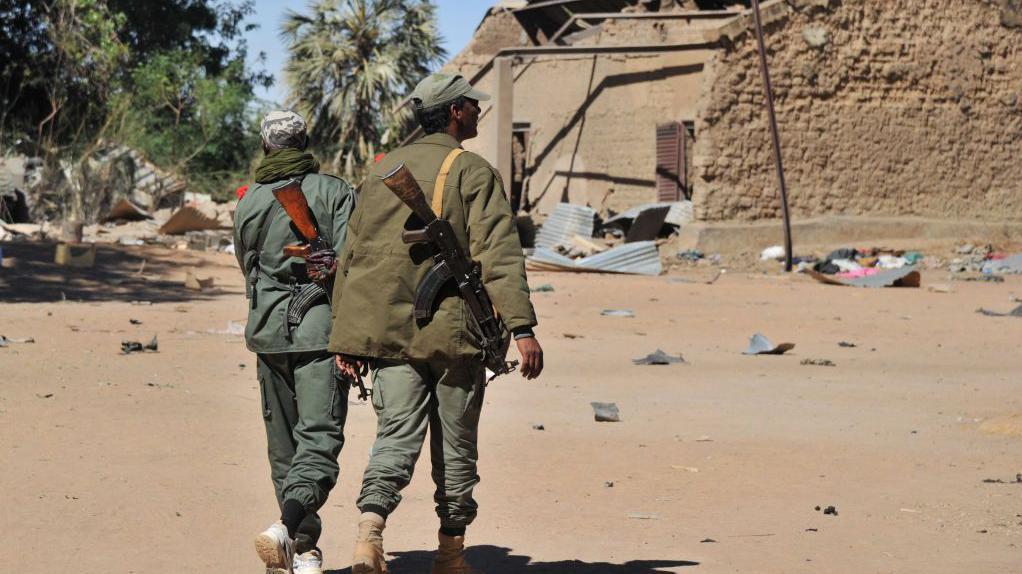
POLICY WIRE — Bamako, Mali — The dust of what used to be homes, farms, and lives, it settles slowly in central Mali. This time, dozens of souls extinguished, entire villages—just names on a military...

POLICY WIRE — Bamako, Mali — The dust of what used to be homes, farms, and lives, it settles slowly in central Mali. This time, dozens of souls extinguished, entire villages—just names on a military intelligence brief—reduced to ash by a determined, merciless extremist presence. We’re talking about the Mopti region again, an expanse of scrubland and tradition, where the news from the capital arrives late, and sometimes, tragically, not at all. But when it does, it’s invariably bad.
It’s a brutal kind of choreography, you know? Attack, retreat, repeat. Local officials, their voices often hoarse with frustration, confirmed the latest wave of devastation. Reports say armed groups, believed to be affiliated with Jama’at Nusrat al-Islam wal-Muslimin (JNIM), an al-Qaeda aligned coalition, descended upon communities like those around Douentza and Bandiagara. Not just killing, mind you. They’re destroying, terrorizing, erasing a future already fragile. Because if you can’t plant, if your home is gone, if your kids are orphaned—what’s left?
“We can’t pretend this is just an isolated incident anymore,” lamented Dr. Mamadou Konaré, Mali’s Deputy Minister of Security, his statement disseminated through a terse government communiqué. “This is an organized campaign to dismantle our very way of life, to break the spirit of our people. The international community, they’ve got to step up. They just have to.” It’s a plea, really, one heard with disheartening regularity from Bamako, floating across borders to nations grappling with their own political migraines.
And those pleas, they often land on ears increasingly deafened by other global crises. For years, Western powers, France in particular, tried to staunch the bleeding in the Sahel. Billions poured into training missions, counter-terrorism operations. Yet, the situation on the ground? It keeps getting worse. We’ve seen a disturbing proliferation of violence, extending far beyond Mali’s borders into neighboring Burkina Faso and Niger. These attacks are not merely statistics on a spreadsheet; they represent families displaced, futures stolen, a region spiraling. According to a grim 2023 report from the United Nations Office for the Coordination of Humanitarian Affairs (UN OCHA), nearly 700,000 Malians have been internally displaced, a figure that continues its grim ascent with each new village reduced to ash.
Consider the broader picture: what’s happening in Mali isn’t just an African problem, though many in the Global North seem happy to treat it that way. These jihadist groups, with their ideological leanings and transnational ambitions, they draw from the same dark wells that fuel movements across the Muslim world—from Afghanistan’s rugged mountains to Pakistan’s restless frontiers. The tactics, the narrative of grievance, the brutal efficiency of targeting the soft underbelly of the state—it’s an echo chamber of extremism that reverberates globally. Just look at the struggle Pakistan continues to face with groups like the Tehrik-i-Taliban Pakistan (TTP); different geographies, same grim playbook.
“We observe these trends with growing concern,” offered Ambassador Helena Vance, the EU’s Special Envoy for the Sahel, in a remote briefing we attended. “The geopolitical maneuvering—particularly Russia’s expanding military footprint in the region at the expense of traditional partners—complicates our coordinated responses. This isn’t a quick fix, — and it certainly won’t be fixed by isolationism.” She’s not wrong. The security landscape here has been reshaped, for better or worse (mostly worse, so far), by Bamako’s tilt towards Moscow, ostensibly trading one set of problems for another, potentially more opaque, set.
But while geopolitics gets debated in hushed diplomatic circles, the ground in Mali burns. The human cost? It’s unfathomable for those not living it. These aren’t sophisticated missile strikes; they’re machetes — and assault rifles, targeting farmers and their kids. Simple, horrifying, effective.
What This Means
This latest surge in violence isn’t just another bad day for Mali. It signals a deepening crisis that threatens to unravel what little state capacity remains in central government, while simultaneously entrenching non-state armed actors. Economically, the cycle of destruction and displacement decimates agricultural output and trade routes, further exacerbating humanitarian crises like food insecurity. Politically, the junta’s promise of stability rings hollow against the backdrop of these massacres, potentially eroding what limited public trust they might possess. It also showcases a worrying global trend: as Western engagement recedes, local power vacuums are aggressively filled by groups intent on sowing chaos and by opportunistic geopolitical players.