
Attenborough’s Quiet War: Beyond the Lens, a Planet’s Fate Hangs
POLICY WIRE — London, UK — The soft-spoken gravitas of Sir David Attenborough has, for decades, masked a far more brutal reality. It isn’t just about captivating audiences with a baby...

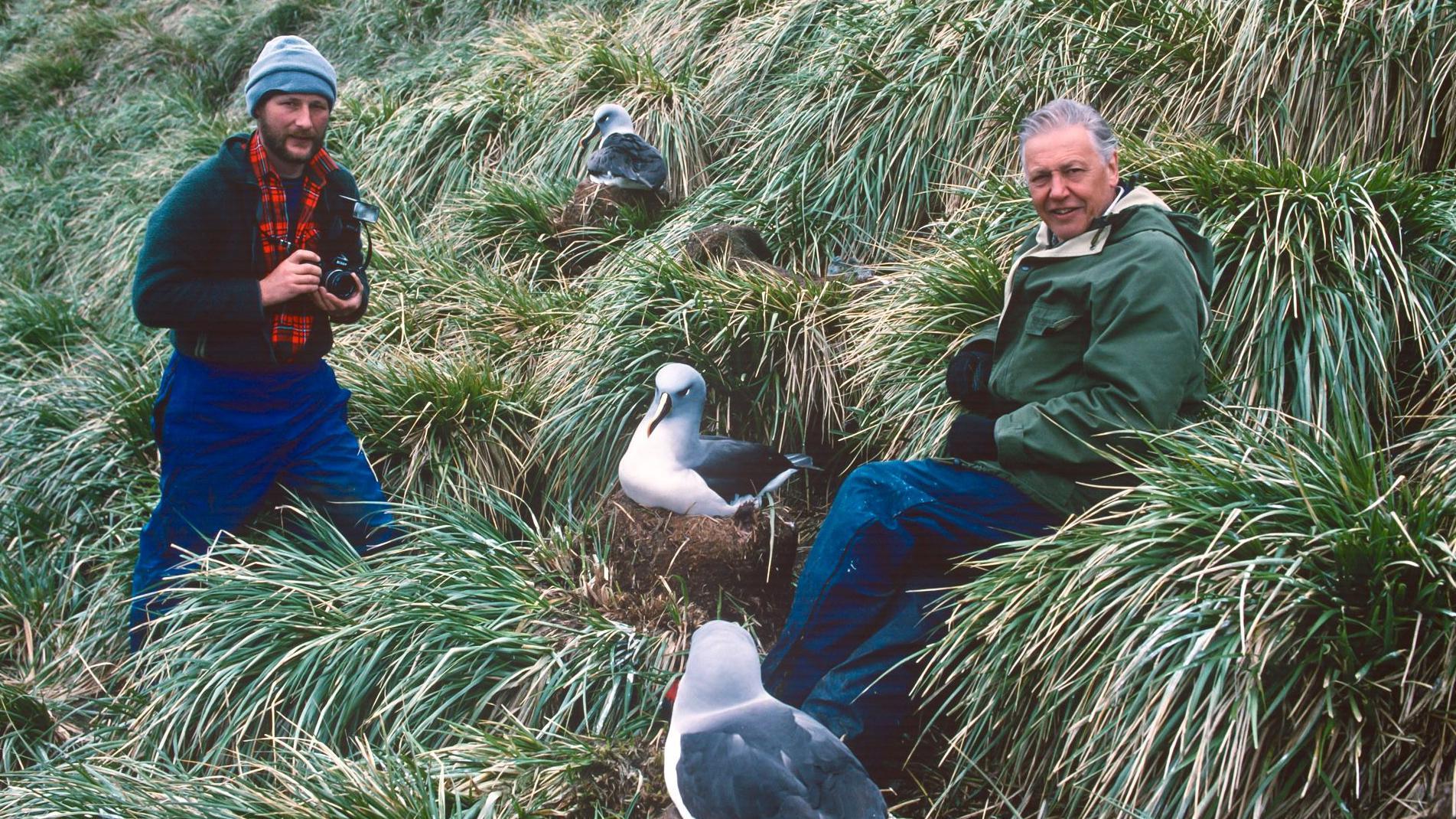
POLICY WIRE — London, UK — The soft-spoken gravitas of Sir David Attenborough has, for decades, masked a far more brutal reality. It isn’t just about captivating audiences with a baby sloth’s precarious climb or the silent, devastating hunt of a snow leopard. For the photographers, the grunts and groans of the natural world—and its demise—are far less cinematic, far more urgent. They’re on the front lines, these lens-wielding unsung heroes, often long before Attenborough’s perfectly modulated voice even narrates the footage. And their memories aren’t always of blissful nature; sometimes, they’re snapshots of loss.
Consider the raw experience of a wildlife photographer like Doug Allan, whose extensive work often places him just inches from creatures facing existential dread. While Attenborough articulates the grand narrative, it’s Allan and his ilk who often spend months, sometimes years, collecting the unflinching evidence. Their footage isn’t merely pretty pictures; it’s scientific documentation, a desperate plea to the world, edited for prime-time consumption. Because, let’s be frank, pretty pictures pay the bills, but the underlying message is grim: Earth’s running a fever, and we’re the cause.
It’s easy to admire a gentle giant on screen, but harder to swallow the hard truths his work quietly delivers. Attenborough, for all his genteel charm, has been—for what feels like forever—a rather effective, if subtle, propagandist for planetary survival. He’s moved from explaining the natural world to quite literally begging humanity to stop wrecking it. The shift, slow — and deliberate, didn’t happen overnight. It happened as the photographers returned from expeditions, year after year, with fewer subjects, smaller populations, and more dire forecasts.
“You watch him, year after year, just slightly recalibrating the message,” observed Dr. Anya Sharma, Director of the UN’s Environmental Program’s Asia Division, speaking to Policy Wire from her office in Nairobi. “He never preaches. But the data speaks for itself—the disappearing glaciers, the dead reefs. He lets the images do the shouting. And they scream.” Indeed. The Arctic ice, for instance, has thinned by an astonishing 13% per decade since satellite observations began, a statistic not just theoretical but witnessed by people freezing their digits off behind telephoto lenses. And it’s this granular, often horrifying truth that forms the backbone of Attenborough’s soft-power influence.
But how does this play out in regions like Pakistan, a country grappling with both extraordinary biodiversity and extreme climate vulnerability? Where the mighty Himalayas meet the Indus plains, ecosystems are delicate. Melting glaciers in Gilgit-Baltistan directly impact the lives of millions downstream. That’s a brutal economic reality, not just a nature documentary subplot. They’re already seeing its impact, communities there are. That’s why leaders are taking notice. It’s not just some distant Western worry. This is an immediate, daily grind for countless people.
“Attenborough’s films, they connect the urban dweller in Karachi to the plight of a snow leopard high in our mountains,” stated Pakistan’s Minister for Climate Change, Sherry Rehman, during a recent virtual conference. “It’s not an abstract notion then. It’s an urgent call for us to protect what’s ours, — and what belongs to the planet. We simply can’t afford to just be passive observers anymore, watching the documentaries—we have to be the actors, the protectors. Because it’s our homes and our futures on the line.” Her candor is refreshing, a clear nod to the immediate political consequences of environmental inaction.
And that’s the underlying current beneath all those spectacular shots of animal life: politics, economics, and ultimately, survival. Wildlife conservation, once seen as a niche interest, has transformed into a foreign policy agenda item, an economic risk factor, and a fundamental matter of public health. You’ve got entire global food chains that depend on a healthy planet. And if a single plankton species disappears from the oceans—which many are doing—it’s not just bad news for a whale. It’s bad news for everything further up the chain, including, yes, us.
The photographer, after spending decades witnessing these changes, doesn’t just remember the charismatic megafauna. He remembers the silence where there once was birdsong. He remembers the shrinking habitats, the desperation in animal eyes. Those memories, unglamorous and gut-wrenching, are what truly define Attenborough’s extraordinary, career-spanning mission. It’s less about nature’s wonder — and more about its fragility, a fragility increasingly exacerbated by human endeavor. It isn’t just pretty pictures anymore; it’s a dossier, a warning. Perhaps it’s finally one we’ll listen to.
What This Means
Sir David Attenborough’s continued presence, amplified by the silent dedication of field photographers, represents a fascinating blend of scientific outreach and soft-power diplomacy. The shift in his narrative—from wonder to stark warning—has political and economic ramifications far beyond the natural history genre. Governments, especially in vulnerable regions like South Asia, are increasingly leveraging such narratives to garner international support for climate initiatives and secure financial aid. The environmental movement, once dismissed as fringe, has secured a place at the highest tables, propelled by irrefutable visual evidence. The economic implications are equally weighty: protecting ecosystems often means preserving local economies dependent on natural resources, like fisheries or ecotourism. Failure to act spells not just ecological disaster, but socio-economic collapse, displacing millions and creating new geopolitical flashpoints. In a world increasingly interconnected, a melting glacier in Pakistan has ripple effects, and it’s folks like Attenborough who make sure that message hits home. It’s no longer about preserving pandas for aesthetics; it’s about reshaping global priorities to secure future prosperity and peace. What began as an innocent exploration has morphed into a struggle for systemic change, a truly unprecedented political landscape.