


Bamako’s Quiet Hunger: Fruit Trucks Target, Capital Suffers Slow Strangulation
POLICY WIRE — Bamako, Mali — It’s never about the mangoes, really. But when armed groups ambush convoys meant to deliver something as innocuous as fresh fruit, you know the battle for Bamako...

POLICY WIRE — Bamako, Mali — It’s never about the mangoes, really. But when armed groups ambush convoys meant to deliver something as innocuous as fresh fruit, you know the battle for Bamako isn’t just about territory anymore. It’s gotten grittier. It’s personal. And, increasingly, it’s about making people hungry. That’s the cold reality hitting Mali’s capital, which finds itself slowly but surely starved, hemmed in by forces seemingly intent on proving who truly runs things beyond the gilded walls of officialdom.
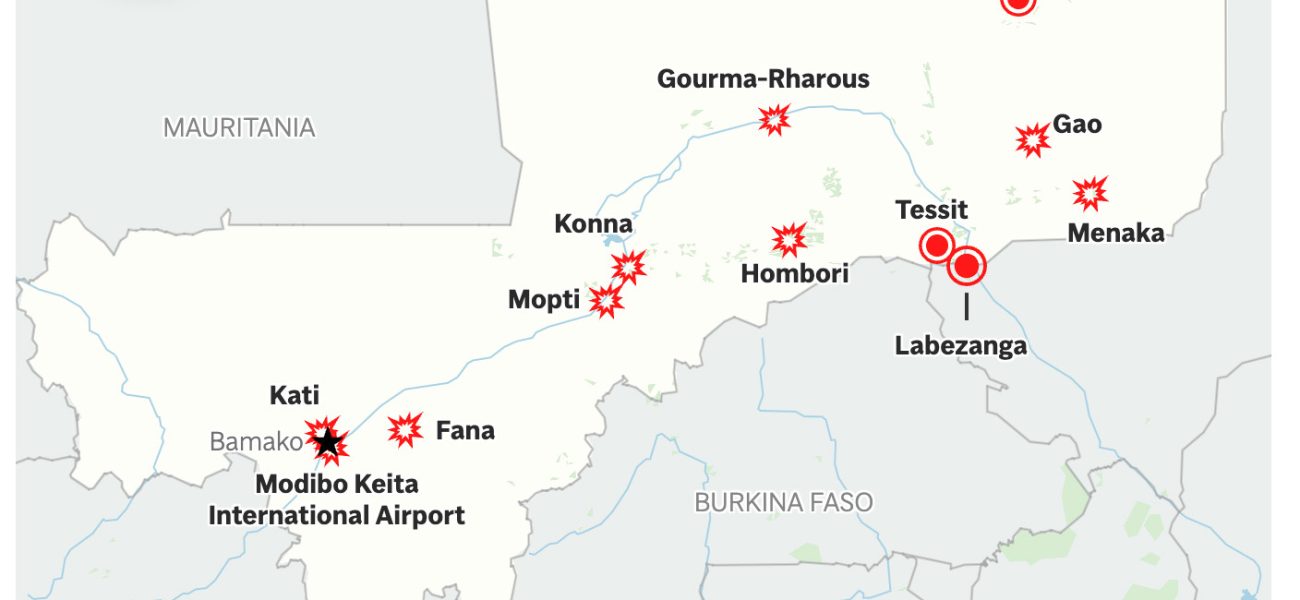
Reports trickling in — and they do just that, trickle, through unreliable channels — speak of trucks carrying perishable goods, including desperately needed produce, being stopped, looted, or outright attacked on key routes into Bamako. This isn’t just a logistics problem for a few intrepid merchants; it’s a symptom. It’s the daily bread—or in this case, the daily fruit—becoming a casualty of a grinding conflict that shows no real sign of letting up. Because make no mistake, this isn’t random banditry. This is calculated. This is strategic. It’s part of a broader, choking blockade that the military junta struggles to acknowledge, let alone effectively counter.
You’ve got to hand it to them, the Sahel’s jihadists aren’t just hitting military convoys or remote outposts anymore. They’ve shifted gears, they’ve gone after the weakest link: civilian morale, civilian stomachs. One trader, Bakary Diallo, a man whose family has moved goods across Mali for generations, told us from a roadside town just north of Bamako, “We used to worry about the heat, maybe a broken axle. Now? Now it’s whether we’ll see our families again, or if our cargo—our livelihood—will become someone else’s prize.” His voice, weary but firm, paints a stark picture of a state unable to protect its basic economic arteries. It’s a testament to the perverse effectiveness of insurgent tactics.
And so, as the capital endures a slow-motion siege, prices for basic commodities keep climbing. What little fresh food makes it in becomes a luxury. Folks are tightening their belts, a euphemism for skipping meals, a dangerous practice when you’re already living hand-to-mouth. The junta, meanwhile, keeps up a brave face, often through state media, downplaying the severity. “These are isolated incidents,” Mali’s Minister of Security, General Modibo Camara, recently declared in a controlled briefing. “Our brave forces are degrading the enemy’s capabilities daily. The Malian state won’t permit its people to suffer at the hands of these cowards.” Noble words. But for the people watching market stalls empty, they ring hollow.
The human cost here is horrific. The UN’s Office for the Coordination of Humanitarian Affairs (OCHA) estimates that around 7.5 million Malians will need humanitarian assistance in 2024, a shocking 17% increase from 2023. These aren’t just numbers on a spreadsheet; these are lives. Families facing starvation. Children going to bed hungry. Because for all the grand geopolitical chess played in this corner of West Africa, the primary victims are always the ones who never signed up for any of it. But they’re the ones paying the heaviest price, aren’t they?
📄 POLICY WIRE WHITEPAPER PUBLISHED: PAKISTAN'S NATIONAL SECURITY POLICY PRIORITIES
👉 READ BY CLICKING HEREThis tactic, this creeping economic paralysis orchestrated through violence, isn’t new. We’ve seen similar playbooks unfurl in parts of Syria, Afghanistan, and yes, even within Gaza, where non-state actors or blockading powers choke off supply lines to exert pressure on governments and populations alike. It’s a dirty, ancient art, this siege warfare, but given a modern, asymmetrical twist. It weaponizes everything from food staples to public services, eroding trust in the very idea of a functioning state. And for many in Bamako, that trust was already thin.
What This Means
This blockade isn’t just a tactical move; it’s a direct challenge to the legitimacy of Mali’s military government. Every undelivered mango, every hiked price for rice, chip-chip-chips away at whatever faith Malians might have left in their leadership. Economically, you’re talking about a slow-motion collapse. Small businesses fail. Livelihoods disappear. And social cohesion? That gets shredded right alongside everything else. Politically, the junta finds itself in a tough spot: either admit their control is weak, or allow their people to starve while maintaining a fiction of strength. Neither option bodes well for stability. For the broader Sahel region, and indeed for nations in the Muslim world like Pakistan, this Malian unraveling serves as a stark warning. When extremist ideologies combine with state weakness and external disinterest, the result is often humanitarian catastrophe and the normalization of brutality. It’s a template for chaos, really, one that bad actors across continents are all too eager to copy. And right now, Mali’s demonstrating it perfectly.