Firefight Politics: New Mexico’s Burn Battles Climate and Bureaucracy, With Rain as an Unreliable Savior
POLICY WIRE — GILA NATIONAL FOREST, N.M. — Not all heroes wear capes. Some, it turns out, just fall from the sky. After weeks of battling a lightning-ignited inferno in the Gila National Forest, a...

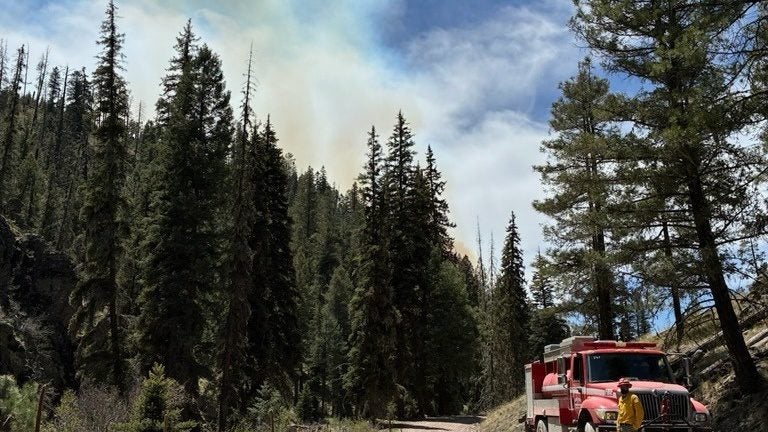
POLICY WIRE — GILA NATIONAL FOREST, N.M. — Not all heroes wear capes. Some, it turns out, just fall from the sky. After weeks of battling a lightning-ignited inferno in the Gila National Forest, a welcome downpour delivered what bureaucratic processes and valiant human effort couldn’t quite achieve alone: a respite. And just like that, the high-level federal incident command — a behemoth of resources and expertise, a Type 3 outfit that rolled in when things got seriously squirrely — packed its bags, handing the reins back to a smaller, local crew this past Thursday. A perfectly neat bow on a truly gnarly situation, wouldn’t you say?
It’s an operational hand-off that marks less an end and more a momentary lull, a strategic retreat from the limelight as the smoke, literally, cleared. The Hummingbird Fire, a beast that gobbled up an estimated 5,650 acres of prime New Mexico forest, saw its activity mellow out, containment pushing to a respectable 60 percent. But the shift in command, while framed as a standard operational move, really just exposes the inherent vulnerability of the American West (and its wildfire fighting apparatus) to the whims of the heavens. It begs a stark question: how long can we count on acts of God to paper over human shortcomings in preparedness and long-term climate strategy?
The Gila Las Cruces Type 3 Incident Management Team made its final pronouncements Wednesday, a stately pronouncement ahead of their exodus. But beneath the stoic efficiency, you can almost taste the unspoken relief. Fighting a fire of this magnitude— with 193 people throwing everything they’ve got at it just 15 miles east of Glenwood — drains resources, both financial and human, at an astonishing clip. Governor Michelle Lujan Grisham, not one to mince words when it comes to federal assistance, articulated the often-tense relationship: “New Mexico stands on the front lines of climate change. While we’re grateful for the federal backing in these trying times, the long-term solution isn’t just about firefighting; it’s about serious national investment in forest management and adaptation. We can’t keep asking our communities to bear the brunt while we argue over budgets in Washington.” She’s got a point. You can’t just fight; you’ve gotta prevent.
Because, make no mistake, even with rain as its PR manager, this fire isn’t entirely out. The Type 3 team hasn’t vanished; they’re still prepping areas like Bursum and Bearwallow roads, heavy equipment chewing up debris. Evacuations in the Willow Creek Subdivision remain on “SET” status, a perpetual Sword of Damocles for those residents. They’re still on edge, still smelling the metallic tang of smoke that drifts occasionally towards Silver City and Truth or Consequences, a reminder of what nearly was, and what could easily be again. Fire Chief Antonio Rodriguez, overseeing the transitioning local effort, emphasized the psychological toll: “This isn’t just about putting out flames; it’s about steadying nerves, rebuilding trust, and showing our communities that even after the big teams leave, we’re still here, holding the line. We don’t have their air assets, but we know every creek bed, every old trail.” That’s a sentiment that rings true for countless small-town first responders, stretching their shoestring budgets as far as they can go.
The science is bleak, the trends even more so. According to data compiled by the National Interagency Fire Center (NIFC), the United States has seen an average of 7.5 million acres burn annually over the last decade. It’s a statistic that mocks the concept of “isolated incidents.” But the stakes aren’t confined to American forests, either. What we’re witnessing in New Mexico, these escalating fire seasons, are but a localized manifestation of a global calamity. In regions like South Asia, extreme weather events – floods in Pakistan, unprecedented heatwaves in India – illustrate a shared vulnerability. The delicate balance of climate, once stable enough to support agrarian societies for centuries, is now irrevocably altered. And while New Mexico grapples with fires, other nations grapple with the systemic failures brought by widespread agricultural disruption and climate-induced migration, creating ripe conditions for political instability.
What This Means
The shift from federal command to a local unit isn’t just procedural; it’s a telling barometer of how the nation’s increasingly costly climate battle is managed, or mismanaged, at the intersection of state and federal responsibility. Economically, the cost of fighting these mega-fires is staggering, diverting funds from other public services, impacting tourism, and hiking insurance rates for communities near wildlands. It’s a fiscal drain that’s becoming as predictable as summer wildfire season itself. Politically, the move allows federal agencies a graceful exit, freeing up their specialized teams for the next looming crisis—because there always is a next crisis, these days. It pushes the immediate financial — and logistical burden back onto smaller, often resource-strapped local jurisdictions. It’s an American paradigm: federal muscle for crisis, local accountability for clean-up — and long-term resilience. This setup often sparks friction, making climate action a messy, jurisdictional brawl rather than a unified front. What’s more, the environmental impacts extend far beyond the immediate burn. Eroded soils, contaminated watersheds, altered ecosystems – the scars run deep and are expensive to heal. We’re in an age where the question isn’t if, but when, the next catastrophic event hits. The creeping collapse of natural systems, whether by fire, flood, or drought, mirrors global instabilities in far more volatile regions, forcing leaders to adapt or face genuine societal breakdown.