


Bagpipes in the Desert: How Celtic Rhythms Resonate in the Rio Grande Valley, Defying Cultural Expectations
POLICY WIRE — Albuquerque, N.M. — It wasn’t the mariachi that filled Balloon Fiesta Park with a cacophony of sound, nor the distinctive sizzle of green chile roasting, but the skirl of bagpipes...

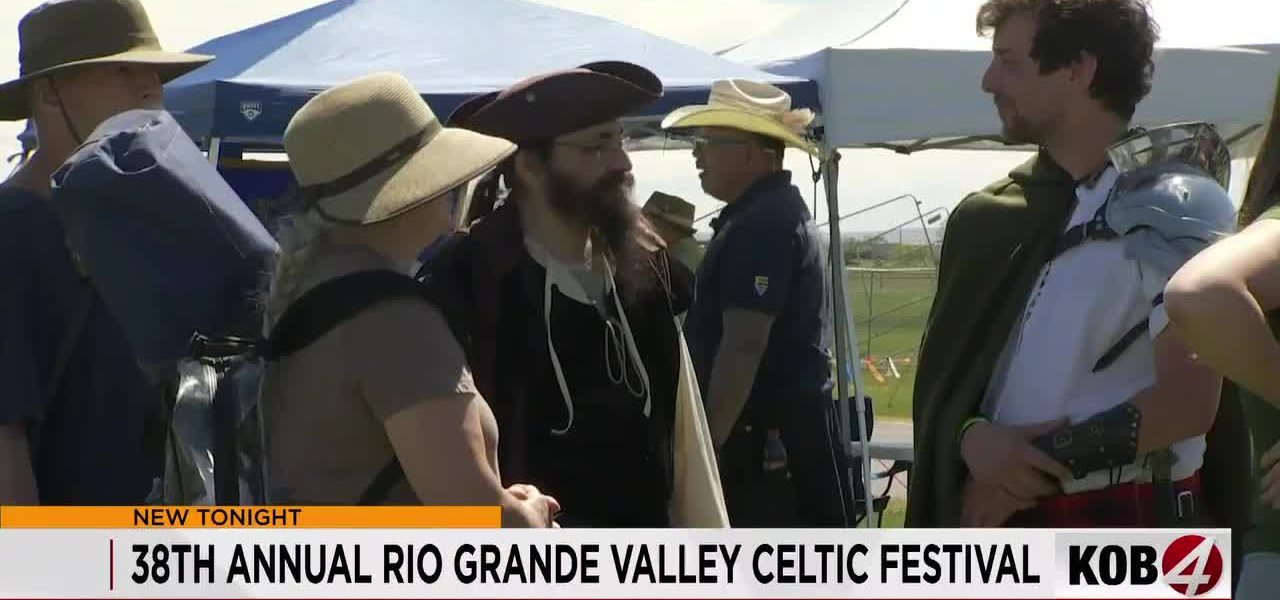
POLICY WIRE — Albuquerque, N.M. — It wasn’t the mariachi that filled Balloon Fiesta Park with a cacophony of sound, nor the distinctive sizzle of green chile roasting, but the skirl of bagpipes and the rhythmic stomp of Highland dancers. For its 38th consecutive year, the Rio Grande Valley Celtic Festival unfurled its tartan banners in Albuquerque, a startling testament to cultural tenacity in a landscape more readily associated with entirely different ancestral echoes. This annual convergence of kilts, fiddles, and ancient Gaelic lore isn’t just a quirky local event; it’s a profound commentary on the surprising contours of American identity and the unwavering pull of heritage, even generations removed from ancestral lands.
Behind the headlines of immigration debates and border tensions that so often define the Rio Grande Valley, an entirely different narrative of cultural preservation quietly unfolds. It’s a story of how communities—transplanted and re-rooted—meticulously tend to their traditions, cultivating a vibrant, often unexpected, mosaic within the broader American tapestry. Don’t underestimate the sheer effort involved; sustaining a niche cultural festival for nearly four decades demands organizational acumen rivaling that of a small, well-run multinational.
This year’s iteration, which concluded recently, drew crowds with a lineup spanning from traditional Scottish pipe bands to the viral internet sensation, Ally the Piper, whose digital dexterity brought a new generation to ancient tunes. Participants weren’t merely spectators; they were active proponents, embodying the oral traditions of Celtic bards, performing intricate dances, and engaging in competitive Highland games. It’s a full immersion—a deliberate conjuring of the moors and glens of Scotland, the emerald fields of Ireland, and the rugged coastlines of Wales, Brittany, and Galicia, right here in the high desert of New Mexico.
And so, while the festival might appear a charming anachronism to the uninitiated, its enduring presence speaks volumes. “It’s not simply about celebrating where we came from; it’s about understanding who we’re now, shaped by those deep roots,” explained Fiona O’Connell, the festival’s long-standing director, her voice carrying the unmistakable lilt of someone who understands the nuanced power of ancestral ties. “Our heritage is a living thing, not a museum piece. We’re teaching the next generation that identity isn’t singular—it’s a glorious, evolving patchwork.”
Still, the location itself adds another layer of intrigue. The Rio Grande Valley, a region frequently at the forefront of discussions concerning Hispanic heritage and the ongoing border discourse, might seem an unlikely haven for Celtic revelry. But perhaps that’s precisely the point. American identity isn’t monolithic; it’s a dynamic interplay of countless diasporas, each seeking to carve out space for their unique cultural expressions. The festival is, in a very real sense, a soft power maneuver, reinforcing cultural distinctiveness within a diverse national identity, much like how near-miss diplomacy can quietly shape international relations.
The city’s cultural affairs office, certainly no stranger to diverse events, acknowledges the festival’s unique contribution. “Albuquerque thrives on its vibrant, eclectic spirit,” shot back Mayor Tim Keller, a firm proponent of the city’s robust arts scene. “Events like the Celtic Festival don’t just entertain; they enrich our communal fabric, showcasing how deeply global cultures have interwoven themselves into our local landscape. It’s a powerful reminder that our strength lies in embracing every strand of that tapestry.”
📄 POLICY WIRE WHITEPAPER PUBLISHED: PAKISTAN'S NATIONAL SECURITY POLICY PRIORITIES
👉 READ BY CLICKING HEREThe sheer scale of this ancestral connection is staggering. According to the U.S. Census Bureau’s American Community Survey, over 30 million Americans claim Irish ancestry, constituting the second-largest ancestry group after German, a testament to the enduring power of lineage across generations and geographies. The Celtic festival, then, isn’t an outlier, but a vivid manifestation of this widespread, yet often invisible, cultural infrastructure.
Consider, too, the global perspective. While the bagpipes of Ally the Piper reverberated through New Mexico’s high desert, they echoed a universal human need for belonging—a phenomenon equally palpable in the vibrant cultural centers of the Pakistani diaspora in Birmingham or the spirited festivals celebrating Eid in Toronto. This isn’t merely about nostalgia; it’s about cultural preservation as a fundamental human right, a bulwark against homogenization, and a crucial element of societal well-being. From the Scots-Irish immigrants who settled the Appalachian mountains centuries ago to the Pashtun communities maintaining their distinct traditions in Europe, the drive to transmit cultural identity across generations remains a powerful, unifying force.
What This Means
The enduring success of the Rio Grande Valley Celtic Festival carries significant political and economic implications, far beyond its immediate cultural fanfare. Politically, it underscores the multifaceted nature of American identity, challenging simplistic narratives often dominated by a few prominent cultural groups. It demonstrates the latent political capital embedded in diaspora communities, whose collective organizing power—even around seemingly innocuous cultural events—can shape local policy, drive tourism, and influence civic engagement. it highlights the importance of inclusive cultural policy that acknowledges and supports the full spectrum of ancestral ties within a nation, rather than selectively promoting certain heritage forms.
Economically, these festivals are often undervalued engines. While specific figures for this particular event aren’t widely publicized, cultural festivals globally contribute billions to local economies through tourism, hospitality, vendor sales, and job creation. They provide a tangible return on investment for cities willing to embrace diverse cultural expressions. In an era where inflation’s whims continue to challenge household budgets, community-driven events offer accessible entertainment and a sense of collective purpose, bolstering local morale and commerce. This long-running festival isn’t just a party; it’s a vital, self-sustaining cultural enterprise that quietly reinforces the economic and social fabric of its host city, proving that even niche heritage celebrations possess considerable heft.