

Berlin’s Green Gambit Stalls: Solar Ambitions Grapple with Earthbound Realities
POLICY WIRE — Berlin, Germany — The future, we’re told, is decidedly green. Germany, that venerable titan of engineering and environmental ambition, once led the charge, positioning itself as...

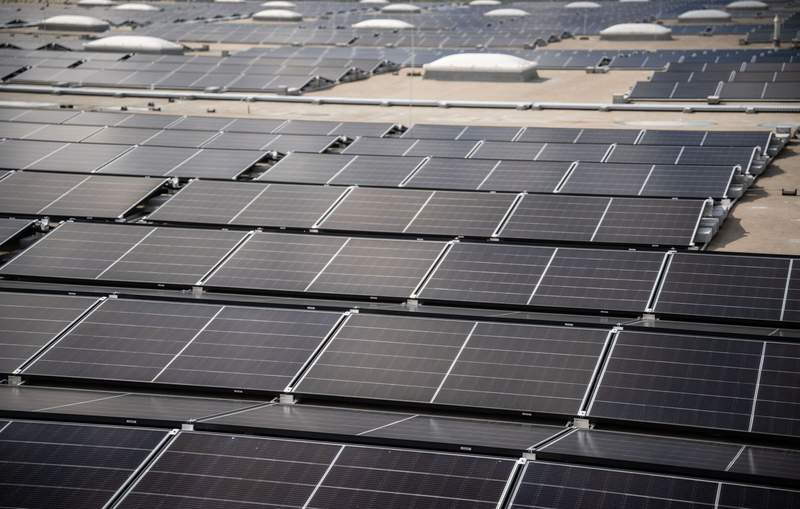
POLICY WIRE — Berlin, Germany — The future, we’re told, is decidedly green. Germany, that venerable titan of engineering and environmental ambition, once led the charge, positioning itself as the undisputed vanguard of renewable energy. Yet, beneath the veneer of its celebrated Energiewende—its grand energy transition—a more prosaic, profoundly consequential reality is asserting itself: the construction of new solar power plants, the very engine of this shift, is now perceptibly slowing. It isn’t just a hiccup; it’s a deceleration that has policymakers scrambling — and critics sharpening their barbs.
For years, the sheer volume of solar installations here was a marvel, a testament to political will and technological prowess. But today, the pace has slackened, the once-unfaltering momentum visibly diluted. Industry insiders whisper of a quagmire of bureaucracy, rising material costs, and an acute scarcity of skilled labor—factors that, when braided together, present a formidable obstacle to Berlin’s aspirational climate targets. This isn’t just about German efficiency; it’s about the intricate, often frustrating, ballet of policy and practicalities.
And the numbers, stark as they’re, don’t lie. Data from Germany’s Federal Statistical Office indicates that new solar capacity additions dropped by approximately 15% in the third quarter of last year compared to the preceding period, a trend line that hardly inspires confidence. This dip, while perhaps not precipitous, represents a significant blip on what was supposed to be a smooth, upward trajectory. It’s certainly enough to make one wonder if the dream itself is starting to fray at the edges.
“We’re confronting a complex confluence of supply chain bottlenecks, skilled labor shortages, and, frankly, bureaucratic molasses,” shot back Robert Habeck, Germany’s Minister for Economic Affairs and Climate Action, when pressed on the issue during a recent parliamentary session. “It’s a temporary deceleration, yes, but not a retreat from our commitments. We’re working tirelessly to streamline processes and incentivize investment.” His tone, however, betrayed a certain weariness, a recognition that the path ahead isn’t as clear-cut as initially envisioned.
Still, not everyone shares Habeck’s measured optimism. Christian Lindner, the Finance Minister, whose FDP party often champions fiscal prudence, offered a more unvarnished assessment. “The government’s grand pronouncements,” he observed with his customary dry wit, “clash rather starkly with on-the-ground realities. We’re not just slowing; we’re stalling in key areas, jeopardizing not only jobs but also our international climate standing. This isn’t just an energy problem; it’s an economic malaise we can ill afford.” It’s a bitter pill, this.
Behind the headlines—the aspirational targets and the glossy PR about a climate-neutral future—a deeper structural challenge persists. Germany, once the technological leader, now finds itself caught between the geopolitical imperative of weaning itself off Russian fossil fuels and the operational intricacies of building out domestic renewable infrastructure at an unprecedented scale. It’s a costly, complicated endeavor, one that exposes the inherent vulnerabilities of even the most ambitious green agendas. And this ripple effect, you know, extends far beyond Europe’s borders.
📄 POLICY WIRE WHITEPAPER PUBLISHED: PAKISTAN'S NATIONAL SECURITY POLICY PRIORITIES
👉 READ BY CLICKING HERENations like Pakistan, grappling with acute energy deficits and eyeing renewable solutions as a pathway to both economic stability and environmental stewardship, are watching Berlin’s struggles with a keen, discerning eye. For Islamabad, a country highly vulnerable to climate change and perpetually navigating intricate energy import dependencies, Germany’s deceleration offers a cautionary tale: the transition isn’t just about intention; it’s about execution, resilience, and the painful calibration of lofty goals against granular, tangible constraints. They’ve got their own hurdles to clear, don’t they?
What This Means
At its core, Germany’s solar slowdown carries profound implications, both domestically — and internationally. Politically, it complicates Chancellor Olaf Scholz’s delicate coalition dynamics, providing ammunition for opposition parties eager to portray the government’s green agenda as impractical or mismanaged. It’s a test of leadership, certainly. Economically, this inertia threatens to undermine Germany’s industrial competitiveness, particularly in energy-intensive sectors, potentially leading to increased energy costs and a less predictable power supply. For a manufacturing powerhouse, that’s not just a concern; it’s an existential threat.
Globally, Berlin’s struggles serve as a sobering reality check for other nations—especially those in South Asia and the wider Muslim world—that are similarly embarking on ambitious renewable energy transitions. It underscores the fact that the shift away from fossil fuels isn’t merely a technological leap; it’s a monumental logistical, regulatory, and societal undertaking. The challenges Germany faces today—supply chain volatility, workforce limitations, and the sheer inertia of existing systems—aren’t unique to Europe. They’re universal. How Germany navigates this current morass won’t just define its own energy future; it’ll offer a template, or perhaps a warning, for every country aspiring to green horizons.
Ultimately, this isn’t just about solar panels. It’s about the very credibility of a developed nation’s promise to itself, — and to the planet. It’s a high-stakes gamble, — and the world is definitely watching.