

Jerusalem’s Chords of Discord: Haredi Draft Protest Unravels National Unity on Iconic Bridge
POLICY WIRE — Jerusalem, Israel — The Chords Bridge, that soaring, minimalist marvel typically emblematic of Jerusalem’s modern aspirations, became, for a tense afternoon, a...

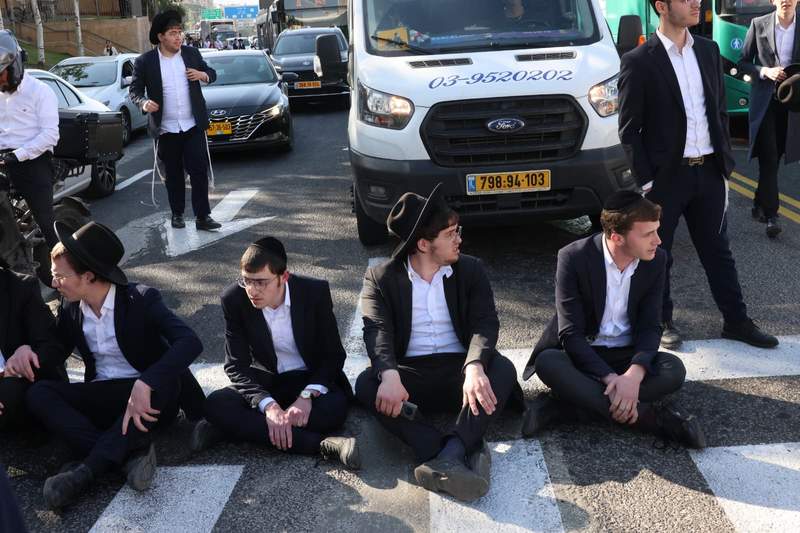
POLICY WIRE — Jerusalem, Israel — The Chords Bridge, that soaring, minimalist marvel typically emblematic of Jerusalem’s modern aspirations, became, for a tense afternoon, a crucible for Israel’s most intractable societal fractures. Police, with a choreography rehearsed over decades of similar confrontations, moved in with force, disrupting a fervent assembly of Haredi ‘Jerusalem Faction’ adherents. They weren’t protesting municipal policy or economic woes, but something far more elemental: the state’s insistent, yet often impotent, demand for universal military conscription.
It’s not merely a policy disagreement; it’s a clash of cosmologies. For these ultra-Orthodox zealots, the relentless study of Torah isn’t merely a religious obligation, but the nation’s truest defense, a spiritual shield more potent, they contend, than any Iron Dome. And their conviction? It runs deep. Still, the scene – young men, some barely out of adolescence, their faces contorted in defiance, locking arms against helmeted officers – felt less like an isolated incident and more like another stark exhibition of Israel’s profound, seemingly unbridgeable chasms.
The immediate catalyst was, of course, the renewed judicial push to end the decades-long exemptions for Haredi yeshiva students. But this recent eruption — with its predictable arrests and impassioned chants — signifies a deeper, more corrosive strain on the nation’s social contract, especially poignant amidst a protracted war that has seen record call-ups and profound sacrifice from other sectors of Israeli society. At its core, this isn’t just about military service; it’s about the very definition of citizenship, the equitable distribution of burden, and who gets to decide the nation’s spiritual and physical destiny.
“Our study is our defense. It’s the spiritual bulwark that shields this nation, a duty far more consequential than any rifle,” opined Rabbi Yitzchak Goldwasser, a prominent, albeit unofficial, voice within the ‘Jerusalem Faction,’ following the dispersal. He spoke with the quiet conviction of absolute certainty, a certainty that brooks no compromise with secular demands. But this stance, however deeply held, increasingly chafes against a weary public.
And the counterpoint is swift, often acerbic. “Every citizen bears a burden. Especially now, when our sons and daughters are dying on the front lines, to suggest otherwise is not just an insult, it’s a moral failure,” shot back Maj. Gen. (res.) Ram Ben-Ari, a former high-ranking Israel Defense Forces officer, speaking to Policy Wire. “This isn’t about theology; it’s about equitable national service. The nation needs every hand, every shoulder.” His words encapsulate the widespread exasperation felt by many secular and observant-Zionist Israelis.
Behind the headlines of specific clashes, a stark demographic reality amplifies the tension. Israel’s Haredi population, currently around 13% of the total, is projected by the Israel Democracy Institute to reach 20% by 2040. Their near-universal exemption from mandatory service, consequently, represents an increasingly weighty and politically explosive strain on the secular and national-religious majority who do serve — often for multiple years, and with significant personal cost.
📄 POLICY WIRE WHITEPAPER PUBLISHED: PAKISTAN'S NATIONAL SECURITY POLICY PRIORITIES
👉 READ BY CLICKING HERESo, the state’s struggle to integrate its Haredi citizens into broader national obligations resonates beyond Jerusalem’s fractured bridges. One finds echoes of similar, albeit distinct, religious-state frictions across the Muslim world. Consider Pakistan, for instance, where powerful religious parties and thousands of madrasas shape societal norms, often creating a parallel social infrastructure that stands distinct from the state’s more secular aspirations. While conscription issues differ, the deep-seated tension between state-defined national duty and religiously mandated community roles, between secular education and traditional learning, forms an invisible handshake of challenges that many nations must confront — often with varying degrees of success or coercion.
What This Means
The recurring protests, the police action, the unyielding rhetoric — it all paints a portrait of a nation increasingly at odds with itself. Politically, Prime Minister Benjamin Netanyahu’s coalition relies heavily on Haredi parties, making any definitive resolution to the draft crisis a parliamentary tightrope walk. His government simply can’t afford to alienate this crucial bloc, even if it means stoking the fury of other segments of the populace. This ongoing deadlock not only deepens societal rifts, exacerbating an already fragile national unity, but it also casts a long shadow over military readiness — a paramount concern given the volatile regional landscape. Economically, the Haredi community’s low participation in the workforce, coupled with their exemption from national service, presents a growing fiscal challenge, placing an undue burden on a shrinking tax base and a strained defense budget. The Chords Bridge incident isn’t just a local disturbance; it’s a stark, almost cinematic, representation of a fundamental struggle for Israel’s identity and its future as a cohesive, functioning democracy. The High Court’s impending rulings on this issue will undoubtedly send seismic tremors through the political establishment, with implications that could redefine the Israeli social compact for generations.