


Beyond the Scoreboard: New Mexico’s Local Gameday and the Unseen Crucible of Community Policy
POLICY WIRE — Albuquerque, United States — It isn’t often that the rigorous pursuit of policy analysis finds its nexus in the seemingly mundane contours of high school softball. But then again,...

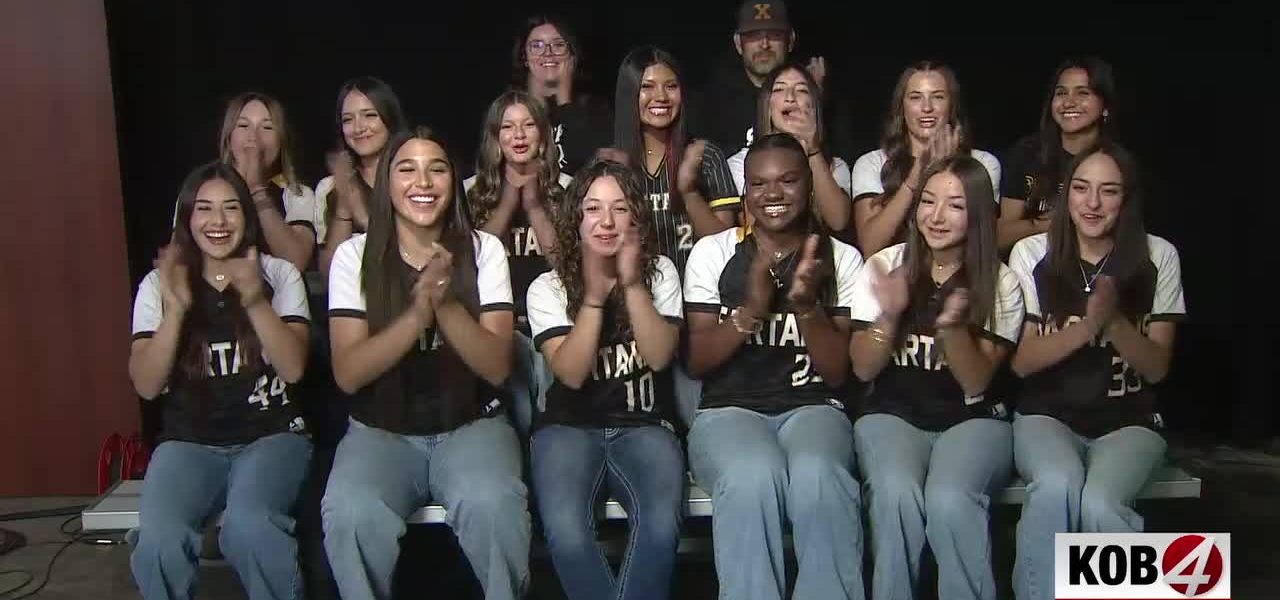
POLICY WIRE — Albuquerque, United States — It isn’t often that the rigorous pursuit of policy analysis finds its nexus in the seemingly mundane contours of high school softball. But then again, profundity often lurks in the peripheral, doesn’t it? The recent broadcast of ‘New Mexico Gameday’ — a local media staple featuring the St. Pius Spartans alongside familiar hosts Devin J Martin and Emily Faith — on its face, was simply a recap of regional athletic endeavors. Yet, peel back the veneer of scores and highlights, and one discerns the intricate, often unexamined, policy currents influencing community cohesion, media strategy, and even the subtle, economic calibrations of local identity.
For weeks, the sports desk at Policy Wire had been dissecting the macroeconomic implications of global sporting phenomena — the staggering financial narratives of the IPL, for example — pondering the sheer kinetic force of capital flowing through athlete endorsements and broadcast rights. And then, there’s this. Rio Rancho versus Cleveland. St. Pius versus Highland. It’s a localized economy, yes, but no less consequential in its human dimension. These aren’t just games; they’re incubators of civic participation, micro-arenas where soft power is forged through volunteerism and concession stand revenue. Still, their policy implications are routinely, almost willfully, ignored by broader political discourse.
And so, we must ask: What does this hyper-local media spotlight on scholastic athletics truly signify beyond the competitive rush? It’s a deliberate choice, isn’t it? A decision by local broadcasters to invest airtime, and thus capital, into narratives far removed from national headlines or geopolitical machinations. This isn’t merely entertainment; it’s an implicit investment in community infrastructure, a subtle governmental function outsourced, as it were, to the commercial media landscape. “These local broadcasts aren’t just about scores; they’re vital threads in our communal fabric, nurturing future talent and civic pride,” shot back State Representative Mariana Delgado (D-15th District), a staunch advocate for youth programs, when queried about the broader utility of such programming. She insists the return on investment isn’t always measurable in dollars, but in discernible social capital.
Behind the headlines of athletic prowess, a more complex socio-economic drama unfolds. Youth sports, including softball, represent a significant, albeit often unquantified, economic sector. Uniforms, travel, equipment, coaching fees — the outlay is substantial. According to a 2022 report from the Sports & Fitness Industry Association (SFIA), youth sports in the U.S. alone constitutes a market valued at over $30 billion annually, a figure that includes both direct spending and indirect economic boosts to local economies. This isn’t trivial; it’s a vibrant, if often overlooked, economic engine. And local media, by giving it airtime, lends it legitimacy — and amplifies its societal presence.
the emphasis on local athletic achievement carries particular resonance within communities like those in New Mexico, which boast diverse demographic tapestries. Take the burgeoning Muslim communities, for instance, often balancing cultural heritage with integration into American suburban life. For young Muslim athletes, participating in team sports, and then seeing their efforts recognized on a public platform, can be a potent symbol of belonging and cultural bridging. It’s an inclusion often less visible in national media narratives that favor more sensationalized or divisive portrayals. One could argue, quite persuasively, that such local media initiatives contribute more effectively to genuine cultural understanding than many a federally funded outreach program.
📄 POLICY WIRE WHITEPAPER PUBLISHED: PAKISTAN'S NATIONAL SECURITY POLICY PRIORITIES
👉 READ BY CLICKING HERE“It’s easy to overlook, but the dedication shown by these young athletes, and the support from their families and local businesses, it’s the bedrock of so much more than just a game,” contended Coach Elena Rodriguez, head of the St. Pius Spartans softball team, during a recent phone interview. Her voice, weary but resolute, betrayed years of grassroots engagement. “We’re building character here. Resilience. Those aren’t stats you can put in a box score, but they’re invaluable, aren’t they?”
At its core, this micro-narrative of New Mexico softball reveals a broader truth: policy, whether explicit or implicit, permeates every stratum of society. From resource allocation in school districts to the editorial choices of local news outlets, decisions are made that shape civic engagement and public perception. So, while the spotlights momentarily gleam on Emily Faith and Devin J Martin discussing the Spartans’ latest triumph, the enduring glow might just be on the quiet, persistent work of community building itself. A work, one suspects, that often proceeds best without grand proclamations, but rather through the consistent, almost ritualistic, celebration of local endeavor.
What This Means
The seemingly innocuous segment on ‘New Mexico Gameday’ serves as a crucial reminder that public policy isn’t exclusively crafted in legislative chambers or presidential decrees. It’s also sculpted by the choices made at the hyper-local level, particularly concerning media focus and community investment. Economically, showcasing high school sports fuels a micro-economy of parental spending, local business sponsorships, and nascent media careers. Politically, it strengthens community bonds, fostering a shared identity that can transcend demographic divides — a particularly salient point in increasingly fragmented societies. By validating youth achievement, these broadcasts implicitly endorse values like perseverance and teamwork, qualities vital for future citizenry. for minority groups, including the growing Muslim population in the U.S., visible participation in such mainstream activities can be a powerful counter-narrative to reductive stereotypes, fostering a sense of belonging and mutual understanding. This isn’t just about athletic prowess; it’s about the subtle, yet consequential, forging of social capital and national identity, one televised high school game at a time. It’s a silent, essential diplomacy, played out on dusty diamond fields, often overlooked in the cacophony of global affairs.